
Why Did the Learjet 60 Break Apart After the Crash
2 min Machine translated Crime & incidents
2 min Machine translated Crime & incidents
How does a nearly nine-ton jet crash and practically disintegrate without a trace?
During the descent, the tracking showed over 32,000 feet per minute, about 585 kilometers per hour straight down.
The Learjet 60 can land weighing up to 8.8 tons, and mass combined with speed means an enormous amount of kinetic energy.
Using nine tons just as an example, that speed represents nearly 120 megajoules, energy comparable to 28 kilograms of TNT, without it being a detonation.
The exact force can't be calculated without knowing the braking distance.
The critical point is the extremely abrupt deceleration.
In milliseconds, the energy transfers to the ground.
The structure fragments, the ground gives way, and Debris enters deep into the crater.
The Learjet can carry up to 1,185 gallons of fuel.
We don't know how much was left, but there was a large fire after impact.
There is no official temperature for that fire.
For reference, severe FAA tests use flames near 1,093 degrees Celsius.
Some of it stayed inside the crater. The rest was scattered in small fragments, and some pieces may have broken off during the fall.
So the Learjet didn't disappear. It was fragmented, buried, and scattered.
Now we need to distinguish impact from an in- flight breakup.
Follow the channel.
End of transcript · 213 words · machine translated
Como um jato de quase nove toneladas cai e praticamente desintegra sem deixar vestígios?
Durante a descida, o rastreamento passou de trinta e dois mil pés por minuto, cerca de quinhentos e oitenta e cinco quilômetros por hora só para baixo.
O Learjet 60 pode pousar com até 8,8 toneladas e massa combinada com velocidade significa uma enorme quantidade de energia cinética.
Usando nove toneladas apenas como exemplo, essa velocidade representa perto de cento e vinte megajoules, energia semelhante a vinte e oito quilos de TNT sem ser uma detonação.
A força exata não dá para calcular sem saber a distância da frenagem.
O ponto crítico é a desaceleração extremamente brusca.
Em milissegundos, a energia passa para o solo.
A estrutura fragmenta, o terreno cede e destroços entram profundamente na cratera.
O Learjet pode levar até mil cento e oitenta e cinco galões de combustível.
Não sabemos quanto ainda restava, mas houve um grande incêndio após o impacto.
Não existe temperatura oficial desse incêndio.
Como referência, testes severos da FAA utilizam chamas próximas de mil e noventa e três graus Celsius.
Parte ficou dentro da cratera. Outra foi espalhada em pequenos fragmentos e algumas peças podem ter se separado ainda durante a queda.
Então o Learjet não sumiu. Foi fragmentado, enterrado e espalhado.
Agora falta separar impacto de ruptura em voo.
Siga o canal.
 2:43 Learjet 60 Crash in Greenacres: Why Did the Plane Leave a Crater
 2:08 Wheeler Tomás, Flávio Bolsonaro and Brazil's Betting Investigation
 4:10 Call for FBI Inquiry into Alexandre Ézéchiel and Haitian Gang Leaders
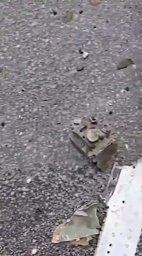 1:17 Small plane debris scattered after crash
 0:34 Court Discussion of Surgery, a Stoma and Other Medical Conditions
 2:27 Dispute Over Medical Credentials and an Ambulance
 0:39 Dispute Over Criminal Investigation Department Authority
 0:40 Call for Plateau Youth to Arm Themselves After Nighttime Attacks
 1:41 Panchkula School Assault: FIR Against Administration and Safety Measures
 4:12 Harassment at a Bus Stop: A Bystander Steps In
 1:07 Tense Exchange About a Child and Media Arrival
 0:52 Flight Incident: Removal, Public Support and Criticism
 iPhone app Translate videos on your iPhone Paste a TikTok, Instagram or X link, add subtitles in your language and save the video to Photos.

TranslateMom transcribes and translates videos from X, TikTok, YouTube and Instagram. Paste a link and you get a page like this one, in your language.