
电子传递链与ATP合成
6 min Machine translated History & how-to
6 min Machine translated History & how-to
这些ATP分子最终为大多数细胞反应提供能量。
of the cell's reactions.
正如人造发电厂产生电能利用风、水或蒸汽的流动来带动涡轮旋转, ATP合酶利用质子的流动来制造ATP 质子从内膜的一侧流向另一侧,从而带动蛋白质亚基旋转。
如果没有质子梯度,合酶亚基会停止旋转,细胞会迅速陷入能量匮乏并且死亡。
因此,建立这一梯度的蛋白质复合体和小分子并维持它,在细胞的生命中发挥着至关重要的作用。
该系统的核心是四种蛋白质复合体,编号为一到四。
复合体一、三和四直接将质子从基质泵入膜间隙。
复合体二并不直接泵送质子,但它会促进复合体三和四中的质子泵送。
质子泵送需要能量,而这四种蛋白质复合体通过传递电子来获取这种能量,这一过程经过一系列偶联反应。
这种相互关联的电子传递过程正是这四种复合体被统称为电子传递链的原因。
让我们聚焦于复合体一。
糖类代谢的一种副产物,称为 NADH,会将两个高能电子送入复合体一,在那里,它们沿着一连串氧化还原中心传递。
氧化还原中心是原子簇,它们对电子具有不同的亲和力,这取决于其独特的原子构型。
让我们仔细研究一对氧化还原中心,以揭示两种电子从上方氧化还原中心移向下方的原因。
氧化还原中心。首先,下方氧化还原中心具有更高的亲和力。
其次,这些相邻氧化还原中心之间的距离非常适合电子跃迁,这就解释了为何电子通常不会绕过下方的氧化还原中心。
每次电子传递时,都会释放少量能量于氧化还原中心之间。
复合体一会汇集所有氧化还原中心的这股能量并用它来泵送质子。
复合体一中的最后一个氧化还原中心将两个电子传递给一个辅酶Q分子。
复合体二与复合体一有两个重要相似之处。首先,高能电子同样会进入复合体二通过糖代谢的副产物进入,不过这里的分子是FADH2。
第二,复合体二也会转移电子在多个氧化还原中心之间,然后将电子交给辅酶Q。
不过,一个主要区别是复合体二不利用这种能量来泵送质子。
来自复合体一和复合体二的辅酶Q分子将电子交给复合体三。
一个电子可以循环利用并在之后重新进入复合体三,但另一个电子会经过两个氧化还原中心,然后到达细胞色素C。
细胞色素C将电子带到复合体四。电子传递链终止于复合体四,在那里一系列涉及四个电子的反应将一个氧分子转化为两个水分子。
质子梯度会增强,因为有四个质子来自该基质并被纳入水分子,另外四个则被被泵入膜间隙。
在没有氧气的情况下,电子传递会停止,这意味着ATP合成也会停止。
事实上,我们呼吸氧气的原因是让它充当电子传递链末端的最终电子受体。
在这个动画中,我们分别探讨了每个蛋白质复合体,但实际上,它们排列得非常紧密。
它们共同有效地让整片线粒体内膜的表面成为一座巨大的细胞发电厂。
End of transcript · 644 words · machine translated
These ATP molecules ultimately provide the energy for most of the cell's reactions.
Just as man-made power plants produce electrical energy by using the flow of wind, water, or steam to rotate a turbine, the synthase makes ATP by using proton flow from one side of the inner membrane to the other to rotate protein subunits.
If there is no proton gradient, synthase subunits stop rotating, and the cell can quickly become starved of energy and die.
Therefore, the protein complexes and small molecules that establish this gradient and maintain it play an essential role in the life of the cell.
At the heart of this system are four protein complexes, numbered one through four.
Complexes one, three, and four directly pump protons from the matrix into the intermembrane space.
Complex two does not directly pump protons, but it does promote proton pumping in complexes three and four.
Proton pumping requires energy, and the four protein complexes get this energy by transferring electrons through a series of coupled reactions.
This linked process of electron transport is why the four complexes are collectively referred to as the electron transport chain.
Let's focus on complex one.
A by-product of sugar metabolism called NADH deposits two high-energy electrons in complex one, where they are passed along a chain of redox centers.
Redox centers are clusters of atoms that have different affinities for electrons based on their unique atomic configurations.
Let's closely consider a pair of redox centers to reveal two reasons why an electron moves from the top redox center to the bottom.
First, the bottom redox center has higher affinity than the top one.
Second, the distance between these adjacent redox centers is ideal for an electron jump to occur, which explains why electrons typically don't bypass the bottom redox center.
A small amount of energy is released each time an electron is passed between redox centers.
Complex one harnesses this energy across all the redox centers and uses it to pump protons.
The last redox center in complex one donates two electrons to a coenzyme Q molecule.
Complex two is similar to complex one in two important ways.
First, high-energy electrons also enter complex two via a by-product of sugar metabolism, although here the molecule is FADH2.
Second, complex two also transfers electrons between several redox centers before donating them to coenzyme Q. One major difference, however, is that complex two does not use the energy liberated to pump protons.
Coenzyme Q molecules from complexes one and two donate their electrons to complex three.
One electron is recyclable and can re-enter complex three later, but the other passes through two redox centers before reaching cytochrome C. Cytochrome C carries the electron to complex four.
The electron transport chain ends in complex four, where a series of reactions involving four electrons converts a molecule of oxygen to two molecules of water.
The proton gradient is strengthened because four protons from the matrix are incorporated into water molecules, and another four are pumped into the intermembrane space.
In the absence of oxygen, the electron transfer comes to a halt, meaning that ATP synthesis also stops.
Indeed, the reason we breathe oxygen is so that it can serve as the final electron acceptor at the end of the electron transport chain.
In this animation, we have explored each protein complex in isolation, but in reality they are very densely packed.
Together, they effectively make the entire surface of the inner mitochondrial membrane a giant cellular power plant.
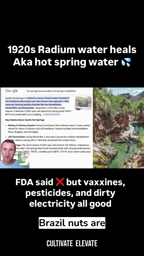 5:17 1920年代镭水瓶:关于放射性与疗效的说法
 3:00 质疑政府与应急准备:离网生活和数字货币
 2:43 沙丁鱼断食与生酮饮食:如何提高酮体水平
 1:01 特朗普发现奥巴马和拜登藏在白宫画像里|喜剧短剧
 2:36 针对犹太人的仇恨言论与反犹阴谋论
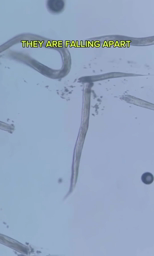 1:45 蓖麻油涂腹部:关于子宫肌瘤、卵巢囊肿和肠道健康的说法
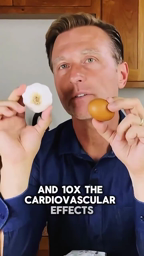 0:38 鸡蛋搭配姜黄、大蒜和牛油果等食材的营养益处
 0:28 红洋葱、蜂蜜和橄榄油饮品的保健功效说法
 1:41 不同手指佩戴铜戒指的含义与所声称的益处
 2:17 土壤细菌组合消除小鼠癌症肿瘤
 1:13 牛油果核的健康功效声称与食用方法
 7:40 奥斯维辛死亡人数与火化能力:否认大屠杀的说法
 iPhone app Translate videos on your iPhone Paste a TikTok, Instagram or X link, add subtitles in your language and save the video to Photos.

TranslateMom transcribes and translates videos from X, TikTok, YouTube and Instagram. Paste a link and you get a page like this one, in your language.