
Was Ali ibn Abi Talib Killed at Siffin? A Review of Historical Accounts
10 min Machine translated Faith
10 min Machine translated Faith
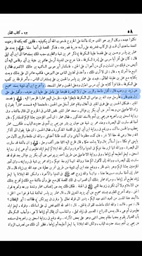
This is in Fath al-Bari, Ibn Hajar's commentary on Sahih al-Bukhari.
Volume thirteen, page sixty-three. Al-Tabari narrated with an authentic chain from Yunus, from Yazid, from al-Zuhri, who said, “Ali appointed over the vanguard of the people of Iraq—this was at Siffin— Qays ibn Sa'd ibn Ubadah. They were forty thousand who pledged to him to die, so Ali was killed.”
Where? At Siffin, Sheikh. So Hasan ibn Ali was pledged allegiance as caliph, and he did not like fighting, but he wanted to set conditions for himself with Muawiyah. He knew that Qays ibn Sa'd would not comply with peace, so he dismissed him. This is the end of the narration.
So Ali was killed at Siffin. Is this evidence enough? No, it is not enough. Let us go to Sahih al-Bukhari and explain what happened after the arbitration. From Ibn Umar— of course, this is on page two hundred and eighty-three.
Ibn Umar said, “I entered upon Hafsa while her braids were dripping. I said, ‘You have seen what has happened among the people, and I have not been given any share in the matter.’ She said, ‘Join them, for they are waiting for you,
and I fear that your holding back from them may cause division.’
She did not leave him alone until he went. Then, when the people dispersed Muawiya delivered a sermon and said, "Whoever wishes to speak about this matter—that is, the caliphate—let him show us his strength, for we have more right to it than he and his father." So the speech was addressed to Hasan. Ali is not mentioned. Right?
Right. Good. So Ali had been killed. Okay. Now let us go to Ibn Abi Shaybah's Musannaf, with an authentic chain of transmission.
Ali said from his pulpit in Kufa: "I am the one who put out the eye of sedition. Had I not been among you, so-and-so, so-and-so, and so-and-so, and the people of the river would not have been killed."
So he did not mention the Battle of Siffin.
So he was killed before it. And the river was—look, Sheikh.
First, the Battle of Zabouq took place. After the Battle of Zabouq came the Battle of the Camel, then Lesser Siffin, then Nahrawan, then Greater Siffin. Ali was killed in Greater Siffin. Therefore, he did not mention it here, he only said, "the people of the river." He had been killed. Okay. Now let us go to the Western spies
who were writing reports for their countries when the disagreement among the Companions occurred. This is the Armenian historian named Sebeos.
This is his account. This is the translation we did. If you want, I'll send you the original with the translation.
It says: “Then God sent strife among the army of Banu Ishmael— meaning the Arabs—so their unity fell apart, and the forces that were in Egypt united with those in the Tajik region, and they killed their king, Uthman, and took the many treasures as spoils. Then they installed another king named Ali,
and returned to their places. When Emir Muawiya saw what had happened, he united his forces and also went to the desert, where he killed the king they had placed on the throne, Ali, destroyed his forces utterly, and returned victorious.”
This was at Siffin, Sheikh. Now let us turn to the Syriac historian Mar Michael. He mentions it in his book here, saying: “But the Muslims stormed the house and killed their emir, Uthman, in the city of Yathrib, while Muawiya sent an army led by Habib to aid the emir.
When they arrived in Basra, they learned of Uthman’s killing, may God be pleased with him, so they turned back and informed Muawiya.
Thus the Muslims became divided, and those in Yathrib and Babylon pursued—who?
Ali. That is, they joined Ali's army. In 967, both Muawiya's group and Ali's group prepared to fight. After several people were killed on both sides, Muawiya returned without meeting Ali. This was the first Siffin, Sheikh.
The sacred month began— Sorry, the month of Muharram.
The fighting stopped. This was the first Siffin.
Then both sides prepared to fight again. The greater Siffin.
After much bloodshed, three men resolved to kill the three who had caused the Muslims' war.
The second went to Muawiya's camp, where he was captured and killed. The third entered Ali's camp and stabbed him with a spear, killing him. Where was this?
All of this took place at Siffin. Now let us bring the account relied upon by Ahl al-Sunna wal-Jama'a. They have no other.
Weak: The History of al-Tabari, The Rightly Guided Caliphate.
Okay? Who told us? Isma'il ibn al-Rashid.
Remember this name. That Ibn Muljam— There is no Abd al-Rahman ibn Muljam, only Ibn Muljam. It could be Khalid ibn Muljam. That Ibn Muljam, al-Burak ibn Ubayd Allah, and Amr ibn al-Bakr al-Tamimi met.
They discussed the people's affairs and found fault with their governors.
Ali was killed the following morning, in the year 40.
Ibn Muljam struck him on the head with a sword. So, what does this report say? Scroll down. Its chain is mu‘dal. The hadith scholar al-Albani said, “This is a weak, mu‘dal chain, for Ismail ibn al-Rashid, who narrated this report,
was al-Sulami al-Kufi, one of the Followers of the Followers, and his status is unknown.” So, the report of Ali’s killing in Kufa is fabricated, Sheikh. He prayed the dawn prayer, then Abd al-Rahman came and struck him on the head.
It was narrated by an unknown person, and its chain is weak, in fact, its chain is crippled, afflicted with an incurable flaw. So, what is the authentic report?
Here is the authentic report in Siyar A‘lam al-Nubala, with a golden chain whose narrators are reliable.
On the authority of Anas, may Allah be pleased with him, who said: Three men from Iraq made a pact, since the Kharijites were from Iraq.
Abd al-Rahman ibn Muljam was from Egypt. What did he have to do with killing whom?
Look, Sheikh, killing whom? Muawiya, Amr ibn al-As, and Habib ibn Maslama. They removed Habib ibn Maslama and inserted Ali ibn Abi Talib.
You see the fabrication, you see how it was fabricated. They came after pledging allegiance, meaning after pledging allegiance to Muawiya as caliph. Muawiya was caliph, and the people of Kufa wanted to kill Muawiya, may God be pleased with him, until they arrived in Iliya, Jerusalem, and prayed before dawn in the mosque.
When Muawiya came out for the dawn prayer, he said “God is greatest.” When he prostrated, one of them threw himself onto the back of the prostrating guard between him and Muawiya, then stabbed Muawiya in his buttocks.
Muawiya left and said, “Complete your prayer and detain the man.” The doctor said, “If the dagger is not poisoned, then there is nothing wrong with you.” The doctor prepared his medications, then licked the dagger and found that it was not poisoned, so he said, “God is greatest,” and those with him said it too. It was said, “The Commander
of the Faithful is all right.” This account was stolen by the people of Kufa, copy-paste, and they fabricated this account for you, removing the name Habib ibn Maslama and replacing it with Ali ibn Abi Talib.
The killing of Ali ibn Abi Talib was in the year 40. Now, the authentic account that we produced was narrated by al-Bukhari.
Yes, Sheikh, in Imam al-Bukhari’s Middle History, on page 194. Listen, three men made a pact. to kill Muawiya after he had been pledged allegiance as caliph. Amr ibn al-As and Habib ibn Maslama. They removed Habib ibn Maslama from al-Tabari's history and replaced him with Ali ibn Abi Talib. So one of them killed
Kharija ibn Hudhafa of Banu Adi ibn Ka'b, and he said, "I thought he was Amr."
He wanted to kill Amr ibn al-As, may God Almighty be pleased with him, but he killed Kharija ibn Hudhafa, who was praying, because Amr ibn al-As was ill in his bed. So these are the lies put forth by the people of Kufa.
They said that Ali ibn Abi Talib was killed in Kufa while he was praying. Abd al-Rahman ibn Muljam loved a woman named Qutam, and she said, "My dowry is the head of Ali ibn Abi Talib." Now let's speak rationally after discussing the sources, Sheikh Bandar. In the year 37 AH,
Muawiya was pledged allegiance as caliph over the Muslims by consensus. Ali ibn Abi Talib lived, according to the distorted Abbasid accounts that we have just presented to you. He lived from the year 37 AH until 40, until the year 40. He was killed in the year 40.
Ali's history is from 37 to 40. Where was he, and what was he doing? He was governor of Kufa and Muawiya became caliph over the Muslims. Would Muawiya leave him to form a new army and return to fighting him? Fine, Hasan abdicated in the year forty. He abdicated while his father was alive. Hasan abdicated while his father was alive.
So the words of the people of Kufa are flawed in reason and logic and in their chain of transmission. Now the truth is clear before you.
End of transcript · 1,589 words · machine translated
هذا في فتح الباري لشرح صحيح البخاري لابن حجر.
المجلد الثالث عشر الصفحة ثلاثة وستين. وأخرج الطبري بسند صحيح عن يونس، عن يزيد، عن الزهري قال: "جعل علي على مقدمة أهل العراق- هذا في صفين- قيس بن سعد بن عبادة، وكانوا أربعين ألفًا بايعوه على الموت، فقتل علي".
فين؟ في صفين يا شيخ. فبايع الحسن بن علي بالخلافة، وكان لا يحب القتال، ولكن كان يريد أن يشترط على معاوية لنفسه، فعرف أن قيس بن سعد لا يطاوعه على الصلح فنزعه إلى نهاية الرواية.
إذًا علي قتل في صفين. هذا الدليل يكفي؟ لا ما يكفي. نروح إلى صحيح البخاري نبين بعد التحكيم وش اللي حصل. عن ابن عمر- طبعًا هذا في الصفحة ميتين وثلاثة وثمانين.
عن ابن عمر قال: "دخلت على حفصة ونسواتها تنطف. قلت قد كان من أمر الناس ما ترين، فلم يجعل لي من الأمر شيء. فقالت: الحق فإنهم ينتظرونك، وأخشى أن يكون في احتباسك عنهم فرقة.
فلم تدعه حتى ذهب. فلما تفرق الناس خطب معاوية قال: من كان يريد أن يتكلم في هذا الأمر- أي الخلافة- فليطلع لنا قرنه، فلا نحن أحق به منه ومن أبيه". إذًا كان الخطاب موجه للحسن. علي ليس له وجود. صح؟
صحيح. جميل. إذًا علي كان مقتول. طيب. نذهب الآن إلى المصنف لابن أبي شيبة بسند صحيح.
قال علي على منبره في الكوفة: "إني أنا فقعت عين الفتنة، ولو لم أكن فيكم ما قتل فلان وفلان وفلان وأهل النهر".
إذًا لم يذكر معركة صفين. إذًا قتل قبلها. والنهر كانت- شف يا شيخ.
أولًا حصلت معركة الزابوق. بعد معركة الزابوق معركة الجمل، ثم صفين الصغرى، ثم النهروان، ثم صفين الكبرى. صفين الكبرى قتل فيها علي. لذلك لم يذكرها هنا فقط قال: "أهل النهر". كان مقتولًا. طيب. نروح الآن إلى الجواسيس الغربيين الذين كانوا يكتبون الأخبار لدولهم حينما حصل الخلاف بين الصحابة. هذا المؤرخ الأرميني اللي اسمه سيبوس.
هذه روايته. وهذه الترجمة حنا ترجمناها. لو بغيت برسل لك الأصل مع الترجمة.
يقول: "ثم أرسل الله الفتنة في جيش بني إسماعيل- يقصد العرب- فتفككت وحدتهم، فاتحدت القوات التي كانت موجودة في مصر مع تلك الموجودة في منطقة طاجيك، وقتلوا ملكهم عثمان، وأخذوا الكنوز الكثيرة غنيمة، ثم نصبوا ملكًا آخر اسمه علي،
وعادوا إلى أماكنهم. فلما رأى الأمير معاوية ما حدث وحد قواته وذهب هو الآخر إلى الصحراء، وقتل الملك الذي نصبوه على العرش علي، ودمر قواته تدميرًا شديدًا وعاد منتصرًا".
هذا في صفين يا شيخ. الآن نذهب إلى المؤرخ السرياني مار ميخائيل. ذكر في كتابه هنا يقول: "لكن المسلمين اقتحموا الدار وقتلوا أميرهم عثمان في مدينة يثرب، في حين أرسل معاوية جيشًا بقيادة حبيب لنجدة الأمير.
ولدى وصولهم إلى البصرة عرفوا بمقتل عثمان رضي الله عنه فعادوا أدراجهم وأخبروا معاوية.
وهكذا انقسم المسلمون، فتتبع الذين في يثرب وبابل- من؟
علي. يعني أصبحوا في جيش علي. وسنة تسعمية وسبعة وستين تأهب كل من جماعة معاوية وجماعة علي للقتال. وبعد مقتل عدد من كلا الجانبين عاد معاوية دون أن يلتقي بعلي. هذه صفين الأولى يا شيخ.
دخل شهر الحرام- عفوًا شهر محرم وتوقف القتال. هذه صفين الأولى.
ثم تأهب الجانبان للقتال مرة أخرى. صفين الكبرى.
وعلى أثر سفك دم غزير صمم ثلاثة رجال على قتل الثلاثة الذين كانوا سببًا في الحرب المسلمين.
وتوجه الثاني إلى معسكر معاوية، فقبض عليه وقتله. ودخل الثالث معسكر علي فطعنه بالرمح وقتله. هذا فين؟
كله في صفين هذا الكلام. ونأتي بالرواية التي يستند عليها أهل السنة والجماعة وما عندهم غيرها.
ضعيف تاريخ الطبري الخلافة الراشدة. جيد؟ أخبرنا من؟ إسماعيل بن الراشد.
احفظ هذا الاسم. أن ابن ملجم- ما في عبد الرحمن بن ملجم فقط بن ملجم، يمكن خالد بن ملجم. أن ابن ملجم والبرك بن عبيد الله وعمرو بن البكر التميمي اجتمعوا فتذاكروا أمر الناس وعابوا على ولاتهم.
وقتل في صبيحتها علي سنة أربعين. وضربه ابن ملجم في قرنه بالسيف. طيب ايش فيها الرواية دي؟ ننزل تحت. إسناده معضل. وقال المحدث الألباني: "وهذا إسناد ضعيف معضل، فإن إسماعيل بن الراشد الذي روى الرواية هذا هو السلمي الكوفي من أتباع التابعين مجهول الحال". إذًا رواية مقتل علي مكذوبة يا شيخ في الكوفة. وصلى الفجر وجاء عبد الرحمن وضربه بقرنه.
رواها واحد مجهول وإسنادها ضعيف بل إسنادها معوق معاه مرض العضال. طيب الرواية الصحيحة وش هي؟ هنا الرواية الصحيحة في سير أعلام النبلاء بسند ذهبي رجاله ثقات.
عن أنس رضي الله تعالى عنه قال تعاهد ثلاثة من أهل العراق إذا الخوارج من أهل العراق عبد الرحمن بن ملجم من أهل مصر ما له شغل على قتل من؟
شف يا شيخ على قتل من معاوية وعمرو بن العاص وحبيب بن مسلمة حذفوا لك حبيب بن مسلمة ووضعوا لك علي بن أبي طالب.
شفت التزوير شفت كيف التزوير. وأقبلوا بعد بيعة من يعني بعد بيعة معاوية بالخلافة كان معاوية خليفة فأرادوا أهل الكوفة قتل معاوية رضي الله تعالى عنه حتى قدموا إيلياء القدس فصلوا من السحر في المسجد.
فلما خرج معاوية لصلاة الفجر كبر فلما سجد انبطح أحدهم على ظهر الحرس الساجد بينه وبين معاوية حتى طعن معاوية في مأكمته.
فانصرف معاوية وقال أتموا صلاتكم وأمسك الرجل. فقال الطبيب إن لم يكن الخنجر مسموما فلا بأس عليك. فأعد الطبيب عقاقيره، ثم لحس الخنجر فلم يجده مسموما فكبر وكبر من عنده، وقيل ليس بأمير المؤمنين بأس. هذه الرواية سرقوها أهل الكوفة copy paste وصنعوا لك هذه الرواية وحذفوا اسم حبيب بن مسلمة ووضعوا لك علي بن أبي طالب
مقتل علي بن أبي طالب سنة أربعين. الآن الرواية الصحيحة التي أخرجناها أخرجها البخاري.
نعم يا شيخ في التاريخ الأوسط للإمام البخاري في الصفحة مئة وأربعة وتسعين. اسمع تعاقد ثلاثة على قتل من معاوية بعد ما بويع بالخلافة. وعمرو بن العاص وحبيب بن مسلمة حذفوا لك حبيب بن مسلمة في تاريخ الطبري ووضعوا لك علي بن أبي طالب فقتل أحدهم خارجة بن حذافة من بني عدي بن كعب وقال ظننته عمرو كان يبي يقتل عمرو بن العاص رضي الله تعالى عنه فقتل
خارجة بن حذافة كان يصلي لأن عمرو بن العاص كان مريضا في فراشه. إذا هذه الأكاذيب التي أوردها أهل الكوفة وقالوا أن علي بن أبي طالب قتل في الكوفة وهو يصلي. وكان عبد الرحمن بن ملجم يحب امرأة اسمها قطام وقالت مهري رأس علي بن أبي طالب. الآن خلينا نتكلم عقليا بعد المصادر يا شيخ بندر. عام سبعة وثلاثين هجري بويع لمعاوية خليفة على
المسلمين بالإجماع. علي بن أبي طالب عاش حسب الروايات العباسية المقلوبة التي أوردناها لك الآن. عاش منذ عام سبعة وثلاثين هجري إلى أربعين إلى سنة أربعين. قتل في سنة أربعين.
تاريخ علي من سبعة وثلاثين إلى أربعين. وين وش كان يسوي؟ كان أمير على الكوفة ومعاوية أصبح خليفة على المسلمين. هل يتركه معاوية كي يشكل جيش جديد ويعود إلى قتاله؟ طيب تنازل الحسن في سنة أربعين تنازل وأبوه حي. الحسن يتنازل وأبوه حي.
إذا كلمات أهل الكوفة مضروبة عقلا ومنطقا وسندا. وبينا الآن الحق أمامك.
 5:00 Battle of the Camel in Fath al-Bari: Talha, Zubayr and Ammar
 2:56 Sheikh Abu Sari Shrine in Suez: A Calf’s Head and a Dispute Over Offerings
 2:17 Excessive Veneration of the Righteous and Seeking Help from Others
 1:31 The Westernization Project and Media's Influence on Islamic Law
 2:20 Islamic Awareness, Religious Education and Muslim Unity
 3:17 Claim That Shia Women Lay Eggs Attributed to Al-Kulayni and Al-Tusi
 1:20 Religious Speech on Resistance, Faith, and Victory or Martyrdom
 1:12 Quranic Verses on Discouragement, Patience, and Steadfastness in Jihad
 0:43 Questions About Christianity and Judaism Amid Allahu Akbar Chants
 4:49 Teaching on the Second Coming of Jesus
 0:33 Why Ghusl May Be Invalid: Missed Areas and Nail Polish
 2:09 Jewish-Christian Dialogue: Differences and the Historical Jesus
 iPhone app Translate videos on your iPhone Paste a TikTok, Instagram or X link, add subtitles in your language and save the video to Photos.

TranslateMom transcribes and translates videos from X, TikTok, YouTube and Instagram. Paste a link and you get a page like this one, in your language.