
Natural Capital: Why Nature Matters to Business and Finance
3 min Money & business
3 min Money & business
When we talk about capital, we tend to think only about financial capital, about cash, financial assets, but we know that's not the only value on which our economies depend. We know that every aspect of every part of the economy is fundamentally dependent on nature, as you highlighted. The air that we breathe, the, the water we drink,
the soil, the oceans that we need for the, the food that we need to consume, the minerals that we need as inputs to technology and to infrastructure.
And without these forms of value, these forms of natural capital, we won't have economies. They are the fundamental building blocks of our economies.
But the ways, as you said, the ways in which we have, uh, grown our economies, our models of economic development, have been incredibly successful for global prosperity.
Um, but the unintended consequences of current models of growth are simply not sustainable on a finite planet.
The amount of resource that we are drawing into our economies, Earth's resources, and the amount of pollution and waste that we're pumping out, whether that's through greenhouse gas emissions, whether that's sewage into our water, whether it's plastics into the ocean,
is beyond the Earth's carrying capacity. And we know that that's leading, as you said, to very significant direct impacts to society, but very significant financial costs for the economy.
We can look at that, as you have, um, and calculate that at a, at a macro level. But the way that that's showing up as we're breaching these boundaries and breaching these limits and undermining nature, is showing up in, in very practical ways that are showing up for financial risk for institutions.
Lack of water is leading to disruption of operations of supply chains where water was needed as an essential input for manufacturing or power production.
The degradation of soil is leading to reduced agricultural yields. The decline of pollinator species is also having an impact on agriculture. So that's leading to direct financial risks for, uh, organizations, for businesses, and ultimately for investors.
And we've said, ultimately, the reason for this is at the moment, the way that decisions are made, uh, on an everyday level within businesses and financial institutions is because we're looking only at financial data, financial metrics that are not factoring in nature.
Nature is treated within the economy as though it's unlimited and predominantly as though it's free, and the risks and harms are simply not costed in financial terms. They-- We can cost them at a macro level. They're not costed into day-to-day decision-making.
And the result is, as a consequence, we've put all of our economies at fundamental risk. We can't do business on a dead planet. If we're going to protect natural systems, one of the solutions is to bring nature onto the balance sheet, to bring nature into the ways that decisions are made within business,
to allocate a value to it and to bring it into accounting and financial mechanisms.
End of transcript · 506 words
 0:10 Fuel Situation in the Country: A Blunt One-Word Response
 0:58 Man criticizes capitalism and working conditions after his wife's death
 0:33 Pakistan's Economy: Bankruptcy and Borrowing to Repay Debt
 4:13 Negotiating an Old Stone Sale: From Hundreds to Two Million Yuan
 1:56 Emergency Air Traffic Communication
 1:26 Interview on Voting and International Impact
 1:56 Discussion on Language Barriers in Media
 3:50 Personal Testimony of Faith Journey
 2:00 Discussion on Dalai Lama and Tibet
 2:52 Understanding the Mirror Principle
 1:26 Community Response to Door-to-Door Outreach
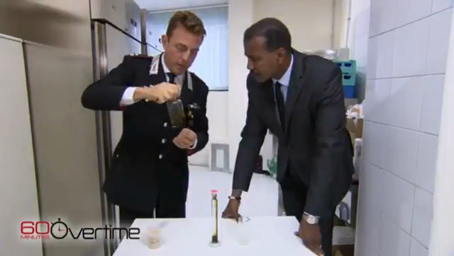 1:45 Identifying Fake Extra Virgin Olive Oil
 iPhone app Translate videos on your iPhone Paste a TikTok, Instagram or X link, add subtitles in your language and save the video to Photos.

TranslateMom transcribes and translates videos from X, TikTok, YouTube and Instagram. Paste a link and you get a page like this one, in your language.