
Generational Inconsistency and Trust: The Debate About Jonathan and Megan
6 min Machine translated Life & society
6 min Machine translated Life & society
Some episode a while ago, I don't know when.
Anyway, guys, if I have to sum it up, I'll try to do it in a, um, concise way, that's what it's called, after all.
A few episodes ago, I said: I see a lack of substance.
The lack of substance wasn't me saying, "Uh…
you're all pieces of shit," I mean, it wasn't a personal insult to you.
The lack of substance we were talking about is something we all experience in society today, not just among the younger generations, where it's always easier to say, "Kids these days…"
which isn't true. Some young people are actually less lacking in substance than others, but it applies to adults too.
And I gave the example of how there are parents today who aren't anymore, who no longer have the authority they once had.
Parents today try to be their children's friends, I mean, they want to be approved of by their kids, they try to be social-media profiles, friends, all that, I mean, the parental role has kind of been lost.
This whole discussion— that's why I said it was broader, we were talking about you, and we got to you too, to the fact that when things happen, in fact, we compared how we felt with how you felt, or how you felt, in this particular case, Megan.
Um, when that thing with Parsi happened, I can't remember which episode now, which we didn't know about, and we found out on the episode when he supposedly said some uncomfortable, um, sexist, chauvinistic things, I don't know.
Anyway, people were laughing and joking because the clip was of you laughing with Jonathan, so it wasn't anything...
But anyway, that point was made, So you obviously apologized to Megan, and you apologized to all the women too.
You did the right thing. You were very good, and you said: I forgive you, but actually, I was hurt by that, I didn't like it.
Right after that came the chain, where Jonathan, in my opinion—and I'm not saying that's how it happened— that's how I see it. You see it differently.
I think Jonathan, instead, didn't take responsibility for saving you, precisely because we'd just had that moment in the studio and he passed the buck to you, and you didn't do it either.
Well, wait, you didn't do it either, you didn't take responsibility, choosing to save Federica instead.
And so that's something that happened. Something that happened, something in the past.
Yes, yes, yes, in the past, but it wasn't ten years ago, I mean, it happened a few weeks ago, but it did happen.
From that event, we reopened the discussion when Jonathan…
I'll give you my analysis, then, obviously, you don't agree, we won't reopen this whole, whole thing.
When Jonathan, um, says he'd made a mistake, that he hadn't explained himself well, but that he still wanted to make Andreas look homophobic, that's another thing that happened.
Things that happen inside us resonate, they're shaped, obviously, by the way we see life, because, as I say, there isn't one truth, one reality, but there are many, as many as there are eyes to see them.
So someone like Andreas and someone like me can't then become close friends with a Jonathan because we've seen, in fact, when I say Jonathan He's sly, he's someone I wouldn't trust, and, well, I've heard other things about Jonathan,
mmm, both about me, but also by chance one day in confession, so I have a clear idea of Jonathan.
With that clear idea, I could never have become close friends with Jonathan.
I talk to him, and I spoke to him nicely, about India and other things, there was an exchange, but I keep to my place and mmm, I want, I wanted him to keep to his because there's a distance, because I understood who he was.
That's my point of view. And we were wondering why, after that thing happened, you know, which was a pretty serious thing where you said, yes, I forgive you, but I was still really hurt to the point that I didn't even save him as a friend in my contacts.
Then, in the end, there was this big rapprochement between you two um, which we saw yesterday, basically and we were wondering, I mean, I say—look, I think it's precisely this inconsistency that's there, and again, it's not just about age,
it's because of society today, someone called it a liquid society, though it wasn't me.
Inconsistency, what do you mean? I mean…
Personality. A lack of personality. No, consistency means saying things, thinking things, um, and taking a stand.
Instead, there's a kind of thing today, there's a kind of fluidity to things.
It's—things move too quickly, because also?
Because social media are wonderful, bless their hearts, we all love them, I'm not trying to be the old lady who says, “Oh my God, it's horrific, the devil,” no.
But… No, it was here, though. Maybe Carmen has it.
Social media has sped up this process. We don't have real contact with our emotions, I mean, I see it with my own children too, but unfortunately, with adults too.
I don't know, you go to the bank, go to the post office, you go…
You see adults, people older than me, with their phones in their hands, scrolling, they haven't even finished watching a video, and they're moving on.
That thing, which seems like something fun, actually has to do with our emotions.
Kids today don't experience their emotions, they don't know what emotions are.
They move on. If they feel pain, they don't process it, they move on because there's something else.
You know? And this is an inconsistency, but it's not my analysis, I mean, I wish it were mine, but I assure you, it's not mine.
It's a general analysis of our generation, but it doesn't necessarily have to be framed around what we've experienced over these past few days.
End of transcript · 1,014 words · machine translated
Qualche puntata fa non so quando. E vabbè ragazzi, se devo fare una sintesi cerco di farla in maniera ehm con sintesi appunto si chiama.
Qualche puntata fa io ho detto: io vedo dell'inconsistenza.
L'inconsistenza non era dire eeeh: siete delle merde, cioè non era l'offesa personale a-a-a voi.
L'inconsistenza di cui parlavamo è un'inconsistenza che oggi viviamo tutti nella società, non solo tra le nuove generazioni, che è sempre quella cosa più facile dire i nuovi ragazzi di oggi, che non è vero, sono ragazzi anche molto invece meno inconsistenti di altri,
ma anche negli adulti. E ho portato l'esempio del fatto che ci sono genitori oggi che non sono più, non hanno più quella autorevolezza che avevano una volta.
Genitori oggi cercano di essere amici dei figli, cioè vogliono essere loro approvati dai figli, cercano di avere il profilo social, l'amicizia, le cose, cioè si è perso un po' il ruolo genitoriale.
Tutto questo discorso, per questo dico era più ampio, noi che parlavamo di voi, siamo arrivati anche a voi, al fatto che eh quando accadono delle cose, in effetti, paragonavamo il nostro sentire al vostro o al tuo, in questo caso particolarmente, Megan.
Ehm quando è successa quella cosa di Parsi, adesso non mi ricordo più quale puntata, che noi non sapevamo e che siamo venuti in conoscenza in puntata quando lui avrebbe detto delle frasi scomode, ehm sessiste, maschiliste, insomma, non so.
Eh comunque si rideva e si scherzava perché la clip eri tu che ridevi con Jonathan, quindi non era una roba...
Però insomma è stato fatto questo appunto, quindi tu hai ovviamente chiesto scusa a Megan, hai anche chiesto scusa a tutte le donne, hai fatto bene, sei stato molto bravo e tu hai detto: io ti perdono però effettivamente questa cosa ci sono rimasto male,
non mi è piaciuta. Subito dopo c'è stata la catena dove Jonathan, a mio avviso, non sto dicendo che sia andata così, ma io la penso così, voi diversamente, io penso che invece Jonathan non si sia preso la responsabilità di salvarti proprio perché venivamo da quell'attimo in studio e passando la palla a te e anche tu non l'hai fatto.
Vabbè aspetta, anche tu non l'hai fatto, non ti sei preso la responsabilità salvando invece Federica.
E quindi quello è un fatto accaduto. Un fatto accaduto, un fatto passato.
Sì, sì, sì, passato, però non è passato dieci anni fa, cioè passato di qualche settimana, ma è un fatto accaduto.
Il fatto accaduto da qui abbiamo riaperto la parentesi quando Jonathan...
Io vi dico l'analisi, poi ovviamente voi non siete d'accordo, non riapriamo tutta sta-sta cosa.
Quando Jonathan ehm dice che aveva sbagliato, non si era spiegato bene, ma comunque voleva far passare Andreas per omofobo, quello è un altro fatto accaduto.
I fatti accaduti dentro di noi hanno una risonanza, hanno una costruzione in base ovviamente al nostro modo di vedere la vita, perché come dico non c'è una verità, una realtà, ma c'è tante ne esistono, quante sono gli occhi che la guardano.
Quindi uno come Andreas e una come me non può poi diventare amica intima di un Jonathan perché abbiamo visto in effetti, quando dico Jonathan è subdolo, è una persona di cui io non mi fiderei, poi insomma ho sentito altre cose di Jonathan,
mmm sia su di me ma anche per sbaglio un giorno in confessionale, quindi io l'idea di Jonathan chiara ce l'ho.
Avendo quest'idea chiara non sarei mai potuta diventare amica intima di Jonathan.
Ci parlo, ci ho parlato in modo gradevole anche dell'India, delle cose, c'è stato uno scambio, ma io sto al mio posto e mmm voglio, volevo che lui stesse al suo perché c'è una distanza, perché ho capito chi era.
Questo è il mio punto di vista. E ci chiedevamo come mai dopo quella cosa accaduta no, che comunque è stata una cosa forte dove tu hai detto sì, ti perdono però comunque ci sono rimasta male tanto addirittura da non salvarlo tuo amico in catena.
Poi alla fine c'è stato questo grande avvicinamento tra di voi eee che abbiamo visto insomma ieri e ci chiedevamo appunto, io dico sa- guarda, secondo me è proprio questa inconsistenza che c'è, e ripeto non è solo per un'età anagrafica,
è perché proprio oggi nella società, qualcuno l'ha definita società liquida, che non sono io.
Insu consistenza tu cosa intendi? Cioè...
Personalità. Mancanza di personalità. No, la consistenza è dire delle cose, pensare delle cose, eee prendere delle posizioni.
Invece c'è una sorta di, oggi, c'è una sorta di fluidità nelle cose.
C'è un- si va troppo velocemente perché anche?
Perché i social che sono stupendi, per carità li amiamo tutti, non sono, non voglio fare la vecchia che dice oddio, l'orrore, il diavolo, no.
Però... No, era qui però. Forse ce l'ha Carmen.
I social hanno accelerato questo processo.
Noi non abbiamo un contatto reale con le emozioni, nel senso che lo vedo anche con i miei figli, ma anche purtroppo con la gente adulta.
Che ne so, vai in banca, vai alla posta, vai...
Tu vedi persone adulte, più grandi di me, con i telefoni in mano che scrollano, non, non hanno manco finito di vedere un video e vanno avanti.
Quella cosa lì, che sembra una cosa divertente, in realtà ha a che fare con le nostre emozioni.
I ragazzi di oggi non le vivono le emozioni, non sanno che cosa siano le emozioni.
Vanno avanti, se sentono un dolore non lo, non lo elaborano, vanno avanti perché c'è un'altra cosa.
Capito? E questa è un'inconsistenza, ma non è un'analisi mia, cioè magari fosse mia, ma non è mia vi assicuro.
È un'analisi che fa in generale sulla nostra generazione, però non per forza si deve incanalare in quello che abbiamo vissuto noi ora questi giorni.
 5:36 Lorella argues over a comment about her time in the bathroom
 3:12 Jealousy dispute over lying next to Federica
 3:52 Mutual Attraction and an Alleged Kiss: Recalling the Night
 4:10 Alessandro and a woman talk about the night they spent together
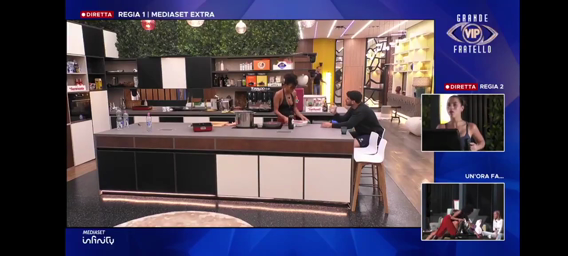 3:18 Housemates Confirm Secret Kisses and Tease the House Spy
 2:09 Jack, Friendship and Feelings: The Audience’s Perspective
 1:19 Giulia and Another Woman Argue Over Accusations of Strategy
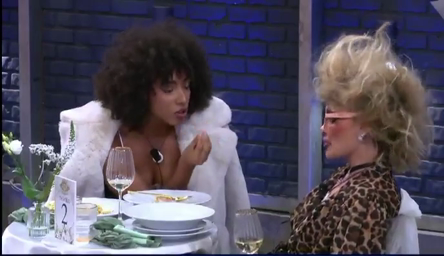 2:01 Giulia and Megan clash over friendship and game strategy
 3:31 A Night Together: Alessandro and His Companion Discuss Memories and Consent
 2:02 Did They Really Kiss? Doubts About the Sounds Heard
 1:13 Fear of Making Mistakes and Self-Criticism
 0:47 Giulia and Meggi Discuss Friendship and Tension
 iPhone app Translate videos on your iPhone Paste a TikTok, Instagram or X link, add subtitles in your language and save the video to Photos.

TranslateMom transcribes and translates videos from X, TikTok, YouTube and Instagram. Paste a link and you get a page like this one, in your language.