
Cómo se valida un bloque de órdenes alcista en trading
2 min Machine translated Money & business
2 min Machine translated Money & business
Estructura. Esa vela bajista es un bloque de órdenes alcista.
Ese precio de apertura es un cambio en el estado de entrega.
El cambio en el estado de entrega ocurre cuando se cruza por primera vez el precio de apertura de esa vela, justo ahí.
Cuando eso ocurre, entonces y solo entonces, nunca antes, nunca en otro momento del futuro, eso valida esa vela bajista como un bloque de órdenes alcista.
Ahora, ¿por qué? ¿Qué hace que eso sea un bloque de órdenes?
El hecho de que tenemos este breaker horario alcista, el hecho de que operamos a la baja hasta él, y luego vemos un cambio en la estructura del mercado, luego volvemos a la vela bajista, la última antes de una subida que presenta un cambio en la estructura del mercado.
No me importa si esta vela empezó aquí, abrió aquí y bajó, o si abrió aquí y bajó, Lo dibujaría justo en el precio de apertura.
Esto se convierte en un bloque de órdenes alcista en cuanto esa vela lo cruce, el precio de apertura.
Ese es el cambio en el estado de la entrega.
En cuanto ocurra, este mínimo no debería vulnerarse.
Así que ahora puedes empezar a buscar matrices PD alcistas que estén en descuento.
Bueno, ahora todo está en descuento porque estamos muy abajo.
Pero aquí mismo tenemos una vela bajista, así que podemos usar ese precio de apertura, extenderlo a cualquier cosa que haya ahí, comprar esto, en cualquier punto de esta zona, comprar, comprar eso, puedes comprar eso con un stop loss justo por debajo.
Pero fíjate más de cerca. Ahora estamos observando ese rango de precios desde este máximo de aquí arriba, hasta ese mínimo.
Confiamos en que ese mínimo no se vulnerará.
¿Por qué? Porque esta vela se cruzó justo ahí.
Ahora, ¿qué pasa si, para hacer de abogado del diablo, qué pasa si rompe ese mínimo?
Bien, entonces tienes que estudiar constantemente la acción del precio y esperar esos mismos casos en los que vemos un cambio en la estructura del mercado al alza, y la última vela bajista marcará el precio de apertura, y si hay una vela que supera ese nivel,
eso valida la vela bajista como un bloque de órdenes alcista.
Esta es solo una forma de mi bloque de órdenes alcista.
Así que aquí tenemos los rangos. El setenta y cinco por ciento del rango es un gradiente, el cincuenta por ciento y luego el veinticinco por ciento.
Quiero que observes cómo cuando el precio se acerca mucho al veinticinco por ciento de ese rango, de nuevo, el rango va desde el máximo hasta ese mínimo, Confiamos en que quiera subir ahora porque tenemos un cambio en el estado de la entrega.
Cuando esa vela empiece a moverse por encima de ese precio de apertura, ya lo tenemos.
Está en su sitio. Tenemos un cambio en la estructura del mercado.
Todo está en verde para subir. Mira—
End of transcript · 492 words · machine translated
Structure. That down closed candle is a bullish order block.
That opening price is a change in the state of delivery.
The change in the state of delivery is when that candlestick's opening price is crossed right there for the first time.
When that happens, then and only then, never before, never another time in the future, that validates this down closed candle as a bullish order block.
Now, why? What makes that an order block?
The fact that we have this bullish hourly breaker, the fact that we traded down into it, and then we see a shift in market structure, then we go back to the down closed candle, the last one prior to a run higher that has a shift in market structure there.
I don't care if this candle started here, it opened here and went down, or if it opened here and went down, I would draw it right on the opening price.
This becomes a bullish order block as soon as that candle crosses it, the opening price.
That's the change in the state of delivery.
Soon as that occurs, this low should not be violated.
So you can now start looking for bullish PD arrays that are in discount.
Well, everything's in a discount now 'cause we're so far down.
But we have a down closed candle right here, so we can use that opening price, extend it for anything in there, buying this, anywhere in this area here, buying, buying that, you, you can buy that with a stop loss right below there.
But look closer. We are now looking at that price range from this high up here all the way down to that low.
We trust that that low will not be violated.
Why? Because this candlestick was crossed right there.
Now, what happens, let's play devil's advocate, what happens if it breaks that low?
Okay, then you have to continuously study price action and wait for that same instances where we see a shift in market structure to the upside, and the last down closed candle will mark the opening price, and if there's a candle that goes above it,
that validates the down closed candle as a bullish order block.
This is only one form of my bullish order block.
So we have the ranges here. Seventy-five percent of the range is a gradient, fifty percent, and then twenty-five percent.
So I want you to notice how as price works very close to the twenty-five percent of that range, again, the range is the high to that low, we are trusting that it wants to go higher now because we have a change in the state of delivery.
When that candle starts moving above that opening price, now we have it.
It's in place. We have a shift in market structure.
All lights are green for going higher. Look-
 9:58 Cómo ganar más de 5.000 dólares al mes con contenido evergreen en YouTube
 1:55 Trading en la semana de nóminas no agrícolas: de lunes a miércoles
 3:17 Venta urgente de activos hipotecarios y bonificaciones para operadores
 1:10 Ice-Nine y la teoría de un congelamiento financiero global
 1:08 Dueño de un fondo de inversión advierte de un desplome inminente
 0:10 El dinero es una invención: papel para evitar la violencia
 1:54 Cómo usar el perfil de volumen y el POC para entrar en operaciones
 5:05 Resumen de trading en Londres: barridos de liquidez y entrada en largo
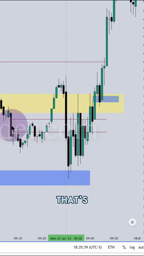 1:37 Brecha de valor razonable como soporte: escenario alcista hacia 4.012
 1:05 Crisis de los puertos de Rostov, Taganrog y Azov
 4:47 Candidato musulmán al Senado rechaza a los Hermanos Musulmanes y defiende la Constitución
 9:49 Racismo, educación israelí y preparación militar: un debate
 iPhone app Translate videos on your iPhone Paste a TikTok, Instagram or X link, add subtitles in your language and save the video to Photos.

TranslateMom transcribes and translates videos from X, TikTok, YouTube and Instagram. Paste a link and you get a page like this one, in your language.