
Debate sobre el Corán, los Evangelios y la divinidad de Jesús
3 min Machine translated Faith
3 min Machine translated Faith
El Corán no es la palabra de Mahoma. Es la palabra de Dios.
Pero Mahoma lo escribió. Mahoma no lo escribió.
¿Quién lo escribió? Mahoma era analfabeto.
No sabía escribir ni leer. ¿Quién lo escribió?
Era la palabra de Dios. Es la palabra divina.
¿Lo ves? Es siempre lo mismo. Son muy consecuentes. Lo aprecio.
¿De acuerdo? Es la palabra de Dios, y les apasiona mucho.
Respeto esa pasión. No hay manera de mantener una conversación racional con eso.
Del mismo modo, si me preguntas: «¿Por qué crees que la Biblia es la palabra de Dios?»
Y te miro a los ojos y te digo: «Porque es la palabra de Dios», el discurso racional se ha derrumbado.
Mi segundo problema filosófico con el islam es que mis amigos musulmanes me dicen que Mateo, Marcos, Lucas y Juan son inexactos.
Son evangelios adulterados. De hecho, dirán: que los cambiaron.
Claro. Exactamente. Así que, obviamente, la siguiente pregunta es: «Bueno, ¿dónde están los que no fueron adulterados?»
Por desgracia, mis amigos musulmanes no pueden presentar los que no fueron adulterados.
En cambio, lo que mis amigos musulmanes me piden que crea es que una revelación que recibió Mahoma quinientos años después de Jesús, lo que obviamente significa que Mahoma nunca conoció a Jesús, que ese libro, el Corán, es una versión más fiel del Jesús histórico que los evangelios escritos por testigos presenciales.
Bueno, lo siento. Cuando quiero estudiar a un personaje histórico, no voy corriendo a un tipo que vivió quinientos años después.
Quiero acudir a los testigos presenciales.
No voy a confiar en Martin Scorsese como mi fuente principal de información sobre Jesús.
Martin Scorsese nunca conoció a Jesús, tampoco Cecil B. DeMille.
Volveré a Mateo, Marcos, Lucas y Juan que vivieron en el siglo primero para que sean mi fuente principal de información sobre Jesús.
Mi tercer problema filosófico con el islam son mis amigos musulmanes que respetan mucho a Jesús.
De hecho, mis amigos musulmanes respetan a Jesús mucho más que el estadounidense promedio.
Mis amigos musulmanes creen que Jesús nació de una virgen, que ascendió al cielo, y que volverá una segunda vez.
Bueno, eso es mucho más de lo que cree el estadounidense promedio sobre Jesús.
Pero mis amigos musulmanes dicen que, aunque Jesús dice la verdad absoluta, Mahoma también dice la verdad absoluta, y el problema es que se contradicen en ciertos puntos.
No puedes afirmar que A sea absolutamente verdadera y luego B sería absolutamente verdadero si A y B se contradicen, porque eso no hace ada más que permitir que C aparezca afirmando que C es la verdad absoluta a pesar del hecho de que C contradice tanto a B como a A. No puede haber una verdad absoluta contradicha por otra verdad absoluta.
¿Alguna vez afirmó Jesús ser Dios? Sí, sin duda. ¿Cuándo, en la Biblia?
En Juan 8: 58, Jesús dice: «Antes de que Abraham naciera, yo soy».
En Juan 10:30, Jesús dice: «El Padre y yo somos uno».
En Juan 14: 9, Jesús dice: «Quien me ha visto a mí ha visto al Padre».
Está claro que Jesús afirmó ser Dios. Entonces era humano y Dios al mismo tiempo, ¿es eso lo que— Eso es lo que afirmó.
Quizá estaba loco, pero eso es lo que afirmó.
No estaba loco. Era un profeta. Bueno, afirmó ser Dios en forma humana, lo que significa que es más que un profeta.
Es Dios en forma humana. Eso fue lo que afirmó.
Pero Dios es algo que es superior a la forma humana, así que no tiene sentido que un dios sea humano porque no necesariamente estaría por encima de los demás.
Mi primer punto es que Dios no es algo. La Biblia di- dice que Dios es alguien, un ser personal, y es totalmente posible que un ser personal, como creador…
Bueno, él creó a todos los seres humanos.
End of transcript · 648 words · machine translated
The Quran is not the word of Muhammad. It is the word of God.
But it was written by Muhammad. It was not written by Muhammad.
Who wrote it? Muhammad was illiterate. He didn't know how to write or read. Who wrote it?
It was the word of God. It is divine word.
You see? It's every single time. They're very consistent. I appreciate it.
All right? It is the word of God, and they're very passionate about it.
I respect your passion. There's no way you can rationally have a conversation with that.
The same way, if you ask me, "Why do you believe the Bible's the word of God?"
And I look you in the face and I say, "Because it's the word of God," rational discourse has broken down.
My second philosophical problem with Islam is my Muslim friends inform me Matthew, Mark, Luke, and John are inaccurate.
They're perverted gospels. In fact, it's been changed, they will say.
Right. Exactly. So then obviously the next question is, "Well, where are the unperverted ones?"
Unfortunately, my Muslim friends cannot produce the unperverted ones.
Instead, what my Muslim friends ask me to believe is that a revelation that Muhammad had 500 years after Jesus, which obviously means Muhammad never met Jesus, that that book, the Quran, is a more accurate presentation of the historical Jesus than the gospels written by the eyewitnesses.
Well, I'm sorry. Whenever I want to study an historical person, I don't go running to a guy who lived 500 years after the fact.
I want to go to the eyewitnesses. I'm not gonna trust Martin Scorsese to be my primary source of information about Jesus.
Martin Scorsese never met Jesus, neither did Cecil B. DeMille.
I'm gonna go back to Matthew, Mark, Luke, and John who lived in the first century to be my primary source of information about Jesus.
My third philosophical problem with Islam is my Muslim friends have great respect for Jesus.
In fact, my Muslim friends respect Jesus far more than the typical American does.
My Muslim friends believe that Jesus was born of a virgin, that he ascended to heaven, and that he's coming back a second time.
Well, that's far more than the typical American believes about Jesus.
But my Muslim friends say that although Jesus speaks the absolute truth, Muhammad also speaks absolute truth, and the problem is they contradict each other on certain points.
You cannot have A be absolute true and then B be absolute true if A and B contradict each other, 'cause that does nothing then but to allow for C to come along claiming C is absolute truth in spite of the fact that C contradicts both B and A. You cannot have an absolute truth contradicted by another absolute truth.
Did Jesus ever claim to be God? Yeah, he sure did. When, in the Bible?
John 8:58, Jesus says, "Before Abraham was born, I am."
In John 10:30, Jesus says, "I and the Father are one."
In John 14:9, Jesus says, "He who has seen me has seen the Father."
Clearly, Jesus claimed to be God. So he was both human and God at the same time is what- That's what he claimed.
Maybe he was a lunatic, but that's what he claimed.
He wasn't a lunatic. He was a prophet. Well, he claimed to be God in human form, which means he's more than a prophet.
He's God in human form. That's what he claimed.
But God is something that's superior to human form, so it doesn't make sense for a god to be human because he wouldn't necessarily be higher than the others.
My first point is God is not something. The Bible ins- says that God is someone, a personal being, and it's totally possible for a personal being as the creator- Well, he made all of the humans
 4:59 Prepararse para el cambio con fe y provisiones
 3:00 Debate entre musulmán y cristiano sobre la Trinidad y el monoteísmo
 1:46 El sufrimiento infantil y la idea de derrotar a Dios
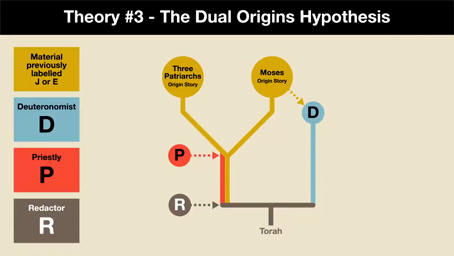 2:20 Cómo se unieron dos mitos de origen israelitas en la Torá
 0:52 Profecías sobre las naciones y el genocidio cultural
 2:05 El número tres en la Biblia y la obra consumada de Cristo
 0:46 Islam y cristianismo: la teoría de un conflicto para proteger a los judíos
 0:48 Un orador predice un futuro musulmán para Europa, Estados Unidos y Rusia
 1:14 Por qué los elegidos enfrentan dificultades en el trabajo y el amor
 1:11 Una médica habla del Corán, la sharía y la huida de su familia de Irán
 0:50 Compartir historias y superar las divisiones religiosas
 1:13 Crítica a una profecía del Zóhar sobre la caída de las naciones occidentales
 iPhone app Translate videos on your iPhone Paste a TikTok, Instagram or X link, add subtitles in your language and save the video to Photos.

TranslateMom transcribes and translates videos from X, TikTok, YouTube and Instagram. Paste a link and you get a page like this one, in your language.