
Afirmaciones sobre la microbiota intestinal, los somátidos y el diagnóstico de cáncer
5 min Machine translated Health
¿De dónde vienen estos microorganismos que hay en tu intestino?
¿Cómo se obtiene todo este microbioma? Por cierto, dicen, ya sabes, que si tomas antibióticos, destruyen tu microbioma.
Entonces, ¿de dónde consigues otros nuevos?
Dicen: «Ah, bueno, toma… ve a comprar probióticos».
¿Ah, de una vaca? ¿Debería obtener mis bacterias de una vaca?
¿De dónde saca bacterias la vaca cuando come hierba?
¿Por qué tengo que obtenerlas de… la vaca?
¿Por qué no puedo obtenerlas de forma natural? De la hierba.
Si le preguntas, si le preguntas a la, eh, profesión médica: «¿De dónde obtienen su microbioma?»
Dicen: «Bueno, cuando nace el bebé, pasa por el canal de parto de la madre.
De ahí lo obtiene». De acuerdo. Entonces, ¿qué pasa si el bebé nace por cesárea y no pasa por el canal de parto?
Bueno, entonces lo obtiene al amamantarse.
Bueno, entonces, ¿y si tienes un bebé que nació por cesárea y por alguna razón no puede mamar?
No lo sabemos. Bueno, la respuesta es que producimos estas bacterias en el cuerpo.
Producimos las bacterias. Recuerda que te dije que Beauchamp, contemporáneo de Louis Pasteur, quien formuló la teoría microbiana, dijo que eran… que eran microzimas, estos cuerpecitos que podían convertirse en cualquier tipo de bacteria que necesitaras para limpiar el desorden en tu cuerpo.
Ajá. Bueno, eso fue hace 150 años. En los últimos 50 años, hubo un hombre en Canadá llamado Gaston Naessens que también desarrolló un microscopio muy potente, eh, y podía ver estas cosas, y llamó somátides a esas mismas cosas.
Dice: «Mientras el cuerpo esté sano, las somátides pasan por un ciclo de tres.
Pero si el cuerpo se vuelve poco saludable por tu forma de vivir, de comer y por el estrés, entonces el cuerpo producirá las bacterias o levaduras que necesitas para limpiar el desastre.»
Pueden producir cocos, que son un tipo de bacteria, o bacilos, que son otra forma de bacteria, o pueden producir micelios, que son formas de levadura.
Y eso es para limpiar el desastre, igual que los carroñeros de la Tierra.
Bueno, cuando, eh, cuando estaba… a principios de los noventa, después de aprender muchísimo sobre lo que estaba pasando en el mundo, eh, cuando hablaba del tema del sida en San Francisco, eh, tenía un programa de radio llamado Truth Serum,
y entrevistaba a terapeutas alternativos.
Así que me puse en contacto con el Dr. Naessens y le pregunté si podía ir a visitarlo, y fui. Fui a Canadá.
Por cierto, había sido, eh, atacado brutalmente por la profesión médica por sus ideas.
¿De acuerdo? Así que pasé una tarde con él, los dos solos en su laboratorio, y miré por su microscopio, y me mostró estos somátides.
Entonces me dijo: «¿Quieres que mire tu sangre?». Y le dije: «Claro».
Me pinchó el dedo, me sacó sangre, y la puso en un portaobjetos, y lo puso bajo el microscopio.
Esto fue en 1992. Bien. En 1992. Miró por el microscopio, y guardó silencio, y fue como si se volviera incómodo, el silencio duró tanto.
Y le dije: «¿Hay algún problema?» Se volvió y me miró, y dijo: «Tienes cáncer».
Así que él fue… Sí, fue quien te lo dijo.
Y, y yo, yo me quedé en shock. Me sentía bien.
No tenía ningún problema, y yo, yo simplemente lo descarté.
Pensé: «No sabe de qué está hablando». ¿Ven?
Y me lo mostró y, y me dijo: «Los somátides han cambiado de formato, y están pasando a otro formato para limpiar el desastre en tu cuerpo».
Dieciocho meses después, me diagnosticaron cáncer mediante una biopsia.
Dieciocho meses después. Él diagnosticó mi cáncer 18 meses antes incluso de que apareciera un pequeño tumor en mi pecho.
Dieciocho meses antes. Es bastante increíble. ¿De acuerdo?
Así que lo que muestra es que formamos bacterias y virus.
Formamos nuestro propio microbioma. Por eso, aunque un bebé no nazca por el canal de parto, nazca por cesárea y no, no, eh, ah, no mame.
Esas son cosas buenas, nacer de forma natural y mamar, pero la, pero la persona aún puede formar su propio microbioma.
Porque producimos las bacterias.
End of transcript · 687 words · machine translated
Where do these microorganisms in your intestine come from?
How do you get this whole microbiome? By the way, they say, you know, if you take antibiotics, that destroys your microbiome.
So then where do you get new ones? They say, "Oh, well, get-- go get probiotics."
Oh, from a cow? I should get my bacteria from a cow?
Where does the cow get his bacteria when the cow eats grass?
Why do I have to get the-- from the cow?
Why can't I just get it the natural way? From the grass.
If you ask, if you ask the, um, medical profession, "Where do you get your microbiome?"
They say, "Well, when the baby is born, it comes through the mother's birth canal.
That's where it gets it." Okay. Then what if a baby's born by C-section and doesn't go through the birth canal?
Well, then they get it from nursing. Well, then what if you have a baby that was born by C-section and for some reason is unable to nurse?
Well, we don't know. Well, the answer is that we make these bacteria in our body.
We make the bacteria. Remember I told you that Beauchamp, who is the contemporary of Louis Pasteur of the germ theory, said that there-- these were microzyma, these little bodies that could become whatever kind of bacteria you needed to clean up the mess in your body.
Mm-hmm. Well, that was 150 years ago. Within the last 50 years, there was a man in Canada named Gaston Naessens who also developed a very, uh, strong microscope, and he could see these things, and he called the same things somatids.
He says, "As long as the body is healthy, the somatids go through a cycle of three.
But if the body becomes unhealthy because of the way you're living, eating, and having stress, then the body will produce the bacteria or yeast that you need to clean up the mess."
They can produce a cocci, which is one kind of bacteria, or rods, which is a different form of bacteria, or they can produce mycelia, which are yeast forms.
And that's to clean up the mess, just like the scavengers on the Earth.
Well, when, uh, when I was-- back in the early 90s, after I learned a whole lot about what was going on in the world, uh, when I was talking about the AIDS issue in San Francisco, um, I had a radio show called Truth Serum,
and I was interviewing alternative practitioners.
And so I contacted Dr. Naessens and asked if I could come and visit him, and I did. I went up to Canada.
By the way, he had been, uh, attacked viciously by the medical profession because of his views.
All right? So I spent an afternoon with him, just the two of us in his laboratory, and I looked through his microscope, and he was showing me these somatids.
So then he said, "Do you want me to look at your blood?" And I said, "Sure."
So he pricked my finger, took my blood, and he put it on a slide, and he put it under the microscope.
Now, this was in 1992. Okay. 1992. And he looked under the microscope, and he was silent, and it was kind of getting uncomfortable, the silence was so long.
And I said to him, "Is there a problem?"
And he turned and looked at me, and he said, "You have cancer."
So he was-- Yeah, he was the one that told you that.
And, and I, I was shocked. I mean, I felt fine.
I had no problems, and I, I just dismissed it.
I thought, "He doesn't know what he's talking about."
You see? And he showed me, and, and he said, "The somatids have changed format, and they're going into another format to clean up the mess in your body."
18 months later, I was diagnosed with cancer by biopsy.
18 months later. He diagnosed my cancer 18 months even before any small tumor appeared on my chest.
18 months before. That's pretty amazing. Okay?
So what he shows is that we form bacteria and viruses.
We form our own microbiome. That's why even if a baby doesn't come through the birth canal, it's born C-section and doesn't, doesn't, um, uh, nurse.
Now, those are all good things, to be born naturally and to nurse, but the, but the person can still form their own microbiome because we make the bacteria.
 1:33 IA para la detección temprana del cáncer y vacunas de ARNm personalizadas
 4:06 Afirmaciones sobre el ADN en las vacunas y las enfermedades autoinmunes
 2:51 Sarampión y remisión del cáncer: el caso de un niño en 1971
 1:26 Afirmaciones falsas sobre el herpes, la falta de colágeno y el contagio
 1:44 Freidoras de aire y PFAS: dudas sobre el recubrimiento antiadherente
 2:44 Ejercicios oculares y afirmaciones sobre la visión y el uso de pantallas
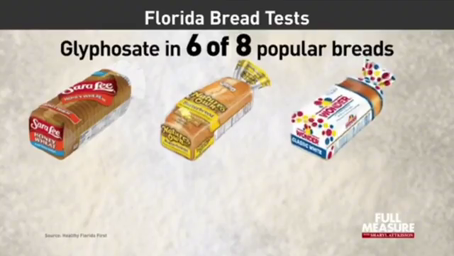 2:00 Glifosato en panes populares: pruebas de Florida y debate sobre su seguridad
 1:21 TDAH, depresión bipolar y opciones de medicación
 2:08 Tratamiento del cáncer y hemogramas: ¿se pasan por alto los linfocitos
 1:28 Por qué persiste la tos después de un resfriado o una gripe
 1:39 Hulda Clark y tres hierbas: afirmaciones sobre el tratamiento de parásitos
 0:35 Análisis de los ingredientes y el procesamiento de las galletas Oreo
 iPhone app Translate videos on your iPhone Paste a TikTok, Instagram or X link, add subtitles in your language and save the video to Photos.

TranslateMom transcribes and translates videos from X, TikTok, YouTube and Instagram. Paste a link and you get a page like this one, in your language.