
Marco Rubio sulla politica estera e gli interessi nazionali degli USA
5 min Machine translated About United States Politics
5 min Machine translated About United States Politics
E ora sono al 3° anno di legge all'Univ. del Texas.
In Grecia… Abbiamo battuto il Texas, la Florida, ok?
Ok? Sono laureato in Florida. Abbiamo perso anche contro altre squadre...
Mi dispiace. Prego, continua. Non è colpa tua.
Non… non sei in squadra, quindi non... Di recente, in Grecia, hai parlato dell'equilibrio tra la sovranità interna della nostra nazione e le esigenze della sicurezza internazionale in quanto leader del mondo occidentale.
Come può l'amministrazione affrontare adeguatamente entrambe queste esigenze senza perdere il sostegno dell'elettorato americano, che ha chiaramente espresso una maggiore attenzione alle questioni interne?
Sì, sono interconnesse, ma saranno sempre...
Senti, comincio da questo. Penso che il compito del governo americano e dei suoi leader è lavorare per gli americani. Voglio dire, sembra un po' strano, ma in politica estera abbiamo perso la via.
Ma l'abbiamo persa anche in ambito economico.
Sono opinioni personali, ma le ho sostenute per iscritto, le ho sostenute nei discorsi.
Credo che a un certo punto l'abbiamo scordato, come alla fine della Guerra fredda, ehm, tutti pensavano: «D'accordo, ora il mondo intero diventerà una democrazia liberista».
Ma non è andata affatto così. Non sarebbe mai potuta andare così.
Secondo, abbiamo riposto questa fiducia nei mercati, nei mercati globali, dicendo in sostanza: «Va bene se tanti posti di lavoro lasciano il nostro Paese e si trasferiscono altrove. Lì costerà meno produrre, e quindi qui i prezzi saranno più bassi».
È vero che i prezzi saranno più bassi qui, ma hai eliminato tanti posti di lavoro, hai devastato intere comunità, e ora ci sono tante persone che non sentono di poter andare avanti.
È successo perché abbiamo perso le priorità.
Abbiamo scordato il compito… Non siamo contro il mondo.
Non dobbiamo— il nostro compito non è danneggiare il mondo, ma il primo obiettivo deve sempre essere ciò che è nell'interesse nazionale degli Stati Uniti, e non dovremmo sentirci in colpa per questo, okay?
La prossima settimana volerò col presidente, e voleremo, per esempio, alle Filippine per il vertice ASEAN, e poi voleremo in Cina per la conferenza dell'APEC.
Un giornalista mi ha chiesto, beh, qualcosa su un disaccordo che abbiamo con la Cina, Dissi: «Il governo cinese fa il bene della Cina, e non se ne scusa».
Solo il nostro Paese pare averlo scordato.
Sono dalla parte dell'America su ogni questione.
E, e il fatto che io debba persino,
che debba dirlo è sconcertante. Che io debba dirlo è sconcertante.
Ricordo a tutti che sono il Segretario di Stato degli Stati Uniti, non il...
C'è stata una grande indignazione, sapete, io— noi abbiamo, ehm, abbiamo queste bandiere al Dipartimento di Stato all'ingresso, con bandiere di tanti Paesi, e io—sentite, non sono entrato con una sorta di crociata per rimuovere le bandiere.
Sono rimaste lì un anno e mezzo, ma per i 250 anni, le abbiamo sostituite tutte con bandiere americane, okay?
Li abbiamo resi tutti bandiere americane, okay?
Li abbiamo lasciati lì dopo 250, tutti impazziti, «Oddio, lasciano il mondo.»
Dissi: «No, non siamo l'ONU. Prendete la bandiera. L'ONU può tenersi tutte le bandiere.»
È il Dipartimento di Stato degli Stati Uniti.
E quindi,
il mio punto di vista è che ciò che dobbiamo fare…
credo che la tua domanda mirasse più a perché gli Stati Uniti agiscono nel mondo.
Beh, dobbiamo essere coinvolti nelle questioni mondiali perché, coinvolti nel mondo o no, il mondo sarà coinvolto con noi. Ci sono cose che accadono in altri paesi e in altri luoghi che hanno un impatto sulla sicurezza nazionale degli USA,
ma anche sui nostri interessi economici.
Possiamo creare i migliori prodotti, ma se non abbiamo mercati aperti a noi, per esempio, questo sarà un problema.
Possiamo… se c’è instabilità e insicurezza nel nostro emisfero, prima o poi dovremo affrontare pressioni migratorie, perché questa amministrazione ha deciso di proteggere i nostri confini, ma la prossima potrebbe non farlo.
E quindi, direi che l’America è più sicura e sta meglio se è circondata da Paesi stabili, sicuri e prosperi.
Ma, in definitiva…
E dovremmo agire per interesse nazionale, ma alla fine, su qualsiasi argomento, la domanda più importante che dobbiamo porci sempre è: qual è il miglior interesse degli Stati Uniti?
E avevamo… non solo ce ne siamo dimenticati, l'abbiamo persino abbandonata per troppo tempo.
E credo che questa amministrazione stia ritornando a quell'idea, ed è così che cerchiamo di perseguirla.
Questo non vuol dire che non vediamo altri Paesi, né che non cooperiamo con altri Paesi, perché spesso, quando i nostri interessi nazionali coincidono con quelli di un altro Paese, è così che si costruiscono alleanze.
Quando i nostri interessi nazionali sono in conflitto con quelli di altri Paesi, è qui che interviene la diplomazia, per capire come conciliare i due.
Ma alla fine, se non riusciamo a conciliarli, so da che parte dobbiamo stare, cioè dalla parte del popolo, del Paese, dell'economia e della sicurezza.
E, e credo che ogni nazione si governi allo stesso modo.
L'abbiamo scordato e lo ripristiniamo.
End of transcript · 827 words · machine translated
and I'm currently a 3L at the University of Texas.
Recently in Greece- We beat Texas this year, Florida, okay?
Okay? I am a Florida grad as well. We, we, we also lost to a couple other than...
I'm sorry. Go ahead. It's not your fault.
You don't-- you're not on the team, so I'm not...
Recently in Greece, you spoke on the balance between our nation's domestic sovereignty and our international security demands as a leader of the Western world.
How can the administration adequately address both of these needs without forfeiting the support of the American electorate, which has clearly expressed a focus on domestic concerns?
Yeah, they're interrelated, but they're always going to be...
Look, let me start with this. I think the job of America's government and its leaders is to work for Americans. I mean, that sounds kind of strange, but in the realm of foreign policy, we've almost lost it.
But we've also lost it in the realm of economics.
These are my personal views, but I've argued them in writing, I've argued them in speeches.
I think there came a point in which we forgot, like the end of the Cold War, um, everybody thought, "Okay, the whole world is now going to become free enterprise democracies."
And it just didn't work out that way. It was never going to work out that way.
The second is we placed this confidence in the markets, in global markets, and basically saying, "It's okay if a bunch of jobs leave our country and relocate somewhere else. They'll make it cheaper over there, which means prices will be cheaper over here."
Which is true, the prices will be cheaper over here, but you just wiped out a bunch of jobs, gutted a bunch of communities, and now you have a bunch of people that don't feel like they can move forward.
All of this happened because we lost our focus.
We forgot that our job is... We're not against the world.
We're not to-- our job is not to harm the world, but our number one objective must always be what's in the national interest of the United States, and we shouldn't feel guilty about it, okay?
Next week, I will get on an airplane with the president, and we will fly, for example, to the Philippines for the ASEAN conference, and then we will fly to China for the APEC conference.
And I was asked by a reporter the other day, well, something about a disagreement we have with China, and I said, "Look, the Chinese government is in favor of what's good for China, and they don't apologize for it."
We are the only country in the world that seems to have forgotten that.
I'm on the American side of every issue.
And, and that I even, that I even have to say that is stunning.
But think about it, the fact that I even have to say that is stunning.
I always remind people, I am the Secretary of State of the United States, not the...
There was a huge outrage, you know, I-- we did, uh, we have these flags at the State Department when you walk in, and we had all these flags of all these different countries, and I-- look, I didn't go in with like a crusade to remove the flags.
We left it there for a year and a half, but then for America 250, we made them all American flags, okay?
And then we left them there after 250, and people are going crazy, "Oh my God, they're abandoning the world."
I said, "No, we're not the United Nations.
Take the flag. The United Nations can have all those flags."
It's the State Department of the United States.
And so,
so the way I view it is that what, what we need to do on...
I, I think your question was probably geared towards more why is the United States involved in things around the world?
Well, we have to be involved in things around the world because whether we're involved in the world or not, the world will be involved with us. There are things happening in other countries and in other places that do have an impact on the national security of the United States,
but-- and our economic interests as well.
We can make the greatest products in the world, but if we don't have markets that are open to us, as an example, that's going to be a problem.
We can-- if, if, if there's instability and insecurity in our hemisphere, we will eventually have migratory pressures, because this administration has made the decision that it's going to protect our borders, but the next administration may not.
And so, I would argue that America is safer and better off if we are surrounded by countries that are stable, safe, and prosperous.
But ultimately...
And we should do things in our policy because it's in our national interest, but in the end, on any topic, the number one question we have to always ask ourselves is, what is in the best interest of the United States?
And we had-- not only have we forgotten it, we've actually abandoned it for far too long.
And I think this administration is re- returning to that idea, and that's how we try to pursue it.
Again, that doesn't mean we don't meet with other countries, and it doesn't mean we don't work with other countries, because oftentimes when our national interests align with the interest of another country, that's where you build alliances.
When your national interests are in conflict with other countries, that's where the work of diplomacy happens, to see how you can balance the two.
But in the end, if we can't balance it, I know whose side we need to be on, and that is on the side of our people, our country, our economy, and our security.
And, and I think that every nation governs itself that way.
We forgot it, and we're restoring it.
 2:32 Cry More: un rap politico contro Trump su Iran e dossier Epstein
 1:33 Dominio totale e tirannia: terrore, ideologia e crisi della verità
 0:44 Il discorso di Greta Thunberg e i Fridays for Future a Berlino
 0:36 Volo da Cancún a Phoenix: comunicazioni aeree e accuse al governo
 1:08 Cori per la Palestina e critiche a Israele e Jill Biden
 1:30 Interventi della CIA in Nicaragua e nel mondo: accuse di destabilizzazione
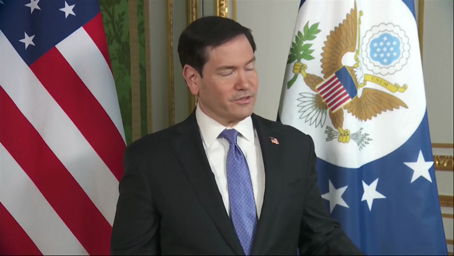 1:05 Un funzionario USA parla di Cina e regolamentazione dell’IA
 1:09 Arretrato dei tribunali e accuse di disparità nelle linee guida sulle pene
 0:44 Scontro sul sostegno a Israele e Van Drew
 1:33 Un movimento serbo chiede di fermare il commercio di armi con Israele
 1:54 Il trattamento di Trump e della sua famiglia sotto accusa
 0:29 L'Europa sostiene l'Ucraina nei colloqui di pace ad Abu Dhabi
 iPhone app Translate videos on your iPhone Paste a TikTok, Instagram or X link, add subtitles in your language and save the video to Photos.

TranslateMom transcribes and translates videos from X, TikTok, YouTube and Instagram. Paste a link and you get a page like this one, in your language.