
Hipótese da simulação: cinco condições para a realidade ser simulada
2 min Machine translated Tech & science
2 min Machine translated Tech & science
Há uma chance real de você não ser real se apenas cinco coisas forem verdadeiras.
As chances de você ser real são de uma em um bilhão.
Veja como funcionaria. Nos videogames antigos, o mundo atrás de você não existe até você se virar.
Um mundo falso poderia fazer o mesmo. Galáxias distantes? Um cenário pintado.
O interior de uma rocha? Vazio até você abri-la.
Não precisa renderizar um universo inteiro.
Só precisa fazer você acreditar nisso. Número um: um computador pode criar uma mente.
Se uma mente é apenas o que um cérebro faz, um computador potente poderia copiá-la.
Mas seu cérebro faz cerca de 100 quadrilhões de cálculos por segundo.
Faça isso por todo ser humano que já viveu, e você chega a um número com 37 zeros.
Parece impossível, a menos que o número dois seja verdade.
Número dois: a tecnologia continua melhorando cada vez mais.
Há 80 anos, um computador ocupava uma sala inteira.
Agora, cabe no seu bolso. Então, um dia, alguém poderia envolver uma estrela inteira com computadores, um cérebro de esfera de Dyson com energia inesgotável.
Essa máquina poderia executar toda a história da humanidade milhares de vezes a cada segundo.
Número três: não nos extinguimos primeiro, mas olhamos para o céu e não vemos alienígenas.
Talvez toda civilização esbarre num limite, guerras em massa, um asteroide, uma doença, e nunca consiga sobreviver.
Então, ninguém resta para construir o computador.
Número quatro: alguém realmente quer simular uma.
Para um ser tão poderoso, somos peixinhos dourados.
Nunca entenderíamos por que iriam querer executá-la.
Tente explicar um videogame a um peixinho dourado.
Aposto que não consegue. Mas o número cinco é o que pega.
Número cinco: se existem simulações, não haverá só uma.
Por que executar uma se você pode executar um bilhão, cada uma repleta de pessoas que acham que são reais?
Então, para cada mundo real ou universo real, poderia haver um bilhão de mundos falsos.
Agora, escolha qualquer um ao acaso. Quais são as chances de ele ser o real?
Uma em um bilhão, e você não tem como saber em qual está.
Eis a parte assustadora. Já estamos construindo mundos falsos com pessoinhas dentro.
O dia em que criarmos um onde elas se achem reais será quando descobrirmos que talvez também estejamos em um.
End of transcript · 386 words · machine translated
There's a real chance you are not real if just five things are true.
The odds that you're real are one in a billion.
Here's how it would work. In old video games, the world behind you doesn't exist until you turn around.
A fake world could do the same thing. Far away galaxies? A painted backdrop.
The inside of a rock? Empty until you crack it open.
It doesn't need to render a whole universe.
It just needs you to believe it. Number one: a computer can make a mind.
If a mind is just what a brain does, a good enough computer could copy it.
But your brain does about 100 quadrillion calculations every second.
Do that for every human who ever lived, and you get a number with 37 zeros.
Seems impossible, unless number two is true.
Number two: technology keeps getting better and better.
80 years ago, a computer filled a whole room.
Now, it fits in your pocket. So one day, someone could wrap an entire star in computers, a Dyson sphere brain with endless energy capabilities.
That machine could run all of human history thousands of times every single second.
Number three: we don't wipe ourselves out first, but we look at the sky and see no aliens.
Maybe every civilization hits a wall, mass wars, an asteroid, a disease, and never makes it.
Then nobody's left to build the computer.
Number four: somebody actually wants to simulate one.
To a being that powerful, we're goldfish.
We could never understand why they would even want to run it.
Try explaining a video game to a goldfish. I bet you can't.
But number five is the one that gets you.
Number five: if simulations exist, there won't be just one.
Why run one when you can run a billion, each one packed with people who think they're real?
So for every real world or real universe, there could be a billion fake ones.
Now, pick any one at random. The odds they're the real one?
One in a billion, and you have no way to tell which one you are in.
So here's the scary part. We're already building fake worlds with little people inside.
The day we build one where they think they're real is the day we find out we're probably in one too.
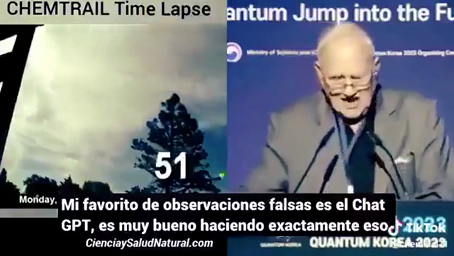 2:21 John Clauser critica o ChatGPT e o IPCC em fala sobre ciência e verdade
 0:42 Jensen, a corrida da IA e a espiã chinesa de vestido vermelho
 2:40 Data center em Ohio e clone de voz por IA: uma história de terapia póstuma
 2:11 Nvidia e o debate sobre a venda de chips de IA para a China
 5:03 Geoengenharia, chemtrails e mudanças climáticas: alegações e preocupações
 1:36 Ciberataque, suspensão de voos e ameaça da IA conhecida como Entidade
 3:54 IA, NVIDIA e vigilância governamental: alegações sobre controle digital
 1:30 Bill Gates fala sobre regulação da IA e ataques a fundos de aposentadoria
 2:19 Alegações sobre a influência de Israel na NVIDIA e na IA
 1:05 Por que uma catástrofe cibernética pode levar à ação
 1:58 Por que o hélio não congela ao esfriar: energia de ponto zero
 1:07 Alegações sobre mundo sintético, 5G, chemtrails e transumanismo
 iPhone app Translate videos on your iPhone Paste a TikTok, Instagram or X link, add subtitles in your language and save the video to Photos.

TranslateMom transcribes and translates videos from X, TikTok, YouTube and Instagram. Paste a link and you get a page like this one, in your language.