
Linfócitos baixos e câncer: linfopenia e sistema imunológico
2 min Machine translated Health
Então, quando você vê essa contagem de ALC em alguém, seja uma pessoa aparentemente saudável ou alguém que você sabe que tem câncer, você pode ver um número, e tenho certeza de que há uma faixa, e se você ficar, digamos, abaixo da faixa aceitável, corre risco,
e isso faria de você um possível candidato ao BioStrike.
Ah, está absolutamente correto. No sentido de que a faixa é, se você ficar abaixo de mil, então a faixa normal fica entre mil e quatro mil.
Se você ficar abaixo de mil… mil, a análise estatística que foi apresentada até agora, hum, de forma notável, em cerca de duzentas a trezentas publicações, é que há uma análise estatística indicando a possibilidade de ter vida mais curta.
Então, esse ALC mais baixo, ou se você cair abaixo de mil, o termo médico para isso é linfopenia.
Então, se você pesquisar linfopenia no Google, Surpreendentemente, havia estudos que iam até a década de 1990, que, se você tem linfopenia no câncer de mama, linfopenia no câncer de pâncreas, linfopenia no câncer de pulmão,
em qualquer câncer que você escolher, sua taxa de sobrevivência é significativamente menor, também do ponto de vista estatístico.
E isso faz muito sentido porque o que o ALC realmente é são seus linfócitos e suas células T. E os linfócitos e as células T são as únicas células que realmente importam para prevenir infecções, prevenir o câncer, tratar o câncer e prevenir metástases.
Então, do meu ponto de vista, isso é muito óbvio, é simples, mas profundo, que descobrimos uma mudança de paradigma em que tratamos o hospedeiro, isto é, o sistema imunológico, em vez da doença.
Na verdade, a doença do câncer é, na verdade, o sintoma.
A causa raiz da doença é o colapso do sistema imunológico.
End of transcript · 299 words · machine translated
So when you see this ALC count on anybody, whether it's a seemingly healthy individual or someone you know has cancer, you could see a number, and I'm, I'm sure there's just a range, and if you fall, what, below the acceptable range, you're at risk,
and that would be a potential candidate for this BioStrike.
Uh, incredibly correct. In the sense that the range is, if you go below 1,000, so the normal range is between 1,000 to 4,000.
If you go below the thou- 1,000, the statistical analysis that's been shown now, um, remarkably in about 200 to 300 publications, is that you have a statistical analysis opportunity to actually have a shortened lifespan.
So this lower ALC, or if you drop below 1,000, the medical term for that is lymphopenia.
So if you were to Google lymphopenia, remarkably, you'd see papers going all the way to 1990s, that if you have lymphopenia for breast cancer, lymphopenia for pancreas cancer, lymphopenia for lung cancer, any cancers you want to choose,
your survival rate is significantly and statistically shortened.
And that makes so much sense because what ALC is actually is your lymphocytes and your T-cells.
And the lymphocytes and T-cells are the only cells that really matter to prevent infection, to prevent cancer, to treat the cancer, to prevent metastasis.
So it is so obvious from my perspective, it's simple and yet profound, that we've unlocked a paradigm change where we treat the host, i.e. the immune system, rather than the disease.
In fact, the disease of cancer is really the symptom.
The root cause of the disease is the collapse of the immune system.
 2:55 Alegações de contaminação por DNA nas vacinas da Pfizer e Moderna
 3:39 Como mudaram as diretrizes de pressão arterial e o uso de medicamentos
 2:08 Hemograma no tratamento do câncer: por que olhar para os linfócitos
 1:39 Hilda Clark e a alegação de cura de parasitas com três plantas
 1:15 Médico diz ter sido demitido por opinião sobre imunidade natural e vacina
 1:00 Água em Garrafas de Cobre: Alegações sobre Saúde
 0:57 Prevenção do câncer e saúde mitocondrial: 6 estratégias sugeridas
 3:40 Bill Gates sobre pandemias, segurança das vacinas e crescimento populacional
 6:55 Indústria farmacêutica e FDA: alegações de ocultismo e corrupção
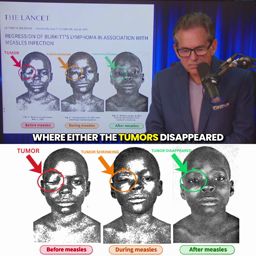 2:51 Sarampo e remissão do câncer: um caso relatado em 1971
 2:46 Vacinas contra tétano, pólio e tuberculose: discussão sobre riscos e benefícios
 1:49 Preparação para Pandemias, Vacinas de RNA e Crescimento Populacional
 iPhone app Translate videos on your iPhone Paste a TikTok, Instagram or X link, add subtitles in your language and save the video to Photos.

TranslateMom transcribes and translates videos from X, TikTok, YouTube and Instagram. Paste a link and you get a page like this one, in your language.