
Bill Gates sobre pandemias, segurança das vacinas e crescimento populacional
4 min Machine translated Health
4 min Machine translated Health
Hoje, o maior risco de uma catástrofe global não se parece com isto.
Em vez disso, parece-se com isto. Se algo matar mais de 10 milhões de pessoas nas próximas décadas, é mais provável que seja um vírus altamente infeccioso e não uma guerra.
Não mísseis, mas micróbios. Acho que uma epidemia, causada naturalmente ou de propósito, é o que tem mais chances de causar, digamos, 10 milhões de mortes excedentes.
Você fez este alerta assustador de que o mundo corria perigo de enfrentar uma grande pandemia.
Quem assiste àquela palestra agora, sabe, fica arrepiado É exatamente o que estamos vivendo.
Haverá condições, sobretudo nos países ricos, de reabrir, se tudo for bem feito nos próximos meses.
Mas, para o mundo em geral, A normalidade só voltará quando tivermos vacinado, em grande parte, toda a população mundial.
O que nos fará voltar ao mundo que tínhamos antes do coronavírus é a vacina e levá-la aos 7 bilhões de pessoas.
A Fundação Gates está na linha de frente dessa busca por uma vacina.
A esta altura, todos já conhecemos o prazo, o prazo otimista de 12 a 18 meses.
É um cronograma bastante acelerado, um processo acelerado para uma vacina.
Pode explicar por quê? Bem, normalmente, uma vacina leva mais de cinco anos porque há muitas etapas que queremos cumprir, hum, de forma sequencial.
Aqui, por causa de todos os efeitos extremamente negativos, quanto antes, melhor.
Mas haverá uma contrapartida. Faremos menos testes de segurança do que normalmente faríamos.
Então, pelo que entendi do que você está dizendo, pode ser que seja preciso haver algum compromisso em algumas das medidas de segurança que — normamente seriam esperadas para criar uma vacina, porque o tempo é crucial.
Bem, claro, se você se quiser esperar para ver se um efeito colateral aparece dois anos depois, é, isso leva dois anos.
É, isso leva dois anos. A população vai crescer tanto que alimentar todo mundo e manter o meio ambiente vai ser impossível?
Aqui vemos um gráfico que mostra a população mundial total nos últimos séculos.
E, à primeira vista, é um pouco assustador.
Passamos de menos de um bilhão em 1800 e depois 3, 4, 5, 6 e 7,4 bilhões, onde estamos hoje, e isso acontece cada vez mais rápido.
Então Melinda e eu nos perguntamos se oferecer novos medicamentos e manter as crianças vivas, criaria mais um problema populacional?
Bem, acreditamos que, nesta década, é possível fazer progressos incríveis, tanto inventando novas vacinas quanto garantindo que elas cheguem a todas as crianças que precisam delas.
Os benefícios disso em termos de reduzir as doenças, reduzir o aumento populacional, realmente dão à sociedade a chance de cuidar de si mesma, uma vez feita essa intervenção.
Os benefícios disso em termos de reduzir as doenças, reduzir o crescimento populacional.
O mundo tem hoje 6,8 bilhões de pessoas.
Esse número deve chegar a cerca de 9 bilhões.
Agora, se fizermos um ótimo trabalho com novas vacinas, assistência médica, serviços de saúde reprodutiva, poderíamos reduzir esse número em talvez 10 ou 15%.
Poderíamos reduzir esse número em talvez 10 ou 15%.
End of transcript · 516 words · machine translated
Today, the greatest risk of global catastrophe doesn't look like this.
Instead, it looks like this. If anything kills over 10 million people in the next few decades, it's most likely to be a highly infectious virus rather than a war.
Not missiles, but microbes. I think, uh, an epidemic, either naturally caused or intentionally caused, is the most likely thing to cause, say, 10 million excess deaths.
You gave this, this chilling warning that the world was in danger at some point of a major pandemic.
People watching that talk now, you know, the hair stands up on the back of their neck.
It is, it is exactly what we're living through.
There will be the ability, particularly in rich countries, to open up if things are done well over the next few months.
But for the world at large, normalcy only returns when we've largely vaccinated the entire global population.
The thing that'll get us back to the world that we had before coronavirus is the vaccine and getting that out to all 7 billion people.
The Gates Foundation is very much at the forefront on this hunt for a vaccine.
We've all learned by now the timeline, the hopeful timeline of 12 to 18 months.
That is a highly expedited track, a fast track for a vaccine.
Can you explain why? Well, usually a vaccine takes over five years because you have many steps that you want to do, uh, in a serial way.
Here, because of all the, uh, incredibly negative effects, the sooner the better.
But there will be a trade-off. We'll have less safety testing than we typically would have.
As I understand it then, from what you're saying is that it may be that there needs to be some compromise in some of the, the safety measures that may-- would normally be expected to create a vaccine because time is so crucial.
Well, of course, if you, if you want to wait and see if a side effect shows up two years later, uh, that takes two years.
Uh, that takes two years. Is the population going to get so big that feeding everybody and maintaining the environment is going to be impossible?
Here we can see a chart that looks at the total world population over the last several hundred years.
And at first glance, this is a bit scary.
We go from less than a billion in 1800 and then 3, 4, 5, 6, and 7.4 billion where we are today is happening even faster.
So Melinda and I wondered whether providing new medicines and keeping children alive, would that create more of a population problem?
Well, over this decade, uh, we believe unbelievable progress can be made, both inventing new vaccines and making sure they get out to all the children who need them.
The benefits there in terms of reducing sickness, reducing the population growth, it really allows the society a chance to take care of itself, uh, once you've made that intervention.
The benefits there in terms of reducing sickness, reducing the population growth.
The world today has 6.8 billion people. That's headed up to about 9 billion.
Now, if we do a really great job on new vaccines, healthcare, reproductive health services, we could lower that by perhaps 10 or 15%.
We could lower that by perhaps 10 or 15%.
 4:50 Dióxido de cloro e COVID-19: alegações sobre Bolívia e ivermectina
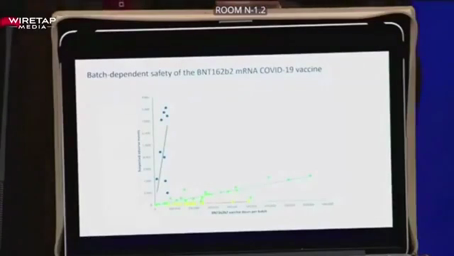 2:56 Estudo sobre reações adversas por lote de vacina na Dinamarca
 3:16 Apresentador fala sobre dose de ivermectina em pasta e faz alegações de saúde
 3:32 Alegações falsas sobre vacinas, imunidade e HIV
 1:39 Limpeza de cristais com água e sal e alegações sobre o haritaki
 1:18 Jejum, células senescentes e o processo de limpeza do corpo
 2:29 Reação ao teste de mRNA de uma pessoa não vacinada contra a COVID-19
 1:31 Exercício de palmas e batidas em concha para os meridianos
 1:42 Alegações sobre colesterol, estatinas e doenças cardíacas
 1:02 Misturas com cravo e seus supostos benefícios à saúde
 1:18 Pesquisador fala sobre estudo de mortes após vacina contra a COVID e retratação
 2:01 Vitamina K em Recém-Nascidos: Riscos Alegados e Alternativa Oral
 iPhone app Translate videos on your iPhone Paste a TikTok, Instagram or X link, add subtitles in your language and save the video to Photos.

TranslateMom transcribes and translates videos from X, TikTok, YouTube and Instagram. Paste a link and you get a page like this one, in your language.