
Estudo sobre reações adversas por lote de vacina na Dinamarca
3 min Machine translated About Denmark Health
3 min Machine translated About Denmark Health
O, hum, como podem ver diante de vocês nesta tela, é o resultado, o principal resultado do nosso estudo.
Hum, mostra os dados oficiais dinamarqueses que consultamos, hum, para o estudo, mostra cada lote e quantas, hum, quantas reações adversas ocorreram em cada lote.
Podem ver isso no eixo Y, o eixo vertical, e no eixo, hum, horizontal, podem ver o tamanho dos lotes.
Como podem ver no gráfico, hum, alguns desses lotes são muito pequenos, alguns são muito grandes.
E, neste caso, se, hum, presumirmos que veríamos uma vacina normal, uma vacina realmente boa, algo produzido de maneira muito consistente, veríamos uma linha quase perfeita, uma linha quase perfeita.
Se, por outro lado, Se produzíssemos uma vacina realmente horrível, a pior que pudéssemos imaginar, não veríamos nenhuma linha.
Veríamos apenas pontos dispersos. Hum, neste caso, vemos três, não uma, mas vemos três linhas, e elas são quase perfeitas.
O problema é que isso é obviamente, ah, algo que está completamente fora da categoria de o que deveríamos esperar ver nos dados de reações adversas.
Essa é a principal conclusão deste estudo.
Mas algo que também é muito preocupante é que isso mostra um sistema, mostra uma estrutura nos dados.
Reações adversas, erro, ah, erros na produção são, por natureza, aleatórios, mas isso mostra uma estrutura.
Ainda não sabemos por quê, ah, mas obviamente estamos pesquisando essa questão.
Há três tipos diferentes de lotes, e cada lote apresenta outro, ah, ah, risco.
E o, o, o azul apresenta o maior risco de mortalidade.
Hum, e ninguém sabia de antemão qual lote receberia.
Ninguém sabia que havia essa diferença entre esses lotes.
Ninguém sabia. Mas a EMA recebe amostras de cada lote, e pode testá-las, e verificar se são idênticos ou não.
E esse é o trabalho dela, porque o trabalho dela é nos proteger de erros, ah, cometidos pela indústria farmacêutica.
E isso também é algo que, numa segunda carta à EMA, vamos abordar.
Pode ter certeza. Ah, assim como coisas como contaminação, ah, por DNA de bactérias nas, nas vacinas, assim como as coisas que, ah, Joachim mencionou, há dois bancos de dados de eventos adversos?
Hum, como é que a… ah, a EMA nunca nos avisou?
End of transcript · 369 words · machine translated
The, um, as you can see in front of you on this screen, uh, is the result, the main result of our study.
Uh, it shows from the official Danish data that we queried for, uh, for the study, it shows each batch and how many, um, how many adverse reactions were present in each batch.
You can see that along the Y-axis, the vertical axis, and along the, uh, horizontal axis, you can see how big were the batches.
As you can see from the graph, um, some of these batches are very small, some of them are very big.
And in this case, if we, uh, assume that we would see a normal vaccine, a really good vaccine, something that was very consistently produced, we would see a near perfect line, one near perfect line.
If we, on the other hand, produced a really horrible vaccine, the worst one we could possibly conceive, we would see no line.
We would see just scattered dots. Um, in this case, we see three, not one, but we see three lines, and they are actually near perfect.
The problem with this is that it's obviously, uh, it's something that is completely outside the category of what we should expect to see in adverse, adverse data.
That's the main finding of this study. But something that is also very troubling is this shows a system, it shows a structure in the data.
Adverse reactions, error, uh, errors in production are by nature, they're random, but this shows structure.
We do not know yet why, uh, but we are obviously researching this, this issue.
There are three different types of batches, and every batch gives another, uh, uh, risk.
And the, the, the blue one gives the highest mortality risk.
Um, and nobody knew upfront which batch you would get.
Nobody knew that there was this difference between these batches.
Nobody knew. But the EMA gets samples of every batch, and they can test it, and they can see whether or not they, they are identical.
And that's their job, because their job is to protect us from, uh, mistakes made by pharmaceutical industry.
And that is also something that in a second letter to the EMA, we are going to address.
Be sure of that. Uh, as are the things as contamination, uh, by DNA of bacteria in the, in the vaccines, as, uh, are the things that, uh, Joachim mentioned about, are there two databases with adverse, uh, events?
Um, how come that the, uh, EMA never warned us?
 4:50 Dióxido de cloro e COVID-19: alegações sobre Bolívia e ivermectina
 1:18 Jejum, células senescentes e o processo de limpeza do corpo
 1:02 Misturas com cravo e seus supostos benefícios à saúde
 2:04 Relatório da Pfizer sobre vacina contra COVID: alegações de riscos cardíacos
 1:39 Limpeza de cristais com água e sal e alegações sobre o haritaki
 3:16 Apresentador fala sobre dose de ivermectina em pasta e faz alegações de saúde
 1:31 Exercício de palmas e batidas em concha para os meridianos
 2:25 Alegações sobre alumínio em vacinas e alergias
 1:42 Alegações sobre colesterol, estatinas e doenças cardíacas
 1:18 Pesquisador fala sobre estudo de mortes após vacina contra a COVID e retratação
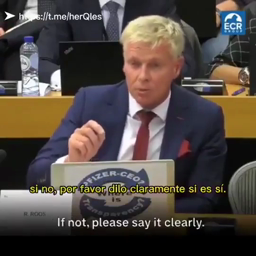 1:11 Vacina da Pfizer: pergunta sobre testes de transmissão antes da comercialização
 1:45 Fenbendazol e câncer avançado: três casos e a necessidade de estudos
 iPhone app Translate videos on your iPhone Paste a TikTok, Instagram or X link, add subtitles in your language and save the video to Photos.

TranslateMom transcribes and translates videos from X, TikTok, YouTube and Instagram. Paste a link and you get a page like this one, in your language.