
Estudio examina los informes de reacciones adversas por lote de vacunas en Dinamarca
3 min Machine translated About Denmark Health
3 min Machine translated About Denmark Health
El, eh… como pueden ver, frente a ustedes en esta pantalla, eh, es el resultado principal de nuestro estudio.
Eh, muestra los datos oficiales daneses que consultamos, eh, para el estudio, muestra cada lote y cuántas, eh, cuántas reacciones adversas hubo en cada lote.
Pueden verlo en el eje Y, el eje vertical, y en el eje, eh, horizontal, pueden ver qué tamaño tenían los lotes.
Como ven en el gráfico, eh, algunos de estos lotes son muy pequeños, algunos son muy grandes.
Y en este caso, si, eh, suponemos que veríamos una vacuna normal, una vacuna realmente buena, algo que se produjera de forma muy uniforme, veríamos una línea casi perfecta, una línea casi perfecta.
Si, por otro lado, si produjéramos una vacuna realmente horrible, la peor que pudiéramos concebir, no veríamos ninguna línea.
Solo veríamos puntos dispersos. Eh, en este caso vemos tres, no una, sino tres líneas, y de hecho son casi perfectas.
El problema es que esto obviamente, eh, es algo que está completamente fuera de la categoría de lo que deberíamos esperar ver en datos adversos, adversos.
Ese es el principal hallazgo de este estudio.
Pero algo que también resulta muy preocupante es que esto muestra un sistema, muestra una estructura en los datos.
Las reacciones adversas, los errores, eh, los errores de producción por naturaleza son aleatorios, pero esto muestra una estructura.
Aún no sabemos por qué, eh, pero obviamente estamos investigando este, este asunto.
Hay tres tipos diferentes de lotes, Y cada lote supone otro, eh, eh, riesgo.
Y el lote azul, eh, supone el mayor riesgo de mortalidad.
Y nadie sabía de antemano qué lote recibiría.
Nadie sabía que había esta diferencia entre esos lotes.
Nadie lo sabía. Pero la EMA recibe muestras de cada lote, y puede analizarlas, y comprobar si son idénticos o no.
Y ese es su trabajo, porque su trabajo es protegernos de los errores, eh, cometidos por la industria farmacéutica.
Y eso también es algo que vamos a abordar en una segunda carta a la EMA.
Que no les quepa duda. Eh, al igual que cuestiones como la contaminación, por ADN de bacterias en las vacunas, así como las cuestiones que mencionó Joachim, ¿hay dos bases de datos de efectos adversos?
Eh, ¿cómo es que la, eh, EMA nunca nos avisó?
End of transcript · 384 words · machine translated
The, um, as you can see in front of you on this screen, uh, is the result, the main result of our study.
Uh, it shows from the official Danish data that we queried for, uh, for the study, it shows each batch and how many, um, how many adverse reactions were present in each batch.
You can see that along the Y-axis, the vertical axis, and along the, uh, horizontal axis, you can see how big were the batches.
As you can see from the graph, um, some of these batches are very small, some of them are very big.
And in this case, if we, uh, assume that we would see a normal vaccine, a really good vaccine, something that was very consistently produced, we would see a near perfect line, one near perfect line.
If we, on the other hand, produced a really horrible vaccine, the worst one we could possibly conceive, we would see no line.
We would see just scattered dots. Um, in this case, we see three, not one, but we see three lines, and they are actually near perfect.
The problem with this is that it's obviously, uh, it's something that is completely outside the category of what we should expect to see in adverse, adverse data.
That's the main finding of this study. But something that is also very troubling is this shows a system, it shows a structure in the data.
Adverse reactions, error, uh, errors in production are by nature, they're random, but this shows structure.
We do not know yet why, uh, but we are obviously researching this, this issue.
There are three different types of batches, and every batch gives another, uh, uh, risk.
And the, the, the blue one gives the highest mortality risk.
Um, and nobody knew upfront which batch you would get.
Nobody knew that there was this difference between these batches.
Nobody knew. But the EMA gets samples of every batch, and they can test it, and they can see whether or not they, they are identical.
And that's their job, because their job is to protect us from, uh, mistakes made by pharmaceutical industry.
And that is also something that in a second letter to the EMA, we are going to address.
Be sure of that. Uh, as are the things as contamination, uh, by DNA of bacteria in the, in the vaccines, as, uh, are the things that, uh, Joachim mentioned about, are there two databases with adverse, uh, events?
Um, how come that the, uh, EMA never warned us?
 1:31 Técnica de palmadas y golpeteo de brazos para la circulación del corazón
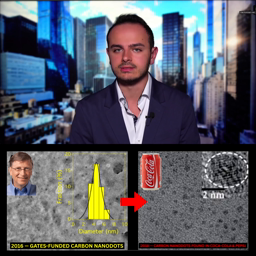 2:55 Nanopuntos en Coca-Cola y Pepsi: estudio en ratones y vínculo alegado con Gates
 1:39 Limpieza de cristales con sal y haritaki para la glándula pineal
 4:22 RFK Jr., la campaña de vacunación contra la gripe y las vacunas
 1:39 Chandra Wilson habla de términos y procedimientos médicos
 2:37 Parásitos cerebrales: consejos de prevención y tratamiento
 0:59 Un orador afirma que no hubo ensayos de vacunas infantiles con placebo salino
 1:53 Glifosato, melanina y afirmaciones sobre la desintoxicación de pesticidas
 1:26 Afirmaciones sobre electrones, conexión a tierra y salud
 1:30 Demostración del cuerpo como circuito y afirmaciones sobre hierbas antiparasitarias
 1:29 Crisis de suicidio entre veteranos: comparación con las muertes en guerra
 0:54 Nattokinasa: afirmaciones sobre coágulos, proteína espiga y placa arterial
 iPhone app Translate videos on your iPhone Paste a TikTok, Instagram or X link, add subtitles in your language and save the video to Photos.

TranslateMom transcribes and translates videos from X, TikTok, YouTube and Instagram. Paste a link and you get a page like this one, in your language.