
微软专利:将人体用作无线天线
1 min Machine translated
科技公司如何能将你的肉体转化为一个工作的无线天线?
与其制造外部硬件,微软专利 US-8665-210B2 将你的生物质量用作网络基础设施。
看看一条活生生的人类手臂。在皮肤之下,它充满了高导电性的水分和电解质。
根据该专利,可穿戴设备不仅仅是在空气中广播。相反,它利用你手臂的导电组织作为物理传输线。
该设备的电场跨越了到你皮肤的微小间隙,将其信号直接融入你身体的自然导电通道中。
但存在一个重大的工程障碍。标准天线需要精确、坚固的金属形状才能正常共振,而柔软、不断运动的人体完全不具备那种几何结构。
该专利的解决方法利用了近场效应,让数据直接搭载在你现有的生物电场上。
信号直接穿过你的肌肉和骨骼进行传播,将你的整个身体变成一个活体辐射源,向外部接收器进行广播。
所以,如果你再回头看那条活生生、有呼吸的人类手臂,它已不再仅仅是生物组织。
它是一个完全活跃的、无线数据网络中的广播节点。
美国国家航空航天局喷气推进实验室,加州理工学院
End of transcript · 217 words · machine translated
How could a tech company turn your physical body into a working wireless antenna?
Instead of building external hardware, Microsoft patent US-8665-210B2 uses your biological mass as network infrastructure.
Look at a living human arm. Beneath the skin, it is packed with highly conductive water and electrolytes.
According to the patent, a wearable device doesn't just broadcast through the open air. Instead, it uses your arm's conductive tissue as a physical transmission line.
The device's electrical fields bridge the tiny gap to your skin, merging its signal directly into your body's natural conductive pathways.
But there is a major engineering hurdle.
Standard antennas require precise, rigid metal shapes to resonate properly, and a soft, constantly moving human body completely lacks that geometry.
The patent's workaround utilizes near-field effects, letting the data piggyback directly onto your existing bioelectric field.
The signal propagates straight through your muscles and skeleton, turning your entire form into a living radiator that broadcasts outward to external receivers.
So if you look back at that living, breathing human arm, it is no longer just biological tissue.
It is a fully active, broadcasting node in a wireless data network.
NASA Jet Propulsion Laboratory, California Institute of Technology
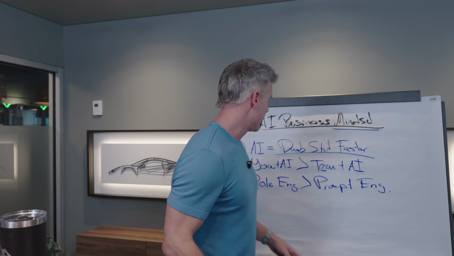 8:57 如何用AI推动业务增长:识别瓶颈、定义智能体角色与优化数据
 0:35 搞笑瓜分世界:从乌克兰、台湾到倒贴钱送加州
 3:49 AI首次照镜子:诺拉和艾玛如何看待自己的脸
 3:56 韩国霍尔木兹海峡部署争议与青瓦台前抗议
 3:28 特朗普谈大通银行系统故障、对华会谈与伊朗
 3:00 低声说出愿望:耳语显化法与Theta脑波
 4:30 人工智能、对齐与全球规模的社会工程
 2:24 《GTA 6》沉迷警告:AI NPC与现实生活中的分心风险
 2:57 纳粹集中营泳池与解放影像:对大屠杀历史的质疑
 0:43 提到加里后准备开玩:谁先来,Wi-Fi 好不好?
 1:31 对《GTA 6》的批评:暴力、虚拟现实与企业所有权
 0:43 美国的有毒关系:真相与军事援助
 iPhone app Translate videos on your iPhone Paste a TikTok, Instagram or X link, add subtitles in your language and save the video to Photos.

TranslateMom transcribes and translates videos from X, TikTok, YouTube and Instagram. Paste a link and you get a page like this one, in your language.