
The Cameroon War: France and the Independence Movement
2 min Machine translated About Cameroon War & conflict
2 min Machine translated About Cameroon War & conflict
France waged war on Cameroon, and did so for 16 years.
And the most incredible thing about this story is that it even continued after independence.
Yes, you heard that right. And how many of you have heard about this war at school?
Back to 1948. In Cameroon, then under French and British administration, the Union of the Peoples of Cameroon was formed, also known as the UPC.
Its goal: to reunify the territory and secure its independence.
Among its leaders was the famous Ruben Um Nyobé.
The movement took its demands to the United Nations.
But the French colonial authorities would gradually intensify the repression.
Seven years later, in May 1955, demonstrations were violently put down.
Several people were killed. And on July 13, the UPC is banned.
In the book I'm holding in my hand, called “Decolonization,” the magnificent book published by Les Aurores, the historians write, I quote: “The crackdown takes on an uncompromising turn.”
The activists are hunted down. Part of the movement goes underground and takes up arms.
Villages destroyed, populations displaced, resettlement camps.
In September 1958, now, Ruben Um Nyobé is killed by the French army.
But wait, on January 1, now, two years later, in 1960, Cameroon officially becomes independent.
So why does the war continue? Because the new Cameroonian government in power, backed by France, continues the fight against the independence fighters.
And that continued until 1971, the year Ernest Ouandié was executed.
Let's talk about numbers. The human toll was probably several tens of thousands of deaths, according to a joint Franco-Cameroonian commission of historians.
And in August 2025, Emmanuel Macron, for those who remember, officially acknowledged France's responsibility in this war, 75 years after independence.
So now, I have a question for you, as you know, I ask at video's end.
How can we tell the story of French decolonization without telling the story of the Cameroon War?
End of transcript · 319 words · machine translated
La France a fait la guerre au Cameroun, et cela pendant 16 ans.
Et le plus incroyable dans cette histoire, c'est qu'elle a même continué après son indépendance.
Oui, vous avez très bien entendu. Et cette guerre, combien d'entre vous en ont entendu parler à l'école ?
Retour en 1948. Au Cameroun, alors sous administration française et britannique, naît l'Union des populations du Cameroun, autrement appelée UPC.
Son objectif : la réunification du territoire et son indépendance.
Parmi ses dirigeants, il y a le fameux Ruben Um Nyobé.
Le mouvement porte ses revendications jusqu'aux Nations unies.
Mais les autorités coloniales françaises vont progressivement durcir la répression.
Sept ans plus tard, en mai 1955, des manifestations sont violemment réprimées.
Plusieurs personnes sont tuées. Et le 13 juillet, l'UPC est interdite.
Dans l'ouvrage que je tiens dans ma main, qui s'appelle « Décolonisation », le magnifique ouvrage publié aux éditions Les Aurores, les historiens écrivent ceci, je cite : « La répression prend une tournure implacable. » Les militants sont traqués.
Une partie du mouvement entre dans la clandestinité et prend les armes.
Villages détruits, populations déplacées, camps de regroupement.
En septembre 1958, maintenant, Ruben Um Nyobé est tué par l'armée française.
Mais attendez, le 1er janvier, maintenant, deux ans plus tard, 1960, le Cameroun devient officiellement indépendant.
Alors pourquoi la guerre continue-t-elle ?
Parce que le nouveau pouvoir en place camerounais, soutenu par la France, poursuit la lutte contre les indépendantistes.
Et ça, ça dure jusqu'en 1971, année de l'exécution d'Ernest Ouandié.
Parlons un petit peu de chiffres. Le bilan humain, probablement plusieurs dizaines de milliers de morts, selon une commission d'historiens franco-camerounaises.
Et en août 2025, Emmanuel Macron, pour ceux qui se souviennent, reconnaît officiellement la responsabilité française dans cette guerre, 75 ans après l'indépendance. Alors maintenant, je vous pose une question, comme vous le savez, j'aime en fin de vidéo.
Comment peut-on raconter la décolonisation française sans raconter la guerre du Cameroun ?
 0:42 Syrian rebel propaganda photo wrongly attributed to ISIS
 2:22 Ukraine and NATO: Criticism of Macron and European Aid
 1:08 Ukraine War: Claims About Nathaniel Rothschild and the Global Order
 3:00 Autonomous weapons: UN call for regulation and on-air clash
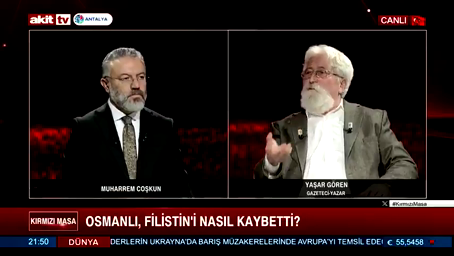 3:59 The Fall of Jerusalem in 1917: The Ottoman Withdrawal
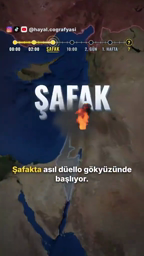 2:55 What If Turkey Went to War With Israel? Gaza and Golan Scenario
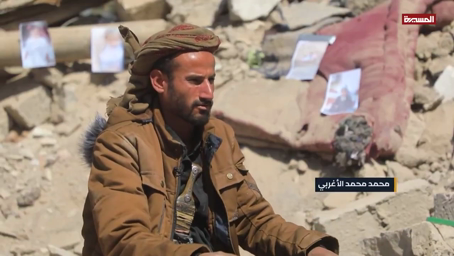 4:56 Yemeni Family Mourns 15 Relatives Killed in Airstrike on Home
 6:51 Son of an Islah Family Shares His Experience With Ansar Allah
 7:04 Yemen War: Blockade, Saudi Role and Calls for Dialogue
 9:15 Sunni-Zaidi Unity and Criticism of the Fighting in Yemen
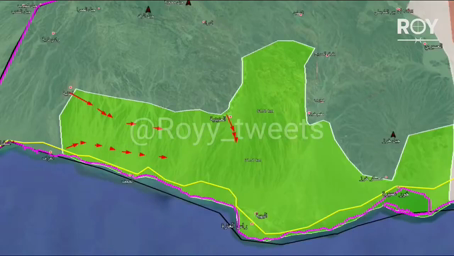 4:46 Houthi Advances on Lahj Coast and Fighting in Taiz
 6:41 Russia-Ukraine Talks: Moscow’s Demands and Prospects for Peace
 iPhone app Translate videos on your iPhone Paste a TikTok, Instagram or X link, add subtitles in your language and save the video to Photos.

TranslateMom transcribes and translates videos from X, TikTok, YouTube and Instagram. Paste a link and you get a page like this one, in your language.