
Learjet 722 Bravo Delta Crash: Mach Tuck and Tail Failure Examined
3 min Crime & incidents
3 min Crime & incidents
Declare emergency, 722 Bravo Delta. We are in an overspeed condition, descending 20,000 feet per minute.
Overspeed. That's what the crew of Learjet 722 Bravo Delta radioed as they fell from 35,000 feet.
75 seconds later, it crashed, killing all nine people on board.
Did a Mach tuck bring it down? Mach is speed compared to the speed of sound.
Air flowing over the top of a wing moves faster than the air underneath.
Faster air has lower pressure, so the higher pressure below pushes the wing up.
That's lift. But go fast enough and the air on top goes supersonic and a shock wave forms.
As speed builds, the shock slides back and the lift slides back with it behind the center of gravity.
The nose drops, the jet speeds up, and the nose drops more.
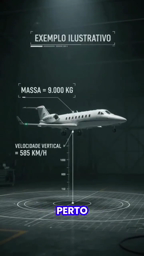
That's a Mach tuck. The Learjet 60 cruises close to that edge.
Its limit is Mach .81, and before the upset, this jet was at about .75.
Learjets carry a Mach trim system that raises the nose automatically as speed builds.
Hand flying without it, the 60's limit drops to .77.
And in 1980, the NTSB warned that once earlier Learjets got into a fast, steep dive, recovery may be impossible.
The crew reported ice and turbulence and asked to climb.
Then the nose went down, wings level. In 13 seconds, the jet blew through its Mach limit and kept going past Mach .9.
Then it rolled into a steep right spiral where pulling back only tightens the turn.
We are descending 22,000 feet and we are banking 60 degrees.
Could that tear off the tail? By 9,000 feet, it was doing almost 500 knots against a limit of 340.
That's twice the air pressure on every surface.
Pushed that far, a tail can flutter and shake itself apart, or the pull to recover can snap it.
In 1985, a China Airlines 747 dove 30,000 feet and the pullout tore away pieces of its tail.
Now the NTSB has recovered the left elevator, the hinged surface on the tail that controls pitch, in three pieces, 1.3 to 3.8 miles from the crash site.
The dive began seven miles away. Those distances match the middle of the dive, between about 27,000 and 14,000 feet, when the jet was far past its limits.
So the elevator most likely came apart during the dive.
Whether that helped cause the crash or the dive tore it off, the NTSB says it doesn't know yet.
The NTSB's final report should tell us. Until then, the precise cause of the crash remains unknown.
End of transcript · 435 words
 4:12 Harassment at a Bus Stop: A Bystander Steps In
 4:10 Jérôme Fourquet Challenged Over First-Name Analysis of Court Appearances
 1:30 Woman Says She Was Attacked in Public and Mentions Her Young Child
 4:10 Call for FBI Inquiry into Alexandre Ézéchiel and Haitian Gang Leaders
 4:06 Argument Over Burning Tree and Hedge Near a House
 2:27 Dispute Over Medical Credentials and an Ambulance
 1:17 Small plane debris scattered after crash
 2:08 Wheeler Tomás, Flávio Bolsonaro and Brazil's Betting Investigation
 2:43 Learjet 60 Crash in Greenacres: Why Did the Plane Leave a Crater
 0:34 Court Discussion of Surgery, a Stoma and Other Medical Conditions
 1:47 Discussing Escort Work, Family Messages, and a Promise to Stop
 1:38 Why Did the Learjet 60 Break Apart After the Crash
 iPhone app Translate videos on your iPhone Paste a TikTok, Instagram or X link, add subtitles in your language and save the video to Photos.

TranslateMom transcribes and translates videos from X, TikTok, YouTube and Instagram. Paste a link and you get a page like this one, in your language.