
Stephen Miller Debates Court Orders and the Alien Enemies Act
10 min Politics
10 min Politics
So you called the judge's order just earlier today, quote, "patently unlawful," end quote, and said that it was an assault on democracy itself.
Does that mean that the administration is ignoring this order?
And might you ignore future court orders that meet the criteria you laid out?
The president of the United States and his administration reserve all rights under the Constitution to conduct national security operations in defense of the United States.
The Alien Enemies Act, which was passed into law by the founding generation of this country, men like John Adams, was written explicitly to give the president the authority to repel an alien invasion of the United States.
That is not something that a district court judge has any authority whatsoever to interfere with, to enjoin, to restrict, or to restrain any way.
You can read the law yourself. There's not one clause in that law that makes it subject to judicial review, let alone district court review.
Uh, so Steven, um, y- when you, when you say that this person has no authority at all, this is how our system works.
It starts with these judges and then continues up.
At what point does it become, in your view, legal for the justice system to be looking at this and making a judgment?
And I, I, I fail to see how there's any other way but to start with where we're starting here before you get to eventually the Supreme Court.
Well, so first of all, there's a, there's a term in law, justiciable.
This is not justiciable. In other words, this is not subject to judicial remedy.
When the president is exercising his Article Two powers to defend the country against an invasion or to repel a foreign terrorist that is unlawfully in the country, he's exercising his core Article Two powers as commander-in-chief.
Is Venezuela invading the US? This is, this is a very important point.
This is a Title 50 authority. It's a commander-in-chief authority.
So just to ask you a simple question, you, you talk about how the system works.
Does a district court judge have the right to direct or enjoin troop movements overseas? Yes or no?
Uh, well, Steven, my question, I- Well, no, no. In other words, the- If you could answer my question first, please ...
Uh, well, Steven, my question, I- Well, no, no. In other words, the- If you could answer my question first, please ...
I mean, in other words, the Is Venezuela- Well, no, I, no, no. But the, the- Is Venezuela invading our country in a way that would- T- T- TDA ... apply its right?
So under the, so I'll answer yours, then you'll answer mine.
Under the terms of the statute, Tren de Aragua is an alien enemy force that has come here as detailed at length in the proclamation at the direction of the Venezuelan government.
The statute says that a president has the ability to repel an invasion or predatory incursion that is directed by a foreign government.
By a state or a government, right? Are they a state or a government?
Yes. This would be... Yes, it is, it is documented the, the TDA was sent by the Venezuelan government in the proclamation.
And here's an even more important point.
Under the Constitution, who makes that determination?
A district court judge elected by no one or the commander-in-chief of the Army and Navy?
The president and the presidential alone- So do you then, do you then think- ... makes a decision of what triggers that determination from statute So do you then think we are actually at war with Venezuela, makes a decision of what triggers that determination from statute So do you then think we are actually at war with Venezuela,
the nation-state of Venezuela? You're not, you're not, you're not hearing me, and you're not understanding me.
Read the statute, Alien Enemies Act 1798.
It says, "If a predatory incursion is perpetrated by a foreign government," so it lists the three, the three qualifying actions.
Yeah, but- It could be an act of war. It does say- It could be, it could- ... in the very beginning it ha- there has to be a declared war against a nation or a state. No. That's what it says.
Mm-mm. No. Wrong. Look up the statute. It's on my account on social media.
That's actually where we found it. Everyone can go see it. The, yes.
It says, "Or a predatory incursion or an invasion."
The statute delineates three criteria for triggering the Alien Enemies Act.
One is a act of war, which by the way, an invasion is an act of war, but put that aside.
One is an invasion, which this is. One is a predatory incursion, which this is.
So it actually meets all three statutory criteria, but with respect to this particular statute, it's, the proclamation is utilizing the incursion and invasion- Okay ... language in the statute. So but- No, but this is a very important question ... take pictures, Steven.
'Cause no, no, no, hold on. This is a very important question.
You said the way our system works is the president of the United States commands the armed forces of the country, commands the foreign policy of the country, and that's subject to district court review.
That is fundamentally untrue. Uh, I never, I never said that, Steven.
That is, that has never- I did not say- That has never been true ... this was not a military oper- The, the- I mean, th- this- A district court judge can no more enjoin the expulsion of foreign terrorists to foreign soil than he can direct the movement of Air Force One,
than he can direct the movement of an aircraft carrier, than he can direct Marco Rubio to engage- Okay. Do you think the Supreme Court- ... in diplomacy in a country or not to ... has any say over this or not?
Like if, does the Supreme Court of the United States have any say over the things that you were just outlining right here?
I believe what the Supreme Court will say is what I just said, which is that the president's conduct here is not subject to judicial review- Okay. But you are, you are acknowledging- ... because these are the plenary-
which is that the president's conduct here is not subject to judicial review- Okay. But you are, you are acknowledging- ... because these are the plenary- ... that they do in fact have a say here ... these are the, the, well, well, here- Even though you think they may agree with you.
What we are expecting is the Supreme Court to say what has always been the case, which is when the president is using his powers as commander-in-chief, those determinations are not subject to judicial review.
In other words, the president's designation of Tren de Aragua as a foreign terrorist organization and as an alien enemy are part of his inherent plenary authority.
There is no way- So at what point in the system- Dude, there is no way- ... Steven, does- How, how are you going to expel- ... do the courts gain power?
Hold on. How are you going to expel illegal alien invaders from our country who are raping little girls, who are murdering little girls, if each and every deportation has to be adjudicated in a district court judge?
It, that means you have no country, it means you have no sovereignty, it means you have no future.
It is fundamentally incompatible to have a country and have individual expulsions adjudicated by a single district court judge.
Okay. I'm just trying to figure out- It is impossible ... at what point in the system do you, 'cause, uh, uh, what does the Trump administration believe?
'Cause we do have separation of powers in this country.
I hear what you're saying. Yes, separation of powers. You're saying the district court does not have authority- I hear what you're saying. Yes, separation of powers. You're saying the district court does not have authority- This is the judiciary interfering- Stephen, let me finish ...
You're saying the district court does not have authority- This is the judiciary interfering- Stephen, let me finish ... in the executive function. Let me finish.
That is the separation of powers. Okay. That is the separation of powers.
Did, did you ignore the judge's order here because you thought you could?
So the judge's order and the actions taken by the Departments of Defense, Justice, and Homeland Security are not in conflict, and the Department of Justice has been clear that they are not in conflict.
But I'm making a more fundamental point.
So you think that you did go along with the order that the judge put out?
You do not think that the Trump administration- As the- ... defied this order?
As the Justice Department said, there is no conflict between the judge's order and the actions taken by the departments I just listed.
But I'm making a deeper and more fundamental point. Yeah.
The district court has no ability- But, so, yeah, I mean, if you don't have to follow it, why did you?
The district court has no ability- But, so, yeah, I mean, if you don't have to follow it, why did you?
The district court has no ability to, in any way, restrain the president's authorities under the Alien Enemies Act or his ability to conduct the foreign affairs of the United States.
Let me paint a picture for you. President Trump and Secretary of State Marco Rubio had engaged in intensive diplomacy to obtain a bilateral security agreement with the nation of El Salvador.
S- If a district court judge- So again- ... can enjoin that bilateral security agreement- Again, I, I, I get it ... then we do not have a democracy. Stephen, you've made your argument.
... can enjoin that bilateral security agreement- Again, I, I, I get it ... then we do not have a democracy. Stephen, you've made your argument.
I, I got it. We do not have a foreign policy. We've, we've heard you say this. I've- Did, did you ignore the, did the administration ignore the order from the district judge? I've- It's a simple question ...
I've, I've answered, and I've answered it. I've, I've answered it because this, the Department of Justice has made a filing in the court.
But let me make another point. The judge in this case put the lives of every single person on those aircraft at risk.
Did he know how much fuel was in those planes?
Did he know the flight conditions? Did he know the weather conditions?
Did he know about how many crew hours? Did he know the need for crew rest?
Did he know any of that? No. Okay. This judge violated the law. He violated the Constitution.
So again, so do you think- He defied the system- ... that the White House- ... of government that we have- ... is above- ... in this country ... federal courts? 'Cause that does seem to be- And by the way- ... what you're arguing here ... these same, these same district court judges
... federal courts? 'Cause that does seem to be- And by the way- ... what you're arguing here ... these same, these same district court judges didn't do a damn thing to stop Joe Biden from flooding this nation with millions of illegal aliens.
Do, these district court judges didn't issue any injunctions to save the lives- Stephen ... of Jocelyn Maung- Is the White House- ... or Laken Riley- ... above- ... or anyone else ... the federal courts?
Is that what you're saying? What I'm saying is that what you said, there's a separation of powers.
The de- the, the judiciary- I, I just- ... exercises judgment- Stephen ... and relief.
I, I don't speak for the White House. Uh, uh, I go.
You, you are here to speak for the- I will do ... y- you're here to speak for the White House. Then I will walk, then I will walk- I just want you to answer- ... I will walk you through it ... that one simple question.
I am. Okay? Ready? Here we go. Under a proper reading of the Constitution, ju- district court judges provide relief to individual plaintiffs seeking relief.
District court judges do not have the authority as a general matter to enjoin the functioning of the executive branch, but their authority is at its lowest point when the president is exercising his powers as commander in chief.
And I asked you a question and you never answered it.
Can a judge enjoin troop movements overseas?
Can a district court judge enjoin troop movements overseas? Stephen- Yes or no ...
I, I am not gonna get into the, the f- the, this- Just say no- This- ... and then you'll know that I'm right ... this is a separate question- Just say no and you'll know that I'm right ...
Stephen. Okay. We're not talking about- No, it's not ... other, other troop services. Because the president- I need to ask you about something else that's- It's not- The president issued a proclamation d- delineating, in detail,
how the Venezuelan regime sent this gang- Okay ... this terrorist organization to our shores.
And by the way, and I, and I love being here, but all the outrage that we are seeing from the Democrat Party and from the corporate media
End of transcript · 2,236 words
 1:26 Interview on Voting and International Impact
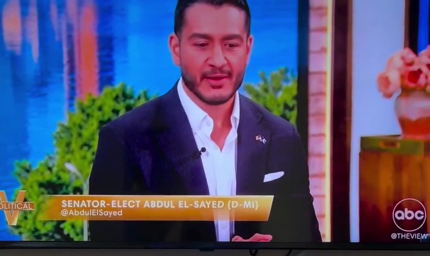 3:40 Discussion on Faith and Responsibility in Politics
 1:56 Discussion on Language Barriers in Media
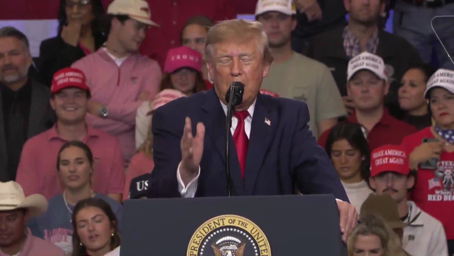 0:44 Political Concerns Over Sharia Law
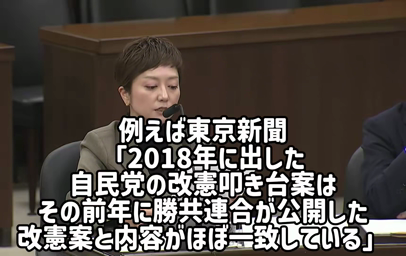 4:08 Emergency Powers and the Unification Church: Questions over Japan's LDP
 3:03 Confrontation Over Politics and a Flag Outside the Iranian Embassy
 3:14 Kunigal Water Issues: Criticism of MLA and Support for Kumaraswamy
 1:53 National Defense, Voting Rights and the Constitution
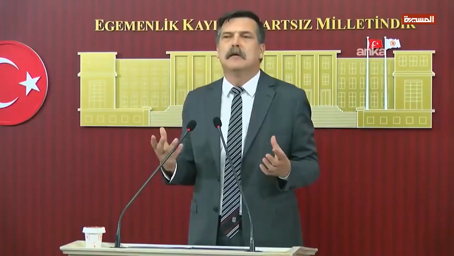 6:47 Turkish Opposition Rejects Mecca Agreement, Warns of Yemen War
 3:43 Seerat Kaur Mann Makes Allegations About Father Bhagwant Mann
 1:52 Debate on Religious Respect and Who Decides Syria’s Future
 1:59 Political Debate on Fuel Cess and Bus Fares
 iPhone app Translate videos on your iPhone Paste a TikTok, Instagram or X link, add subtitles in your language and save the video to Photos.

TranslateMom transcribes and translates videos from X, TikTok, YouTube and Instagram. Paste a link and you get a page like this one, in your language.