
Il dottor William Makis parla di ivermectina e ricerca sul cancro
3 min Machine translated Health
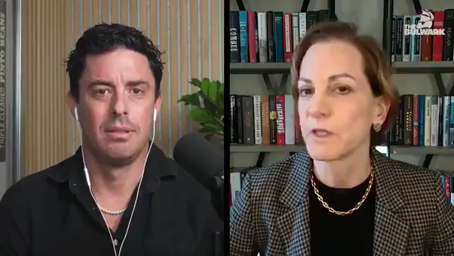
Beh, un'altra persona che ha ottenuto un enorme successo nel trattare i pazienti con protocolli non convenzionali è il dottor William Makis.
È qui con noi per parlarne. Dottor William Makis, grazie mille per essere qui con noi.
Siamo lieti che sia qui. Grazie mille per avermi invitato.
Certamente. È un onore averla qui. Beh, questa notizia clamorosa è emersa proprio questa settimana.
Certo, noi che facciamo parte della comunità per la libertà in medicina e conosciamo il suo lavoro, sappiamo da tempo che le persone si stanno allontanando dall'industria farmaceutica e stanno ottenendo grandi risultati con ivermectina e fenbendazolo, combinati con altri ehm, metodi di trattamento, si sa,
e chi segue il suo Substack lo sa già. Ma ci sono molte persone che ancora non lo sanno, Allora, ci parli un po' di questo, dottor Makis, perché una delle persone di cui Mel Gibson ha parlato è proprio una persona che hai curato.
Esatto. Allora, sai, non mi aspettavo un'intervista di Mel Gibson da Joe Rogan, e che parlasse davvero di questo approccio al cancro con farmaci riproposti, ed è di questo che scrivo, sai, sul mio Substack da due anni.
Ho approfondito la ricerca sull'ivermectina, soprattutto in relazione al COVID-19, e ho scoperto un intero corpus di articoli e pubblicazioni scientifiche, oltre 100 studi sull'ivermectina efficace nel cancro.
Si tratta di studi preclinici, sai, molti condotti su topi e, ehm, su linee cellulari e così via.
Ma esiste una mole enorme di studi sull'efficacia dell'ivermectina contro il cancro, e tutti questi ricercatori, sai, hanno cercato di capire come agisce l'ivermectina.
In che modo l'ivermectina cura il cancro?
Com'è possibile che un antiparassitario che, sai, è stato un farmaco antiparassitario efficace per decenni, curi il cancro?
Ed è un corpus di ricerche affascinante, che è stato completamente abbandonato e ignorato dalle grandi aziende farmaceutiche.
L'ivermectina non è più sotto brevetto. Merck aveva un brevetto su di essa fino al 1996, credo.
Non è più coperta da brevetto. Nessuno ci guadagnerà.
Ecco la risposta. Non ci sono soldi da fare ricercando l'ivermectina, eppure esistono oltre una dozzina di meccanismi d'azione dell'ivermectina contro il cancro.
Alcuni dei più affascinanti che l'ivermectina attacca, le cellule staminali tumorali.
Sono cellule tumorali che la chemio non riesce a uccidere.
Quindi, quando l'oncologo ti dice: «Non possiamo curare il tuo cancro», un tumore al pancreas, al colon, è perché sa che la chemio non riuscirà a uccidere quelle cellule staminali tumorali.
E quindi, ehm, l'ivermectina può effettivamente uccidere le cellule staminali tumorali.
Può anche invertire la resistenza, ehm, che le cellule tumorali sviluppano verso certi tipi di chemioterapia.
E quindi ha questa capacità, a livello molecolare, di invertire la resistenza, detta resistenza a più farmaci, e rendere le cellule tumorali sensibili alla chemio.
End of transcript · 459 words · machine translated
Well, someone else who's had tremendous success treating patients with non-conventional protocols is Dr. William Makis.
He joins us to discuss all of this now. Dr. William Makis, thank you so much for joining us now.
We appreciate you being here. Thank you very much for having me.
Absolutely. It's an honor to have you. Well, this bombshell story broke just this week.
Of course, those of us in the medical freedom community who are aware of your work have known for some time that people are stepping away from the pharmaceutical industry and having tremendous success with ivermectin and fenbendazole combined with other,
um, you know, methods of treatment, and those who follow your Substack would be familiar with that.
But there's a lot of people who still don't know, so tell us a little bit about this, Dr. Makis, because one of the people that Mel Gibson, uh, spoke about is actually someone that you've treated.
That's right. So, you know, I didn't, I didn't expect, uh, this, um, Mel Gibson interview on, on Joe Rogan and for him to actually talk about, uh, this approach to cancer with repurposed drugs, and that's what I've been, you know, writing about on my Substack for the last two years.
Uh, I did a deep dive into ivermectin research, uh, especially in regards to COVID-19, and I discovered an entire body of, of articles and, and scientific papers, over 100 papers on the success of ivermectin in cancer.
Now, these are preclinical studies, uh, you know, a lot of studies done on mice and, and, uh, cell lines and so on.
But there is a tremendous body of work showing that ivermectin is successful against cancer, and all these, you know, researchers have been trying to figure out how is ivermectin doing this.
How is ivermectin treating cancer? How is it that an antiparasitic that, you know, has, has been a successful parasitic drug for decades, how is it treating cancer?
And it's a fascinating, uh, body of research that has really been completely abandoned and ignored by big pharma.
Uh, ivermectin, of course, is off-patent.
Merck had a patent on it till, I think, 1996.
It's off-patent. No one's gonna make money on it.
So, there's your answer. It's, there's no money in researching ivermectin, and yet there are over a dozen mechanisms of action for ivermectin in cancer.
Uh, some of the more fascinating ones are that ivermectin attacks, uh, cancer stem cells.
Now, these are cancer cells that chemo can't kill.
So, when your oncologist tells you, "We can't cure your cancer," pancreatic cancer, colon cancer, it's because they know that the chemo's not gonna be able to kill those cancer stem cells.
And so, um, ivermectin can actually kill cancer stem cells.
It can also reverse, uh, resistance that cancer cells develop to certain types of chemotherapy.
And so it's got this ability on a molecular level to reverse the resistance, it's called multidrug resistance, and make cancer cells actually susceptible to chemo.
 2:51 Morbillo e remissione del cancro: un caso clinico del 1971
 0:52 Ivermectina e mebendazolo: risultati dichiarati di uno studio sul cancro
 1:22 Consulto medico: il dottore dice che non c'è cura
 9:05 Le dimensioni dalla prima alla quarta: come percepiamo lo spazio
 7:54 Bowes promette di lottare contro le sanzioni UE e per i diritti in Irlanda
 1:44 Sofia Larrondo dice che stanno portando via suo padre durante un arresto
 2:41 Dalla California a Colorado, Texas e Wyoming: una scenetta comica
 4:40 Come è stata localizzata una villa di Epstein a San Paolo
 2:49 Stephen Miller elogia Trump su deregolamentazione, immigrazione ed economia
 8:41 Putin sulle elezioni tedesche, la NATO, l’Ucraina e i prezzi del gas
 2:20 Piers Corbyn sugli incendi in Russia e il cambiamento climatico
 1:58 Europa e Russia: si discute un'escalation militare
 iPhone app Translate videos on your iPhone Paste a TikTok, Instagram or X link, add subtitles in your language and save the video to Photos.

TranslateMom transcribes and translates videos from X, TikTok, YouTube and Instagram. Paste a link and you get a page like this one, in your language.