
The First Amendment, COVID Restrictions and Individual Rights
2 min About United States Politics
2 min About United States Politics
When you think about civil and individual rights, First Amendment, the right to free speech, the assembly, right?
That was passed and adopted by the states in 1791.
What's the First Amendment intended to do?
To restrict government from infringing on those rights.
You think life was easy in 1791? What do you think life was like in 1791?
You think it was easy? You think it was all hunky-dory?
Life in s- 1791 was brutal. Brutal. You want to talk about disease, pestilence, famine, war?
You want to talk about a life that is no electricity, no running water, no sewer, nothing.
And that amendment was passed for times that are more brutal than that.
And here comes a virus. And every right you have is basically taken away.
And Americans are like, "Take it. Take it away."
That is what outraged me because look, what was the whole point of this country? What, what, what is America born out of?
In my view, it's born out of the, uh, the idea that every other government that preceded it got it wrong in the following sense.
Your life should not be dictated by a king or a dictator or a, a, a politburo or a central authority.
It's the idea that you are born with inalienable rights.
You should be able to choose your destiny, including what risks you want to take.
Individual rights come with risks. Letting Joe Rogan say what he wants on this podcast comes with risks.
Letting you practice what religion you want, assemble with who you want, that comes with risks.
Let me tell you, a lot of risks. Yeah. Okay?
But the greater risk is always ceding that right to the government, because once you do, you don't get it back often.
End of transcript · 300 words
 1:26 Interview on Voting and International Impact
 1:56 Discussion on Language Barriers in Media
 0:44 Political Concerns Over Sharia Law
 1:52 Debate on Religious Respect and Who Decides Syria’s Future
 8:14 Iran's 13 Aban: US-Iran Tensions from the 1953 Coup to the Strait of Hormuz
 2:09 Claims of a Midnight State of Emergency in Poland
 3:09 Donetsk’s Future: Population Outflow and Donbas Industry
 4:08 Schrödinger's Netanyahu: Contradictions on Iran, Gaza and Identity
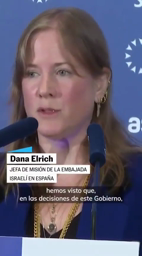 0:53 Spain and Israel: Government Criticism and Defense Cooperation
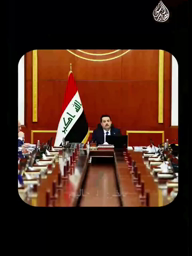 1:31 Warning Syrians Against Democracy and Man-Made Laws
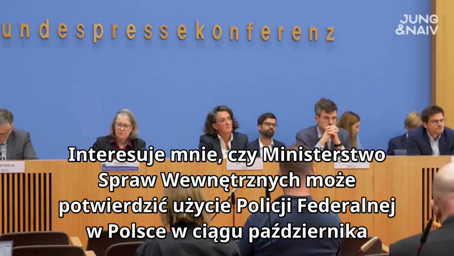 1:11 German Federal Police in Poland? Interior Ministry Responds
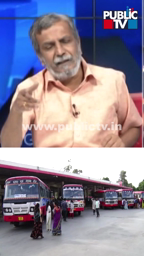 1:48 Bus Fare Hikes, Transport Workers’ Wages and Guarantee Schemes
 iPhone app Translate videos on your iPhone Paste a TikTok, Instagram or X link, add subtitles in your language and save the video to Photos.

TranslateMom transcribes and translates videos from X, TikTok, YouTube and Instagram. Paste a link and you get a page like this one, in your language.