
Iran Sanctions and the Strait of Hormuz: Lorenzo Kamel on Diplomacy
5 min About Iran
Well, let's bring in Lorenzo Camel. He is a professor of international history at the University of Turin, and joins us now from Arone- Rome. Uh, Professor, thank you for joining us. The, the fact that they've not given no timeline here,
haven't identified any other third party countries, uh, what do you take from this?
That's most likely, um, there is, uh, an impasse at the, at this moment, but it's clear that history, uh, teach us that you cannot win a war of attrition against geography.
So in this sense, uh, uh, it's clear that, uh, Iran, uh, notwithstanding this sanction and so on, is aware of the fact that there's a certain leverage. At the same time, it's also evident that, uh, Iran cannot, uh, completely close,
uh, the Strait of Hormuz, and the US cannot fully open it.
So in this sense, third parties can play an important role.
And in this sense, Oman and Pakistan efforts to engage Iran, uh, signal diplomatic attempts to stabilize this region, possibly using also US pressure on oil, uh, prices ahead of the midterm election. Uh, but that said, I think that the next step might be, um, quite clear in the sense
that, uh, if this sanction will, uh, really, uh, go ahead, as it seems, it's most likely Iran will, uh, strike Saudi Arabia and the UAE. It's always in the sense will try to, uh, make ... fill the, the, the leverage to which I was referring to, uh, before.
So, uh, Professor, you ... can we look at this from a historical point of view?
Do sanctions actually work? I mean, uh, ultimately Tehran has been subject to quite high, uh, levels of sanctions in the last few decades, and it's still s- bit of ... uh, uh, a major regional actor here. What more can the US do?
And it takes ages for them to work, doesn't it historically?
Yes. It's not a really original, uh, solution.
Sanctions, uh, according to The Lancet, sanctions, uh, from the US, uh, caused 38 millions death since 1970.
So, uh, in almost all cases, these were US unilateral sanction, meaning that they were not imposed by the United Nations.
And the sanctions are never imposed against regimes that are considered useful, uh, to the US and their allies, and yet they are presented as acceptable, uh, measure.
The first sanction that were imposed against Iran were in 1979, uh, so at the time the Iranian students stormed the US Embassy and took diplomat, uh, hostages. So in the sense, that was the starting point.
But let's always remember that that was at the Iranian Revolution, not the Islamic Revolution. It became Islamic at a later stage.
It was I- the Iranian Revolution and the most popular revolution in the modern and contemporary history, more than the French and the Russian Revolution.
And why it was so popular, that revolution?
It was so popular, so participated because, uh, the US were interfering in this country.
So following the coup, uh, against Mossadegh and, uh, through puppet regime of, uh, uh, Mohammad Reza Pahlavi, uh, through the, uh, torture chambers and so on and so forth, so all this pushed millions of Iranians to, uh, strike back.
At the time when the sanctions were imposed, uh, Iran was the first buyer of US weapons at the global level.
So if history teaches us something, is that, uh, if the US w- want to replicate without adjusting some things the same pattern, the result won't be so much different.
Professor, very quickly, the thing is this seems to be a further escalation by the US. No doubt, uh, the Iranians will also up the ante, and every time this happens, the space for diplomacy gets smaller and smaller, does it not? How does this end?
Yes. First of all, there are many actors that have a strong interest in closing the win- of, uh, the window of diplomacy.
So we have seen that there was a way, let's say the JCPOA, the nuclear agreement, was certainly profitable.
Was certainly not 100%, uh, uh, somehow, uh, so- solving all the problems, but still was a pattern that w- would go in a direction.
Now we've seen that the Trump administration was very, very keen in, uh, uh, unilaterally, uh, going out of that, uh, uh, agreement.
And why so? Because there is a strong interest, a strong interest of having a clear, uh, target. And of course, uh, the interest comes also largely from Israel, so the Israeli have a strong interest in that sense, uh, in, uh, uh, in, uh, attacking Iran and having this clear enemy. Contrary to what many people thinks, uh,
sometimes to have clear enemies from Hamas in, uh, in Palestine to the Iranian regime and many others is very useful for certain actors. So diplomacy is something that is positive for some, but for many political actors it's actually something that might be seen as dangerous.
Lorenzo Camel, thank you so much. Professor of International History at the University of Turin there.
End of transcript · 854 words
 9:51 Prank Arrest Scenario Unfolds
 2:23 Lessons from Childhood Experiences
 4:00 Comedic Relationship Anecdotes
 5:38 Discussion on Religious Beliefs and Tolerance
 1:59 Office Meeting and Financial Updates
 1:28 Discussion on Relationships and Film Plans
 2:46 Experiment on Church Assistance for Formula
 2:57 Trump's Economic Strategy and Foreign Investment
 4:30 Exploring AI's Role in Society
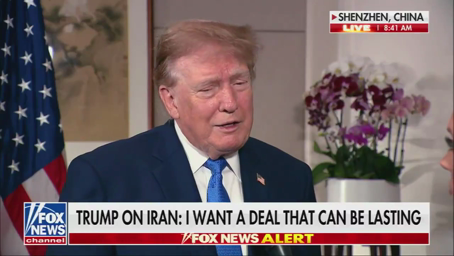 1:18 Military Strategy and Iran Negotiations
 3:12 Brookfield's Major Deals and Investments
 2:20 Concerns Over Smallpox Vaccine Deployment
 iPhone app Translate videos on your iPhone Paste a TikTok, Instagram or X link, add subtitles in your language and save the video to Photos.

TranslateMom transcribes and translates videos from X, TikTok, YouTube and Instagram. Paste a link and you get a page like this one, in your language.