
Qué hace el presidente de la Cámara y cómo lo elige su bancada
4 min Machine translated About United States Politics
4 min Machine translated About United States Politics
La televisión. El trabajo del presidente es…
Estoy intentando… Tengo que escribir esto al revés para ustedes.
El trabajo del presidente es legislativo y también político.
Alguien me dijo que usara letras, así que gracias por el consejo, porque puedo escribir una letra a la vez.
Así que el trabajo del presidente es tanto legislativo como político.
Las responsabilidades legislativas, eh, de la presidencia consisten en tener un equipo de disciplina partidaria.
Un equipo de disciplina partidaria significa saber cómo van a votar todos sus miembros, eh, sobre un proyecto de ley determinado, y si sabes cómo van a votar todos tus miembros, entonces sabes qué proyectos de ley contarán con la mayoría de tu bancada.
Así sabes qué proyectos de ley tienen los votos para aprobarse antes de presentarlos ante la cámara, y sabes qué proyectos de ley no tienen los votos para aprobarse antes de presentarlos ante la cámara.
Así que las responsabilidades legislativas de la presidenta incluyen dirigir la operación de disciplina de voto, y a veces eso también significa poner en orden a todos y convencer a todos tus miembros, porque el grupo demócrata tiene una ideología amplia. Lo sabemos.
Hay, hay congresistas de izquierda, hay congresistas progresistas, hay congresistas moderados, hay congresistas conservadores del grupo demócrata.
Así que, así que tienes que organizar toda esta operación legislativa y de disciplina de voto, y luego tu otro trabajo es político.
Y tu trabajo político consiste en conservar la mayoría.
Y siempre hay un montón de debates políticos sobre qué posturas pueden ayudar a los demócratas a conseguir una mayoría, eh, o a conservar su mayoría.
Pero como, como presidenta, tu trabajo principal es hacer esto, Y la extensión de ese puesto político es recaudar fondos.
Y por eso, cuando los miembros eligen a un presidente de la Cámara, porque el presidente de la Cámara, el speaker, no es elegido por el voto popular.
El presidente lo eligen los miembros del Congreso que ya han sido elegidos.
En esa elección, aunque, como dije durante mis historias, que fue lo que motivó esta transmisión en vivo, quizá hayan visto una versión de esa elección en televisión, en el pleno de la Cámara, pero, en realidad, la verdadera elección ocurre antes,
y se realiza a puerta cerrada, mediante voto secreto.
Y esto era lo que estaba comunicándoles a algunos de ustedes en las historias de Instagram.
Se realiza mediante voto secreto y una votación del grupo parlamentario.
Y sobre esa votación, algunos, ya saben, algunos dicen: «¿Por qué es una votación secreta?», etcétera.
El portavoz tampoco es la única persona elegida de esta manera.
Cada presidente de comité… La dirigencia demócrata está formada por unas doce personas, según lo que consideres parte de la dirigencia, pero existen los llamados cargos formales de liderazgo.
Está el portavoz, está el líder, está el jefe de disciplina, está el presidente del caucus, y luego están los presidentes de comité.
Todos estos cargos se eligen, y las elecciones disputadas son mediante voto secreto.
Y esa papeleta, cuando votas, no presenta el nombre de esta persona, con un sí o un no.
Así no es la papeleta. La papeleta es así.
A ver. La papeleta es así.
El nombre de esta persona, o votas por ella.
Algo parecido a tu papeleta cuando votas en las urnas.
Cuando votas en las urnas, la papeleta no dice algo como «Greg Abbott, sí o no».
Tu papeleta se parece a Greg Abbott o a Gina Hinojosa, y tienes que elegir a quién quieres como candidato.
Pasa lo mismo con una elección interna del caucus.
End of transcript · 597 words · machine translated
Television. The speaker's job, it is...
I'm trying to-- I have to write this backwards for y'all.
The speaker's job is legislative and it is political.
Someone told me to use letters, so I thank you for the tip, because I can write one letter individually.
So the speaker's job is both legislative and political.
The legislative, uh, responsibilities of the speakership is to have a whip operation.
A whip operation means both knowing how all of your members are going to vote, uh, on a given bill, and if you know how all of your members are going to vote, then you know what bills will have a majority of your caucus.
So you know which bills have the numbers to pass before you bring it to the floor, and you know which bills do not have the numbers to pass before you bring it to the floor.
So the legislative responsibilities of the speaker involves a whip operation, and sometimes that also means wrangling all and convincing all of your members, which the Democratic caucus has a broad ideology. We know this.
There are, there are left members of Congress, there are progressive members of Congr-Congress, there are moderate members, there are conservative members of the Democratic caucus.
So, so you have to organize this whole legislative and whip operation, and then your other job is political.
And your political job is about keeping your majority.
And there are always tons of political debates about what positions will either help Democrats win a majority, uh, or keep their majority.
But as, as the speaker, your primary job is to do this, and the extension of that political job is fundraising.
And so when members are electing a speaker, because the speakership, the speaker is not elected by popular vote of people.
The speaker is elected by the members of Congress that have been elected.
In that election, although, and I said this during my stories, which is what prompted this live, that election you may have seen a version of it happen on television on the house floor, but it actually, the real election happens before then,
and it happens behind closed doors via a secret ballot.
And this is what I was communicating to some of you all on Instagram stories.
It happens via a secret ballot and a caucus vote.
And that ballot, some like, you know, some people say, "Why is it a secret ballot?" Et cetera.
The speaker is also not the only person that is elected this way.
Every committee chair... Democratic leadership is actually like a dozen people, depending on what you count as leadership, but there are things known as formal leadership positions.
There's a speaker, there's the leader, there's the whip, there's the caucus chair, then there are committee chairs.
All of these are elected and contested elections are secret ballot.
And that ballot when you vote is not this person's name, yes or no.
That's not how this ballot looks. This ballot looks like this.
Let me see. The ballot looks like this.
This person's name, you either vote for it.
Kind of like your ballot when you're voting at the polls.
When you vote at the polls, the ba-- your ballot doesn't look like Greg Abbott, yes or no.
Your ballot looks like Greg Abbott or Gina Hinojosa, and you have to select who you want your candidate to be.
It's the same thing with an internal caucus election.
 3:36 Abdul y Jesse debaten la sharía, la supremacía blanca y la libertad religiosa
 3:13 Ganador de elecciones en Michigan habla del antisemitismo y la ayuda a Israel
 9:49 Racismo, educación israelí y preparación militar: un debate
 2:21 Candidato musulmán al Senado rechaza a los Hermanos Musulmanes y cuestiona la pregunta
 3:11 Yo soy la tormenta: discurso sobre la fuerza y la defensa de Occidente
 7:11 Tribunales secretos y dobles: teorías sobre un despertar mundial
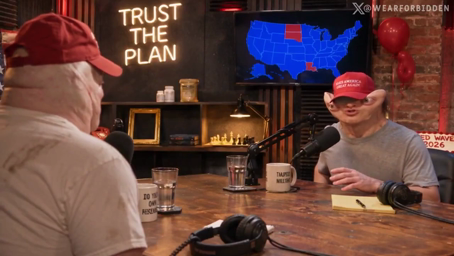 2:00 Sátira sobre la ola azul y el plan de Trump en las legislativas
 0:48 El candidato al Senado de EE. UU. Abdul discute con un periodista de Sky News
 2:10 Virginia Foxx critica a maestra al responder a ensayo de alumno sobre autos eléctricos
 1:43 Por qué un candidato de Michigan hace campaña con Obama pese a sus críticas
 5:47 Pete Hegseth defiende la agenda militar de Trump y pide 350.000 millones
 1:26 Abdul El-Sayed cuestiona a periodista de Sky News por no votar en Michigan
 iPhone app Translate videos on your iPhone Paste a TikTok, Instagram or X link, add subtitles in your language and save the video to Photos.

TranslateMom transcribes and translates videos from X, TikTok, YouTube and Instagram. Paste a link and you get a page like this one, in your language.