
Does Ivermectin Work on Different Cancers? A Speaker's Claims
4 min Health
4 min Health
So which cancers does ivermectin actually work on?
I get these questions several times a day, every single day.
Will it work on my leukemia? Will it work on my lymphoma?
Will it work on my lung cancer, my gastroesophageal cancer?
Will it work on my liposarcoma? And on and on.
Um, they're very similar questions, and, uh, the answer is the same for all of them.
The answer is yes and no. It could work on your cancer, but it might not.
Um, now that seems a little bit of a flippant answer, but it goes to the mechanism underlying, uh, each cancer.
You see, every cancer is different. Every cancer has a unique fingerprint.
And it isn't the type of cancer that determines whether ivermectin will work or not.
This is the kind of thinking that really messed up Scott Adams.
Uh, Scott Adams, uh, tried ivermectin for a month, uh, saw that it wasn't working for him after one month, and decided that, well, if it didn't work for my prostate cancer, that it doesn't work on anybody's prostate cancer,
and therefore it's a scam. And this is very limited thinking.
Um, and people really don't understand cancer at all.
Uh, just because, you know, ivermectin worked for one breast cancer patient doesn't mean it'll work for the next breast cancer patient who seems to have the same type of cancer.
Uh, the cancer could look the same by markers.
You could have ER positive, PR positive, HER2 positive breast cancer, and yet the next person with those same markers, the ivermectin might not work for them at all.
Each cancer is unique. Each cancer has its own fingerprint.
And ivermectin works at the molecular level.
Uh, unfortunately, we don't have a test that can tell us whether ivermectin will work for a particular cancer or not.
Uh, you simply have to try it. That's what it comes down to.
Uh, chemotherapy is a little bit different because chemotherapy will work in the short term on the vast majority of cancers, but because you're not killing cancer stem cells, uh, most of those cancers will inevitably come back.
That's why when cancer patients ring the bell, uh, it's very misleading because a year later, the cancer could be come back, and now instead of stage two, it's stage four.
This happens all the time. So ivermectin is a very broad anti-neoplastic, anti-cancer agent.
In twenty twenty, there was a group of Mexican researchers who ran a study, and they could get their hands on twenty-eight different cancer cell types, uh, with their cell lines, and they tested ivermectin on all of them. And guess what?
They found that ivermectin works to some degree on every single cancer type.
Now, of course, it works better for some than others.
It worked better on ovarian cancers and breast cancers and lung cancers and prostate cancers compared to maybe something like sarcomas or kidney cancers.
But it worked to some degree on all of them.
You just never know until you try, okay?
So, uh, every cancer is unique. Every cancer has their, uh, unique fingerprint.
And it's frustrating. You know, if, if ivermectin works for a pr- one prostate cancer patient, why does it not work for the next prostate cancer patient?
And we just don't know. We don't know what's happening at the molecular level.
We don't know if-- why the cancer signatures, uh, are different at the molecular level, even though the markers might look exactly the same.
End of transcript · 594 words
 1:25 Benefits of Pomegranate Juice for Health
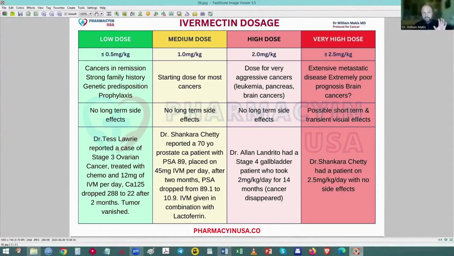 5:48 Ivermectin Dosing for Cancer Treatment
 1:02 Discussion on COVID Vaccine Controversies
 0:58 Patient Care Procedure Explanation
 0:59 Impact of Long COVID on Society
 1:21 Vaccine Safety and Industry Ties
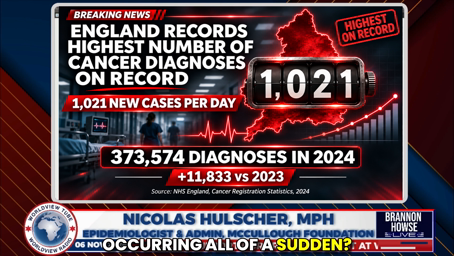 1:09 UK Records Highest Cancer Diagnoses
 6:17 German Doctor on Practice Budgets and Child Health Checkups
 6:04 Lipid Nanoparticles in mRNA Vaccines: Structure and Side Effect Claims
 2:17 How Your Body Processes Milk, Water and Coffee
 0:33 Customer from Rasht Shops for Skincare and a Philips Shaver
 3:17 Graviola Tea Recipe and a Claim of Cancer Recovery
 iPhone app Translate videos on your iPhone Paste a TikTok, Instagram or X link, add subtitles in your language and save the video to Photos.

TranslateMom transcribes and translates videos from X, TikTok, YouTube and Instagram. Paste a link and you get a page like this one, in your language.