
Debatte über englische Identität, Ethnizität und Volkszählung
2 min Machine translated Life & society
2 min Machine translated Life & society
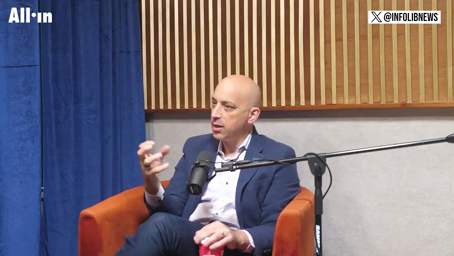
Na ja, natürlich, aber— Bist du Schwarz?
Wenn du dich Schwarz nennen würdest, weil du es wolltest, wäre das akzeptabel?
Für mich? Nein. Nein, nein. Aber was wäre, wenn du dich Schwarz nennen wolltest?
Ich verstehe nicht, warum— Äh, was wäre, wenn … Was wäre die Antwort darauf?
Die Antwort darauf ist, ich glaube, das wäre falsch, und ich würde mich nicht als— beschreiben. Warum? Warum wäre es falsch?
Wegen der— Weil du nicht Schwarz bist. Ja, aber wenn du Schwarz und Engländer sein kannst— Aber du bist eine Frau … Du kannst Schwarz— Könntest du dich eine Frau nennen, wenn du es wolltest?
Du bist einfach … Hör zu, du gehst mich an— Nein, ich frage dich— … und du fängst Streit an. Nein, das sind ernst gemeinte Fragen.
Nein, nein, aber du fängst Streit an. Worte haben eine Bedeutung.
Was … Warum, warum können … Warum dürfen Menschen nicht selbst entscheiden?
Warum kann … Warum kann das nicht eine Wahl sein? Könntest du dich als Schwarz bezeichnen?
Wenn ich wollte, könnte ich das. Ich glaube nicht, dass das richtig wäre, und ich würde es auch nicht wollen.
Ach, komm schon. Du würdest doch nicht— Ich würde es nicht wollen.
Schon klar— Komm schon. Ich meine, kann ich nicht einfach— Stuart, ich würde das nicht wollen.
Kann ich … Weißt du, wenn ich … Ich glaube nicht, dass das richtig ist.
Aber wenn du wolltest, könntest du es. Wenn es bei der Volkszählung … Warum könnte … Na ja, weil es …
Okay, ja, natürlich könntest du das, denn du kannst es körperlich tun … Moment mal …
aber es ist eine Lüge. Du kannst also ver— du kannst das Land vertreten in der Fußballmannschaft und— Na ja, nein, ich kann das, weil ich als Staatsbürger Engländer sein könnte.
Richtig. Wir reden hier über ethnische Zugehörigkeit.
Ja, aber das gehört doch auch dazu, oder?
Ich muss nicht ethnisch englisch sein, um für die englische Fußballnationalmannschaft zu spielen.
Also, ich muss Bürger Englands sein. Also, Moment.
Aber wie viele, wie viele Generationen müsste das zum Beispiel durchlaufen, bevor— Nein, ich, ich— Gilt das für immer?
Nein. Jetzt gerade. Oder ist das— Eine Generation … eine Generation?
Ich bin ethn— Ich bin nicht ethnisch englisch— Also eine— … aber als Bürger bin ich Engländer.
Also eine Generation. Das ist völlig in Ordnung. Ja.
Deine Kinder oder Enkelkinder könnten sich dann als ethnisch, äh, englisch bezeichnen.
Willst du also sagen— Na ja, wenn sie, wenn sie weitermachen … Wenn ich, ich, ich— Willst du also sagen— schlägst du vor, dass das nur einige Generationen anhält?
Stuart, so schwierig ist das nicht. Wenn ich weiterhin Punjabis heiraten würde, wären sie auch in 50 Generationen keine Angelsachsen.
Also, Eng— Aber sie wären Engländer, Staatsbürger.
Ja. Ich ver— Nicht ethnisch englisch … Das verstehe ich. Richtig.
Was ich sagen will: Ich finde, die Leute sollten selbst entscheiden können, wie sie sich auf dem Volkszählungsformular bezeichnen.
Und ich glaube auch, dass dieser konkrete Gesetzentwurf ein guter Diskussionsanlass ist.
Richtig. Na ja, ich werde mich— Und ich finde, das ist ein Recht— … als trans Frau mit einem Bein und Schwarze bezeichnen und sagen, Sie diskriminieren— Ich bin mir— … mich, weil ich anderer Meinung bin.
Na ja, dann kannst du das ins Volkszählungsformular eintragen.
Weißt du, was ich zutiefst heuchlerisch finde?
Äh, wenn ich meine Haare äh, zu Zöpfen flechten würde, Viele wären außer sich und würden sagen, ich begehe kulturelle Aneignung.
Es gibt einen sehr einseitigen Dialog, äh, wenn es um die Gesellschaft geht, aber bei weißen Engländern ist alles erlaubt.
Jeder kann alles machen. Äh, warum glaubst du, dass das so ist, wenn du meine Ansicht tatsächlich teilst?
Was hältst du von all dem?
End of transcript · 600 words · machine translated
Well, of course, but- Are you Black? I- if you called yourself Black because you wanted to, would that be acceptable?
To, to me? No. No, no. No, no, but what if you wanted to call yourself Black?
I don't understand why- Uh, what if... What, what's the answer to that?
The, the answer to that is I think that would be wrong, and I wouldn't describe myself as- Why? Why would it be wrong?
Because of the- Because you're not Black.
Yeah, but, but if you can be Black and English- But you're a woman ... you can be B- Could you call yourself a woman if you wanted to?
You are just... Look, you're picking, uh, on me- No, I'm, I'm asking you- ... and you're picking a fight. No, these are genuine questions.
No, no, but you're picking a fight. Words have meaning.
What... Why, why isn't... Why can't people have a choice?
Why can't... Why can't that be a choice? Could you choose to call yourself Black?
If I wanted to, I could. I don't think that would be right, and I wouldn't want to.
Oh, come on. You don't- I wouldn't want to.
Sure- Come on. I mean, can I just- Stuart, I wouldn't want to do that.
Can I s- do you know, if I- I don't think that's right.
But if you wanted to, you could. If, in the census, it would- Why could... Well, 'cause it...
Okay, yeah, of course you could, 'cause you can physically do so- So, hold on ... but it's a lie. So you can rep- you can represent the country for the football team and- Well, no, I can because I could be English as a citizen.
Right. We're talking about ethnicity here.
Yeah, but that, that is part of this as well, isn't it? I don't need to be ethnically English Yeah, but that, that is part of this as well, isn't it? I don't need to be ethnically English to play for the English football team.
So when- I need to be a citizen of England. So, hold on.
But how many, how many generations, for instance, does that then have to go through before- No, I, I- Is that forever?
No. Right now. Or is that- One generation ... one generation?
I am eth- I'm not ethnically English- So one- ... but I am English as a citizen.
So one generation. That's absolutely fine. Yeah.
So your children or your grandchildren could then describe themselves as ethnically, uh, English then.
So are you suggesting- Well, if they, if they continue... If I, I've, I, I- So are you sug- are you suggesting that it just lasts a number of generations?
Stuart, it's not that difficult. If I continued marrying Punjabis, 50 generations in they would not be Anglo-Saxon.
So Eng- But they would be English, citizens.
Yes. I under- Not ethnically English ...
I understand that. Right. What I'm saying is that I think people should have the choice to describe themselves on the census form as they see fit.
And I also believe that this particular bill is a good debating point.
Right. Well, I'm gonna call myself- And I think that's a right- ... a trans one-legged Black woman and say you are discriminating- I'm su- ... against me for disagreeing.
Well, you can put that in the census form then.
Do you know what I find deeply hypocritical?
Uh, if I was to stick my hair, uh, in braids hairstyle, many people would be apoplectic saying I am doing cultural appropriation.
There is a very one-sided dialogue, uh, when it comes to society, but when it's white English people, it's fair game.
Anyone can do anything. Uh, why do you think that that is, if indeed you share my view?
What do you make to all of that?
 2:04 Jüdische Identität, Mischehen und die Rückkehr aus dem Exil
 1:48 Juan trifft eine New Yorkerin bei ihrem ersten Besuch in Kalifornien
 1:06 Warum arbeiten wir trotz Automatisierung noch so viel
 1:08 Abtreibungsdebatte: Dürfen Männer über Abtreibung urteilen
 0:46 Liebe im kalten Regen: Eine wilde Umarmung auf der Straße
 0:10 Eine Pfeife rauchen und etwas Schlechtes tun
 3:13 Wahlsieger in Michigan über Antisemitismus und US-Waffenhilfe für Israel
 1:56 Actionhelden im Polizeirevier: Wettbewerb um gefasste Schurken
 3:11 Wir sind der Sturm: Rede über Stärke und die Verteidigung des Westens
 3:22 Oleksandr Dubinsky wirft Biden Korruption vor und appelliert an Trump
 6:51 Afghanistan United Front: 100 Tage Operationen gegen die Taliban
 2:42 Migration und Gewaltkriminalität in Deutschland: Polizeistatistik und Debatte
 iPhone app Translate videos on your iPhone Paste a TikTok, Instagram or X link, add subtitles in your language and save the video to Photos.

TranslateMom transcribes and translates videos from X, TikTok, YouTube and Instagram. Paste a link and you get a page like this one, in your language.