
Diritti umani e nazioni: storie che rendono possibile la cooperazione
2 min Machine translated
Ora, potreste riuscire ad accettare che in ambito religioso, la cooperazione si basa su una finzione, che tante persone, tanti sconosciuti si riuniscono per costruire una cattedrale o una sinagoga o una moschea, o per andare insieme in crociata perché credono tutti alle stesse storie su Dio, il paradiso e l'inferno e così via.
Ma quello che voglio sottolineare è che succede esattamente la stessa cosa in tutti gli altri ambiti della cooperazione umana, in ambito giuridico, in ambito politico, e anche in ambito economico.
Prendiamo come esempio l'ambito giuridico.
Oggi, nel mondo, molti, forse la maggior parte degli ordinamenti si basano su questa idea, sulla convinzione che esistano i diritti umani.
Ma i diritti umani sono proprio come il paradiso e come Dio.
Sono solo una storia inventata e diffusa da noi.
Può essere una storia molto bella, Potrebbe essere una storia molto attraente, vogliamo crederci, ma è solo una storia.
Non è una realtà. Non è una realtà biologica.
Proprio come le meduse e i picchi e gli struzzi non hanno diritti, anche l’Homo sapiens non ha diritti.
Prendi un essere umano, aprilo, guarda dentro, trovi il suo sangue, e trovi il cuore e i polmoni e i reni, ma lì non trovi alcun diritto.
L’unico posto in cui trovi i diritti è nelle storie inventate dagli esseri umani e diffuse in giro.
E lo stesso vale anche in ambito politico.
Gli Stati e le nazioni sono anch’essi come i diritti umani e come Dio e il paradiso, anche loro sono, sono, sono solo storie.
Una montagna è una realtà. La puoi vedere, la puoi toccare, puoi persino sentirne l’odore.
Ma Israele o gli Stati Uniti, Sono solo storie, storie molto potenti, storie a cui forse vogliamo credere molto, ma restano pur sempre solo storie.
Gli Stati Uniti non si possono vedere davvero.
Non si possono toccare né annusare.
End of transcript · 311 words · machine translated
Now, you may find it possible to accept that in the religious field, cooperation is based on fiction, that a lot of people, a lot of strangers come together to build a cathedral or a synagogue or a mosque or go on crusade together because they all believe the same stories about God and heaven and hell and so forth.
But what I want to emphasize is that exactly the same thing happens in all other fields of human cooperation, in the legal field, in the political field, in the economic field as well.
Take the legal field as an example. Today in the world, many, maybe most legal systems are based on this idea, this belief in human rights.
But human rights are just like heaven and like God.
It's just a fictional story that we've invented and spread around.
It may be a very nice story, it may be a very attractive story, we want to believe it, but it's just a story.
It's not a reality. It is not a biological reality.
Just as jellyfish and woodpeckers and ostriches have no rights, homo sapiens have no rights also.
Take a human, cut him open, look inside, you find their blood, and you find the heart and lungs and kidneys, but you don't find there any rights.
The only place you find rights is in the fictional stories that humans have invented and spread around.
And the same thing is also true in the political field.
States and nations are also like human rights and like God and like heaven, they too are, are, are just stories.
A mountain is a reality. You can see it, you can touch it, you can even smell it.
But Israel or the United States, they are just stories, very powerful stories, stories we might want to believe very much, but still they are just stories.
You can't really see the United States. You cannot touch it, you cannot smell it.
 9:05 Le dimensioni dalla prima alla quarta: come percepiamo lo spazio
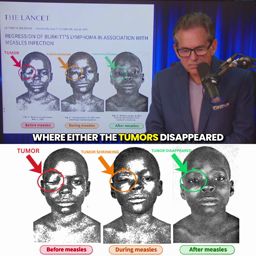 2:51 Morbillo e remissione del cancro: un caso clinico del 1971
 0:35 Divisione scherzosa del mondo: Ucraina, Taiwan e California
 7:54 Bowes promette di lottare contro le sanzioni UE e per i diritti in Irlanda
 1:44 Sofia Larrondo dice che stanno portando via suo padre durante un arresto
 4:40 Come è stata localizzata una villa di Epstein a San Paolo
 2:41 Dalla California a Colorado, Texas e Wyoming: una scenetta comica
 8:41 Putin sulle elezioni tedesche, la NATO, l’Ucraina e i prezzi del gas
 2:49 Stephen Miller elogia Trump su deregolamentazione, immigrazione ed economia
 2:20 Piers Corbyn sugli incendi in Russia e il cambiamento climatico
 2:22 Starlink e Starshield: le accuse su Ucraina e Zelenskyy
 0:45 Abate cattolico contesta la richiesta di nascondere la croce in un luogo ebraico
 iPhone app Translate videos on your iPhone Paste a TikTok, Instagram or X link, add subtitles in your language and save the video to Photos.

TranslateMom transcribes and translates videos from X, TikTok, YouTube and Instagram. Paste a link and you get a page like this one, in your language.