
Naturkapital: Warum die Natur in die Bilanz gehört
3 min Machine translated Money & business
3 min Machine translated Money & business
Wenn wir über Kapital sprechen, denken wir meist nur an Finanzkapital, an Bargeld, Finanzvermögen, aber wir wissen, dass das nicht der einzige Wert ist, von dem unsere Volkswirtschaften abhängen.
Wir wissen, dass jeder Aspekt jedes Teils der Wirtschaft grundlegend von der Natur abhängt, wie du hervorgehoben hast.
Die Luft, die wir atmen, das, das Wasser, das wir trinken, der Boden, die Ozeane, die wir für die Nahrung brauchen, die wir zu uns nehmen müssen, die Mineralien, die wir als Rohstoffe brauchen für Technologie und Infrastruktur.
Und ohne diese Wertformen, diese Formen natürlichen Kapitals, gäbe es keine Volkswirtschaften.
Sie sind die grundlegenden Bausteine unserer Volkswirtschaften.
Aber die Art und Weise, wie du sagtest, wie wir unsere Volkswirtschaften äh aufgebaut haben, unsere Modelle der wirtschaftlichen Entwicklung, waren unglaublich erfolgreich für den weltweiten Wohlstand.
Ähm, aber die unbeabsichtigten Folgen der derzeitigen Wachstumsmodelle sind schlichtweg nicht nachhaltig auf einem begrenzten Planeten.
Die Menge an Ressourcen, die wir in unsere Volkswirtschaften ziehen, die Ressourcen der Erde, und die Menge an Verschmutzung und Abfall, die wir ausstoßen, sei es durch Treibhausgasemissionen, sei es durch Abwasser in unseren Gewässern,
sei es durch Plastik im Ozean, übersteigt die Belastbarkeit der Erde.
Und wir wissen, dass das, wie du sagtest, zu sehr erheblichen direkten Auswirkungen auf die Gesellschaft führt, aber auch zu sehr erheblichen finanziellen Kosten für die Wirtschaft.
Man kann sich das, wie du es getan hast, Ähm, ansehen und auf Makroebene berechnen.
Aber wie sich das konkret zeigt Wenn wir diese Grenzen überschreiten und diese Beschränkungen sprengen und die Natur untergraben, zeigt sich das auf ganz praktische Weise und führt zu finanziellen Risiken für Institutionen.
Wassermangel führt zu Störungen bei Lieferketten und Abläufen bei denen Wasser als unverzichtbarer Input benötigt wird für die Fertigung oder Stromerzeugung.
Die Bodendegradation führt zu geringeren Ernteerträgen.
Der Rückgang der Bestäuberarten wirkt sich ebenfalls auf die Landwirtschaft aus.
Das führt zu direkten finanziellen Risiken für äh, Organisationen, Unternehmen und letztlich für Anleger.
Und wir sagten, letztlich liegt der Grund dafür derzeit darin, wie Entscheidungen getroffen werden, äh, im Alltag in Unternehmen und Finanzinstituten denn wir betrachten nur Finanzdaten, Finanzkennzahlen, die die Natur nicht berücksichtigen.
Die Natur wird in der Wirtschaft behandelt, als wäre sie unbegrenzt und vor allem kostenlos, und die Risiken und Schäden werden einfach nicht in finanzieller Hinsicht eingepreist.
Sie— Wir können sie auf makroökonomischer Ebene beziffern.
Sie fließen nicht in alltägliche Entscheidungen ein.
Und folglich führt das dazu, dass wir all unsere Volkswirtschaften einem grundlegenden Risiko ausgesetzt haben.
Auf einem toten Planeten können wir keine Geschäfte machen.
Wenn wir natürliche Systeme schützen wollen, besteht eine Lösung darin, die Natur in die Bilanz aufzunehmen, die Natur in die Entscheidungsprozesse in Unternehmen einzubeziehen, ihr einen Wert zuzuweisen und sie in Buchhaltungs- und Finanzmechanismen einzubeziehen.
End of transcript · 453 words · machine translated
When we talk about capital, we tend to think only about financial capital, about cash, financial assets, but we know that's not the only value on which our economies depend.
We know that every aspect of every part of the economy is fundamentally dependent on nature, as you highlighted.
The air that we breathe, the, the water we drink, the soil, the oceans that we need for the, the food that we need to consume, the minerals that we need as inputs to technology and to infrastructure.
And without these forms of value, these forms of natural capital, we won't have economies.
They are the fundamental building blocks of our economies.
But the ways, as you said, the ways in which we have, uh, grown our economies, our models of economic development, have been incredibly successful for global prosperity.
Um, but the unintended consequences of the current models of growth are simply not sustainable on a finite planet.
The amount of resource that we are drawing into our economies, Earth's resources, and the amount of pollution and waste that we're pumping out, whether that's through greenhouse gas emissions, whether that's sewage into our water,
whether it's plastics into the ocean, is beyond the Earth's carrying capacity.
And we know that that's leading, as you said, to very significant direct impacts to society, but very significant financial costs for the economy.
You can look at that, as you have, um, and calculate that at a, at a macro level.
But the way that that's showing up as we're breaching these boundaries and breaching these limits and undermining nature, is showing up in, in very practical ways that are showing up for financial risk for institutions.
Lack of water is leading to disruption of operations of supply chains where water is needed as an essential input for manufacturing or power production.
The degradation of soil is leading to reduced agricultural yields.
The decline of pollinator species is also having an impact on agriculture.
So that's leading to direct financial risks for, uh, organizations, for businesses, and ultimately for investors.
And we said, ultimately, the reason for this is at the moment, the way that decisions are made, uh, on an everyday level within businesses and financial institutions is because we're looking only at financial data, financial metrics that are not factoring in nature.
Nature is treated within the economy as though it's unlimited and predominantly as though it's free, and the risks and harms are simply not costed in financial terms.
They-- We can cost them at a macro level.
They're not costed into day-to-day decision-making.
And the result is, as a consequence, we've put all of our economies at fundamental risk.
We can't do business on a dead planet. If we're going to protect natural systems, one of the solutions is to bring nature onto the balance sheet, to bring nature into the ways that decisions are made within business, to allocate a value to it,
and to bring it into accounting and financial mechanisms.
 0:58 EU-Spar- und Investitionsunion: Ersparnisse für Unternehmen mobilisieren
 1:46 Spekulationen über COVID-19, ukrainische Biolabore und den Krieg
 3:13 Wahlsieger in Michigan über Antisemitismus und US-Waffenhilfe für Israel
 3:11 Wir sind der Sturm: Rede über Stärke und die Verteidigung des Westens
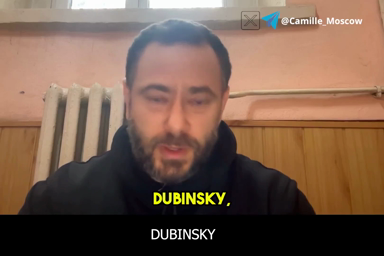 3:22 Oleksandr Dubinsky wirft Biden Korruption vor und appelliert an Trump
 2:30 Abdul zu Iran: Fragen zu Chamenei und Absage an Krieg für Regimewechsel
 6:51 Afghanistan United Front: 100 Tage Operationen gegen die Taliban
 2:55 Muslimisches politisches Engagement: Mamdani, Wahlen und Gemeinschaft
 2:42 Migration und Gewaltkriminalität in Deutschland: Polizeistatistik und Debatte
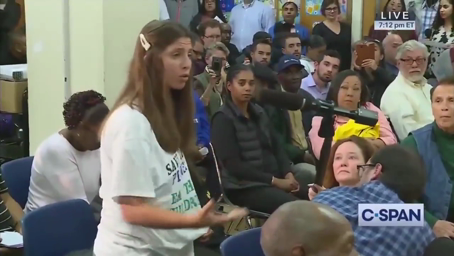 1:52 Klimakrise: Frau fordert, Babys zu essen – Politikerin antwortet
 1:12 Satirischer Dialog über Rassismus und die Zukunft der Mongolei
 1:27 Buddhismus und Islam: Leid überwinden und Fremde willkommen heißen
 iPhone app Translate videos on your iPhone Paste a TikTok, Instagram or X link, add subtitles in your language and save the video to Photos.

TranslateMom transcribes and translates videos from X, TikTok, YouTube and Instagram. Paste a link and you get a page like this one, in your language.