
La teoría conspirativa de que las armas nucleares son un engaño
54 views 9 min Machine translated War & conflict
54 views 9 min Machine translated War & conflict
Así que, con todo el alarmismo nuclear que vuelve a circular en las noticias, pensé que sería buen momento para recordarte o hacerte saber que las bombas nucleares son un engaño.
Y lo digo como alguien con un doctorado en física nuclear, así que sé muy bien cómo se supone que funcionan estas cosas, pero también soy muy escéptico sobre su existencia.
Así que, si nunca habías oído esto, bueno, quizá te suene a una loca teoría conspirativa de Internet, pero, en realidad, está muy bien sustentada.
Y, cuando lo investigues, verás que, en realidad, son las propias bombas nucleares las que son la loca teoría conspirativa, porque no existen, eh, y aun así todo el mundo cree en ellas.
Así que hay dos formas de verlo. Puedes abordarlo desde la perspectiva de la física nuclear, que es mi especialidad, o puedes verlo desde la perspectiva de la historia militar.
Ahora bien, yo me he acercado a esto desde la perspectiva de la física y simplemente a través de mi propia investigación, ya sabes, cada vez estoy menos convencido de que la física realmente dé como resultado algo real.
Eh, creo que todo es puramente teórico y que nunca han dividido el átomo, eh, y mucho menos demostrado que el átomo exista, eh, con un nivel de rigor suficientemente alto.
Así que soy muy escéptico con la física nuclear en general.
Pero cuando miras la historia, la historia militar de esto, nada tiene sentido tampoco.
Así que había un tipo llamado Michael Palmer que escribió un libro titulado Hiroshima Revisited, y expuso muy bien el problema con el relato de Hiroshima y Nagasaki.
Y presentó pruebas de que las bombas eran no estaba hecha de uranio y plutonio, sino, de hecho, de napalm y gas mostaza.
El napalm es una sustancia pegajosa, eh, como un gel, hecha de petróleo, y el gas mostaza es un agente vesicante.
¿De acuerdo? Causa, ya sabes, ampollas y te quema, te envenena los pulmones y cosas así.
Es algo bastante repugnante.
La detonaron en el aire. Lanzaron la bomba y la detonaron en el aire, y luego cae todo esto pegajoso, venenoso, que provoca ampollas, eh, una sustancia incendiaria por toda la ciudad.
Y, eh, fue un ataque espantoso. Pero no fue nuclear, ¿de acuerdo?
No fue una fisión del átomo de uranio, ya sabes, basada en la física cuántica y todas esas cosas.
No, no lo fue. Solo eran combustibles comunes, bastante rudimentarios, eh, como el petróleo y, eh, el gas mostaza.
Ahora bien, no hubo lluvia radiactiva, lo cual era una gran señal de alarma, porque me enseñaron que si estallara una bomba como esta, causaría miles de años de tierras baldías inhabitables, mutaciones, deterioro y niveles de radiación tan altos que sería peligroso hasta ir allí.
Pero Hiroshima y Nagasaki se reconstruyeron justo después de la guerra, y ambas son ciudades prósperas, modernas y hermosas.
De hecho, están en mucho mejor estado que la mayoría de las ciudades occidentales.
Eh, y la magnitud de la explosión se exageró por completo.
Eh, Michael Palmer documentó casos de personas que estaban a unos cincuenta metros de la explosión y sobrevivieron.
Cincuenta metros. Así que eso desmiente por completo esta idea de que una sola bomba pudiera volar una ciudad entera y todo lo que hubiera a kilómetros y kilómetros.
Eh, entonces, bueno, todo el asunto de la nube de hongo, bueno, tampoco es prueba de una bomba nuclear.
Las nubes de hongo son una reacción perfectamente normal ante una gran explosión.
Eh, no demuestran que el combustible de la bomba sea nuclear. ¿Entiendes?
Así que, si ves un video de una bomba que explota y crea una nube de hongo, no des por hecho que eso significa que es nuclear.
¿Entiendes? Eh, cualquier cantidad suficientemente grande de explosivos produciría el mismo efecto.
Entonces, ¿a qué vienen tantas mentiras?
Bueno, a ver, eh, eh, hay dos partes. Básicamente, está el engaño estratégico de, ya sabes, obtener una ventaja de guerra psicológica convenciendo al enemigo de que tienes la bomba más grande del mundo, ¿no?
Eso infunde el miedo a la muerte en el enemigo y, ya sabes, si tu enemigo tiene miedo, eso genera una, una ventaja de guerra psicológica muy fuerte.
Pero también tenían que ocultar que estaban llevando a cabo un ataque experimental con armas químicas contra una población civil, porque eso fue lo que pasó.
Ahora bien, las armas químicas estaban prohibidas por la Convención de Ginebra, ¿no?
Las reglas de la guerra dicen que se puede hacer volar a la gente con, eh, ya sabes, bombas y balas y combustibles explosivos, pero no se puede quemarlos con sustancias químicas y venenos.
Ahora, como eso, eso era lo que en realidad estaban haciendo, tuvieron que cambiarle el nombre a la bomba y presentarla como un nuevo tipo de combustible de combustión.
Y ese es el, el relato nuclear. Es un nuevo tipo de combustión, no un arma química.
Así que e-es una especie de tecnicismo extraño, pero sí, tuvieron que para eludir la ilegalidad de lo que hacían.
En aquel entonces había censura, después de las explosiones.
Los primeros periodistas occidentales no llegaron hasta cuatro semanas después de la explosión, y, cuando presentaron su informe, los militares lo confiscaron porque el informe no respaldaba el relato que difundían los medios occidentales.
Eh, sí, quiero decir, los medios han sido cómplices durante mucho tiempo.
Han difundido noticias falsas y documentales, historias alarmistas sobre lo nuclear, películas alarmistas sobre lo nuclear.
Eh, ha habido una enorme, digamos, estafa en torno a lo nuclear y a esa palabra y, eh, eh, al miedo que se infunde con ello.
Eh, hubo un hombre llamado Galen Windsor que lo denunció, eh, la estafa de las centrales nucleares, y, eh, lo llamó un engaño para provocar miedo nuclear.
Que, en realidad, nada de eso era tan peligroso como nos habían dicho, y estoy totalmente de acuerdo con eso.
Creo que lo han ocultado todo a propósito.
Ya sabes, porque donde hay poder, hay secretos y mentiras.
Hay que tenerlo presente, ¿no? Sí, tienen poder.
Claro que sí. Pero lo que nos dicen sobre la naturaleza de ese poder es mentira, es un engaño.
No van a ir por ahí diciéndoselo a todo el mundo, ni a enseñártelo en la escuela ni nada, como, exactamente cómo funcionan sus armas más poderosas.
Eh, claro que no. Es absurdo pensar eso.
Así que, ya sabes, no debería sorprendernos que nos mientan sobre estas cosas.
Pero podemos saberlo por las inconsistencias de la versión oficial y de la falta de veracidad de la física nuclear y la física cuántica, podemos saber que algo así simplemente no es posible y nunca se ha demostrado suficientemente que exista.
Y el beneficio de eso es que, bueno, ya no tienes que tenerle miedo.
Ese es el verdadero beneficio de adentrarse en este laberinto y entenderlo, que ya no tienes que tenerles miedo a las armas nucleares, ¿verdad?
Tienen un montón de cosas con las que asustarte.
No te preocupes, ya se les ocurrirá otra cosa.
Pero al menos esta puedes s- ya sabes, tacharla de la lista de las cosas que te aterrorizan porque no existen. Es un engaño.
Y esos videos que has visto de explosiones en el desierto, tampoco son nucleares.
Usan TNT. De hecho, la primera prueba nuclear se llamó Proyecto Trinity, y esto en realidad era una referencia al TNT, que significa trinitrotolueno.
Trinitrotolueno. Así que la primera parte de la palabra es, eh, trinidad.
Por eso se llama Proyecto Trinity. Así que es importante darse cuenta de que en la guerra hay muchos engaños y mentiras, y la verdad sobre las armas que usan es mucho más rudimentaria.
Solo usan combustibles convencionales, explosivos convencionales, venenos convencionales, que bastan perfectamente para hacer el trabajo.
End of transcript · 1,305 words · machine translated
So with all the nuclear fear-mongering going on again in the news, I thought it would be a good time to remind you or make you aware that nuclear bombs are a hoax.
And I say this as someone with a PhD in nuclear physics, so I'm very well aware of how these things are supposed to work, but I'm also incredibly skeptical of their existence.
So if you've never heard it before, well, it might sound like a crazy conspiracy theory on the Internet, but actually it's very well substantiated.
And once you've looked into it, you will find that it is actually nuclear bombs themselves that are the crazy conspiracy theory because they don't exist, uh, and yet everyone believes in them.
So there's two ways to look at it. You can approach it from a nuclear physics perspective, which is my background, or you can look at it from a military history perspective.
Now, I have kind of come at it from the physics perspective and just through my own investigation, you know, become less and less convinced that the physics actually adds up to anything real.
Uh, I believe it's all just theoretical and that they've never actually split the atom, uh, let alone even proven that the atom exists, uh, to any sufficiently high standard.
So I'm very skeptical of nuclear physics in general.
But when you look at the story, the military history of it, none of it makes sense either.
So there was a guy called Michael Palmer who wrote a book called Hiroshima Revisited, and he did a great job of exposing the problem with the Hiroshima and Nagasaki narrative.
And he put forth the evidence that the bombs were not made from uranium and plutonium, but in fact made from napalm and mustard gas.
So napalm is a sticky, uh, gel-like substance made from petroleum, and mustard gas is a blistering agent.
Okay? So it, you know, causes like blisters and like burns you and poisons your lungs and stuff.
Pretty nasty stuff.
So it was detonated in the air. So they dropped the bomb, detonated it in the air, and then it rains down all this like sticky, poisoning, blistering, uh, fire goo all over the city.
And, um, so it's a horrendous attack. But it wasn't nuclear, okay?
It wasn't a splitting of the uranium atom, you know, based on quantum physics and all this kind of stuff.
Like, no, it wasn't. It was just quite rudimentary, uh, common fuels such as petroleum and, um, and mustard gas.
Now, there was no nuclear fallout, which was a big red flag because I was taught that if a bomb like this was to go off, it would cause thousands of years of inhospitable wasteland, mutations, decay and radiation levels so high that it would be like dangerous to even go there.
But Hiroshima and Nagasaki built right back after the war, and they're both, uh, thriving, modern, beautiful cities.
They're actually in way better shape than most Western cities.
Um, and the scale of the explosion was totally exaggerated.
Uh, Michael Palmer, uh, documented cases of people who were about fifty meters away from the blast and survived.
Fifty meters. So that completely debunks this idea of a, a single bomb like blowing up a whole city and everything for miles and miles around.
Um, then, well, the whole mushroom cloud thing, well, that's not proof of a nuclear bomb either.
Mushroom clouds are a perfectly normal response to a, a large explosion.
Uh, they don't prove the nuclearity of the fuel that's in the bomb. Okay?
So if you see a video of a bomb going off and creating a mushroom cloud, don't assume that that means it's nuclear. Okay?
Um, any, any sufficiently large quantity of explosive would have the same effect.
So what's with all the lies then? Well, I mean, uh, uh, there is two parts to it.
There's basically the strategic deception of, you know, creating a psychological warfare advantage by convincing the enemy that you have the biggest bomb in the world, right?
It just like puts the fear of death in the enemy and, you know, if your enemy is afraid, that creates a, a strong, like, psychological warfare advantage.
But they also had to conceal the fact that they were engaged in an experimental chemical weapons attack on a civilian population, 'cause that's really what happened.
Now, chemical weapons were banned under the Geneva Convention, right?
The rules of warfare state that you're allowed to blow people up with, um, you know, bombs and bullets and explosive fuels, but you're not allowed to burn them with chemicals and poisons.
Now, because that, that's what they were actually doing, they had to rebrand the bomb as a new type of combustion fuel.
And that's what the, the nuclear narrative is.
It's a new type of combustion, not a chemical weapon.
So i-it's this weird kind of technicality, but yeah, they, they had to do that to get around the, the illegality of what they were doing.
Now, there was censorship at the time, the-- after the bombs went off.
The first Western journalists didn't get in till four weeks after the explosion, and when they submitted their report, the military confiscated it because the report didn't support the narrative that they were spinning in the Western media.
Um, yeah, I mean, the media have been complicit in it for a long time.
They've been putting out fake news and documentaries, nuclear scare stories, nuclear scare movies.
Um, there's been a massive, like, scam around nuclear and that word and, uh, uh, and the fear that's put into it.
Um, there was a guy called Galen Windsor who exposed this, uh, the, the scam in nuclear power stations, and, um, he called it a nuclear scare scam.
Uh, that basically none of it was as dangerous as, as we've been told, and I fully agree with this.
I think it's all been hidden on purpose.
You know, 'cause w-wherever there is power, there is secrets and lies.
You gotta remember that, right? Yes, they have power.
Of course, they do. But what they tell us about the nature of that power is a lie, is a deception.
They're not just gonna tell everyone, teach you at school and everything, like, exactly how their most powerful weapons work.
Um, uh, of course not. It's, uh, it's absurd to think that.
So, you know, it shouldn't be surprising that they lie to us about this stuff.
But we can know from the inconsistencies in the official narrative and from the lack of veracity of nuclear physics and quantum physics, we can know that such a thing is just not possible and has never been sufficiently demonstrated to exist.
And the benefit of that is, well, you don't need to be afraid of it anymore.
That's the real benefit of going down this rabbit hole and understanding it, is that you don't need to be afraid of nukes anymore, right?
They have loads of things to scare you with.
Don't worry, they'll think of something else.
But at least this one, you can s- you know, scratch off the list of things that terrify you because they don't exist. It's a hoax.
And those videos you've seen of explosions in the desert, those are not nuclear either.
Those use TNT. In fact, the first nuclear test was called Project Trinity, and this was actually a reference to TNT, which stands for trinitrotoluene.
Trinitrotoluene. So the first part of the word is, uh, trinity.
That's why it's called Project Trinity. So it's just important to realize that in warfare, there is lots of deception and lies, and the actual truth behind the weapons that they use is much more rudimentary.
They just use conventional fuels, conventional explosives, conventional poisons, which are all perfectly sufficient to get the job done.
 2:51 Canciller ruso niega atacar a civiles tras bombardeo de fábrica
 1:32 Haití: fuerza de la ONU contra pandillas y misión separada de El Salvador
 3:32 Veterano de Vietnam recuerda su regreso y el Memorial de los Veteranos
 0:52 Putin y las muertes de civiles en la guerra entre Rusia y Ucrania
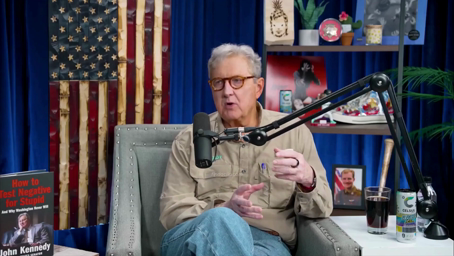 1:21 Afirmaciones sobre el arsenal de misiles de Irán y el ataque de Trump
 0:39 La costa de Gaza y una propuesta para trasladar a sus habitantes al Néguev
 0:27 EE. UU. prioriza vidas estadounidenses y advierte de una respuesta militar
 1:00 Llamado a judíos de todo el mundo ante el sufrimiento civil en Gaza
 1:29 Albert Pike y la supuesta predicción de tres guerras mundiales
 1:28 Haití: misión de la ONU contra pandillas y operación salvadoreña separada
 0:51 Estrecho de Ormuz: críticas a Rubio y los objetivos de guerra de EE. UU. en Irán
 1:03 La guerra, la opinión pública y las advertencias nucleares de Netanyahu
 iPhone app Translate videos on your iPhone Paste a TikTok, Instagram or X link, add subtitles in your language and save the video to Photos.

TranslateMom transcribes and translates videos from X, TikTok, YouTube and Instagram. Paste a link and you get a page like this one, in your language.