
Contrôle neuronal des insectes : biodrones et armement potentiel
1 min Machine translated Tech & science
Je peux influencer les fonctions cérébrales des individus de diverses manières, à la fois positivement et négativement, en activant ou désactivant des nœuds et réseaux du cerveau qui influencent ainsi leurs cognitions, émotions et, en fin de compte, leurs comportements. Mon collègue Jamie Canton aime beaucoup jouer avec
l'idée d'opérations neuronales spécialisées.
Et là encore, nous parlons de l'utilisation soit de médicaments et/ou de dispositifs pour modifier l'intégrité des fonctions cérébrales dont nous savons qu'elle peut également modifier la perception qu'ont les individus du temps et de l'espace.
J'infiltre le système nerveux de cet insecte, et je contrôle sa façon de se déplacer.
En contrôlant sa façon de se déplacer, je contrôle sa trajectoire.
Je contrôle le mouvement de ses ailes. Je contrôle où il plane, où il vole, où il s’articule. Et je peux aussi faire en sorte de coupler cela à un ensemble très, très petit de biocapteurs ou de caméras, et ce que j’ai essentiellement ici, c’est un biodrone. Je peux aller plus loin et je peux aussi
imprégner cet individu, cet organisme individuel, d’un très petit système d’administration pouvant être militarisé.
Autrement dit, si j’utilise une arme biologique à très, très petite échelle, telle qu’une organotoxine très puissante ou l’administration d’une très petite quantité de microbes dont nous savons qu’ils peuvent soit se répliquer et infecter, soit être génétiquement modifiés pour avoir un effet de morbidité très, très élevé, je peux alors
l’utiliser non seulement comme un drone de reconnaissance, mais aussi comme un drone infiltrant pouvant être militarisé et pouvant alors délivrer une charge utile
End of transcript · 261 words · machine translated
I can affect individuals' brain functions in a variety of different ways, both positively and negatively, by engaging or disengaging nodes and networks of the brain that therefore affect their cognitions, emotions, and ultimately their behaviors. Something my colleague Jamie Canton likes to play with an awful lot is
the idea of specialized neural operations.
And here, once again, we're talking about the use of either drugs and/or devices to modify the integrity of brain function that we realize can also modify individuals' perception of time and space.
I infiltrate that bug's nervous system, and I control the way it moves.
By controlling the way it moves, I control the way it goes.
I control its wings pattern. I control where it hovers, where it flies, where it articulates. And what I can also do is I can then couple this to a very, very small scale set of either biosensors or cameras, and what I basically have here is a biodrone. I can go one step further and I can also
impregnate that individual, that individual organism, with a very small-scale weaponizable delivery mode.
In other words, if I'm using a very, very small-scale bioweapon, such as a very potent organotoxin or the delivery of a very small level of microbes that we know can either replicate and infect or is genetically modified to have a very, very high morbidity effect, I can then
utilize this not only as a reconnaissance drone but also as an infiltrative weaponizable drone that can then deliver some payload
 4:59 Au cœur d’un processeur : transistors, microscope électronique et fabrication
 4:04 Les cinq technologies promises à l’humanité par des extraterrestres
 1:05 iPhone 16 : l’infrarouge de Face ID et de la caméra selfie visible à 50 mètres
 1:54 Une attaque par ransomware menée par des agents IA en 14 minutes
 1:11 Cristaux de calcite dans la glande pinéale et navigation des pigeons
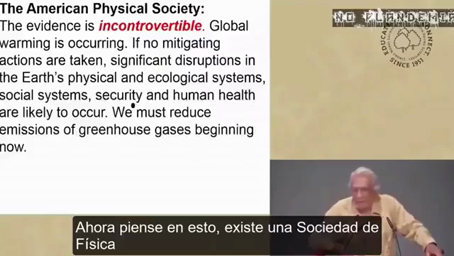 2:20 Réchauffement climatique : un regard sceptique sur les relevés de température
 0:58 Richie parle d’Agentic Days à Zurich et esquisse un pas de danse
 1:01 iPhone 16 : l’infrarouge de Face ID et de la caméra visible en vision nocturne
 1:17 GTA 6 : régler le HDR avec HGiG et la luminosité maximale
 2:38 Le système électrique de la Terre : océans, ionosphère et aurores
 0:27 Préparation aux pandémies après la COVID-19 et futures cyberattaques
 0:35 Une cyberattaque majeure pourrait paralyser les services essentiels
 iPhone app Translate videos on your iPhone Paste a TikTok, Instagram or X link, add subtitles in your language and save the video to Photos.

TranslateMom transcribes and translates videos from X, TikTok, YouTube and Instagram. Paste a link and you get a page like this one, in your language.