
As finanças da Anthropic: US$ 800 bilhões em obrigações e custos de IA
5 min Machine translated Money & business
5 min Machine translated Money & business
Mas Dei uma olhada nas finanças da Anthropic, e é um pesadelo.
Agora, não encare isso como conselho de investimento, é claro, mas se você olhar quanto a Anthropic vai ter que pagar a todos esses, ah, provedores de serviços e de infraestrutura, incluindo empresas como Broadcom, AMD, Microsoft, Google e muitas outras,
se você fizer as contas, e há alguma variação dependendo das circunstâncias, mas nos próximos anos, até 2031, por exemplo, a Anthropic vai ter que levantar 800 bilhões de dólares só para cumprir suas obrigações assinadas,
ou quase 800 bilhões. É um pouco menos. E isso já está, sabe, no papel.
E, mesmo assim, a empresa está queimando dinheiro como você não imagina.
O fluxo de caixa dela é, sabe, muito pequeno.
A receita dela é uma fração minúscula de 800 bilhões, Sabe, nem chega a 20 bilhões.
E não vejo nenhuma maneira possível de a Anthropic ganhar o que precisa ganhar para simplesmente cumprir as obrigações que já assumiu.
Fiz as contas e cheguei a um número de mais ou menos…
Ela realmente precisa ganhar cerca de 100 bilhões por ano, mais ou menos, para ter lucro.
E isso inclui tudo, sabe, as despesas operacionais e todos os arrendamentos e os investimentos adicionais em hardware e por aí vai.
Precisa de 100 bilhões por ano em receita.
De novo, neste momento, só tem uma fração disso.
E também está claro que essa receita necessária, é claro, não pode vir de usuários finais com assinaturas de 100 dólares mensais ou outro valor, nem mesmo de 200 por mês.
Quero dizer, isso não é sobre atender usuários finais.
Os clientes usuários finais individuais ou até mesmo os clientes corporativos individuais, esses...
As taxas deles nunca representarão o nível de receita de que a Anthropic precisa para justificar seus investimentos contínuos e sua expansão, especialmente em infraestrutura, mesmo com, ah, um número enorme de TPUs alugadas para treinar modelos.
Quer dizer, é... é algo enorme. E, aliás, mérito da Anthropic, os modelos deles são ótimos.
O Opus 5.5 é considerado por muitos, inclusive por pessoas em quem confio, o melhor modelo de programação do mundo.
Agora, não estou usando esse modelo porque passei a usar só soluções locais.
Estou usando o DeepSeek para programar agora, e estou bem satisfeito com o DeepSeek.
O Opus 5.5 é um pouco melhor que o DeepSeek.
Mas, por outro lado, ele tem muitas recusas.
Você tenta fazer algo, e ele diz: “Não, não vou fazer isso.”
Quer dizer, até mesmo código de segurança comum ou tentativas de solucionar problemas, ah, violações de segurança ou coisas assim, o Opus se recusa.
E esse é um dos problemas de usar modelos na nuvem, é que você não tem controle, você pode perder o acesso a qualquer hora.
E é por isso que cada vez mais pessoas, inclusive empresas, estão migrando para a IA de código aberto que podem executar localmente, ou até mesmo executar modelos sem censura ou sem restrições, que não se recusam a fazer coisas.
Então, independentemente do que você pense sobre a capacidade dos modelos, ainda há desvantagens em usá-los na nuvem, e é por isso que a IA local sempre terá essas vantagens.
Mas, pensando bem, A única maneira de a Anthropic poder continuar existindo, sabe, sem ir à falência, bem, na verdade há duas maneiras.
Uma é continuarem tomando dinheiro emprestado e rolando a dívida, quase como um Ponzi, seguirem captando, o que, é claro, depende de o custo do dinheiro emprestado continuar relativamente baixo, mas não está.
É, as taxas de juros para empresas ligadas à IA estão subindo muito, e algumas dívidas de empresas como a CoreWeave foram colocadas a, bem, 16% de rendimento para atrair compradores a assumir essa dívida.
16%. Isso está ficando bem louco, não é?
Então, as empresas de IA não vão conseguir mais tomar empréstimos a 6, 7 ou até 8%.
E isso acaba se tornando uma situação meio autodestrutiva se você precisa continuar tomando empréstimos para continuar vivo, mas o empréstimo fica cada vez mais caro, e você tem que rolar a dívida antiga para uma nova com taxas muito mais altas,
então, sabe, o fim está próximo. Bright Videos.
End of transcript · 699 words · machine translated
But I took a look at the financials of Anthropic, and it's a nightmare.
Now, don't take this as investment advice, of course, but if you look at how much Anthropic is going to have to pay to all of these, uh, service providers and infrastructure providers, including companies like Broadcom, AMD, Microsoft, Google, and many others,
if you do the math on that, and there's some variation depending on the circumstances, but over the next few years, like to 2031, Anthropic is going to have to come up with 800 billion dollars just to meet its signed obligations,
or, or nearly 800 billion. It's just under.
And that's already, you know, on paper. And yet, the company is burning cash like you can't believe.
Its cash flow is, you know, very small. Its revenues are a tiny fraction of 800 billion, you know, not even 20 billion.
And I don't see any possible way that Anthropic can earn what it needs to earn in order to just service the obligations it's already committed to.
I did the math on that, and came out to a number of about...
It really needs to earn about 100 billion a year, give or take, in order to be profitable.
And that includes everything, you know, operating expenses and all the leases and additional hardware investments and so on.
It needs about 100 billion a year in revenue.
Again, right now, it's only at a fraction of that.
And it's also clear that this needed revenue, of course, cannot come from end users with 100 dollar a month subscriptions or whatever it costs, or even 200 a month.
I mean, this isn't about serving end users.
The, the individual end user customers or even the individual corporate customers, these...
Their fees will never represent the level of revenue that Anthropic needs to justify its ongoing investments and its expansion, especially in infrastructure, even, uh, a massive number of TPUs leased in order to do model training.
I mean, it's, it's massive. And, and by the way, to Anthropic's credit, their models are really outstanding.
Opus 5.5 is largely regarded by many people, including those I trust, as the top coding model in the world.
Now, I'm not using it because I've, I've gone to everything local.
I'm using DeepSeek for coding right now, and I'm quite happy with DeepSeek.
Opus 5.5 is a little better than DeepSeek.
But then again, it has a lot of refusals in it.
So you're trying to do certain things, and it will say, "No, I'm not willing to do that."
I mean, even just regular security type of code or trying to troubleshoot, uh, security breaches or things like that, Opus will refuse.
And that's one of the problems with using cloud-based models, is you don't have control, you could be cut off at any time, et cetera.
And that's why more and more people, including companies, are moving to open source AI that they can run locally, or they can run even uncensored or obliterated models that don't refuse things.
So regardless of what you think about the capability of the models, there are still disadvantages to using them in the cloud, and that's why local AI will always have these advantages.
But if you think about it, the only way Anthropic could actually continue to exist, you know, without going bankrupt, well, there are really two ways.
One is they have to keep borrowing money and just keep rolling it over, almost like a Ponzi, keep bringing money in, which of course depends on the cost of borrowed money remaining relatively low, which it isn't.
Uh, interest rates for AI-related companies are rising dramatically, and some of the debt of some companies like CoreWeave has been put at about, uh, well, 16% yield in order to entice buyers to carry that debt.
16%. That's, I mean, that's getting crazy, right?
So AI companies aren't going to be able to borrow at 6 or 7 or even 8% any longer.
And so that becomes sort of a self-defeating thing if you have to keep borrowing in order to stay alive, but the borrowing becomes more and more expensive, and you have to roll over old debt into new debt at much higher rates,
then, you know, the end is near. Bright Videos.
 5:07 Funcionários de armazém e engenheiros da Amazon: debate sobre ações
 8:57 IA para Crescer Empresas: Gargalos, Liderança e Agentes
 3:03 Cyber Polygon, ciberataques a bancos e moedas digitais
 1:14 Estratégias de trading com VWAP e bandas de desvio padrão
 2:44 Gestores do Goldman Sachs enfrentam mudança de Nova York
 1:30 Aer Lingus brinca com seu nome no mercado americano
 0:50 Como criar bancos comunitários com fundos e investimentos coletivos
 3:00 Ataques cibernéticos a bancos, moedas digitais e simulações de killware
 3:03 Cyber Polygon, ataques cibernéticos aos bancos e moedas digitais
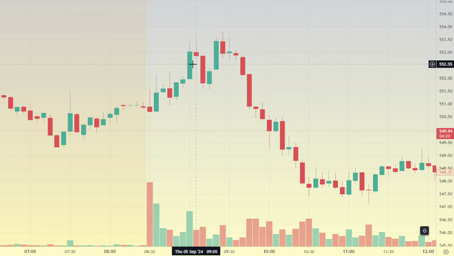 2:45 Operação vendida no SPY: análise de volume e preço no gráfico de 5 minutos
 0:21 Debate sobre a possível recondução de Jensen Huang a CEO da NVIDIA
 2:49 A sociedade escolheu os bancos centrais? Debate sobre o Federal Reserve
 iPhone app Translate videos on your iPhone Paste a TikTok, Instagram or X link, add subtitles in your language and save the video to Photos.

TranslateMom transcribes and translates videos from X, TikTok, YouTube and Instagram. Paste a link and you get a page like this one, in your language.