
Nanopontos de carbono em Coca-Cola e Pepsi: estudo e alegações sobre Gates
3 min Machine translated Health
Isso vai assustar muita gente. Há um estudo que descobriu que pontos quânticos de carbono fluorescentes dentro da Coca- Cola e da Pepsi atravessam a barreira hematoencefálica. Sim.
O que isso significa é que, dentro da Coca- Cola e da Pepsi, um estudo analisou o interior do líquido e identificou o que são chamados pontos quânticos de carbono.
São partículas microscópicas, ah, com cinco nanômetros de largura, compostas de carbono, oxigênio e hidrogênio.
E, hum, o que eles também fizeram foi extraí-las da Coca-Cola e da Pepsi e administrá- las a camundongos para ver o que aconteceria, e as partículas foram diretamente para o cérebro.
Então, elas rompem a barreira hematoencefálica, passam por ela e chegam ao cérebro, chega, chega, chegaram ao coração.
Foram para o fígado e os pulmões. Basicamente, foram para todo o corpo.
E é aqui que a coisa fica muito estranha.
Bill Gates, a Fundação Gates é, uma das maiores financiadoras, uma das maiores investidoras da maior engarrafadora de Coca-Cola do mundo, quer dizer, fábrica de engarrafamento, com 660 milhões de dólares investidos, além de ter financiado a PepsiCo.
Ele é um inves- ele era investidor nisso.
E então, dois anos antes de detectarem esses pontos de carbono na Coca- Cola e na Pepsi, a Fundação Gates financiou um estudo que desenvolveu pontos de carbono. O quê?
É, não dá para inventar uma coisa dessas.
Acabei de descobrir isso. Eu fiquei tipo, “Não, não tem como isso ser verdade.”
Ele, é, diz na seção de agradecimentos: “Agradecemos à Fundação Bill e Melinda Gates por financiar este estudo.”
Eles literalmente fizeram pontos quânticos de grafeno de carbono.
É, eles fizeram isso de grafite. A questão é que você, se comparar os dois nanodots, os encontrados na Coke e na Pepsi e os que a Gates Foundation ajudou a desenvolver, eles têm o mesmo tamanho, cinco nanômetros.
Ambos são fluorescentes e refletores, e ambos têm a mesma composição química, basicamente carbono, é… hidrogênio e oxigênio.
E ambos têm o que se chama de características grafíticas.
Isso significa que o carbono, as moléculas de carbono ficam dispostas numa estrutura hexagonal, é…
Então, basicamente, eles são iguais. E não estou dizendo que os que ele desenvolveu dois anos antes estejam na Coke e na Pepsi, mas estou dizendo que é… uma coincidência muito estranha.
Sim, eu diria que é uma coincidência bem estranha.
E aqui está o estudo, aliás, Nanopartículas fluorescentes presentes na Coca- Cola e na Pepsi- Cola…
End of transcript · 412 words · machine translated
This is gonna be scary to a lot of people.
There's a study discovered that fluorescent carbon nanodots inside Coca-Cola and Pepsi that cross the blood-brain barrier. Yeah.
What this means is inside of Coca-Cola and Pepsi, a study looked inside the liquid and identified what are called carbon nanodots.
These are microscopic, uh, five-nanometer-wide particles made up of carbon, oxygen, and hydrogen.
And, um, what they also did was they extracted them from the Coke and Pepsi, and they administered it to mice to see what would happen, and the particles went directly into the brain.
So it breaches the blood-brain barrier, goes through it, so it gets in the brain, get, it get, got in the hearts.
It went to the liver and lungs. It basically went everywhere in the body.
And here's where it gets very strange. Bill Gates, Gates Foundation has, is one of the largest funders, one of the largest investors in the world's largest Coca-Cola bottler, uh, bottling plant, uh, with 660 million dollars invested,
as well as funded, uh, PepsiCo. He's an in- he was an investor in that.
And then two years before they detected these carbon nanodots in Coke and Pepsi, the Gates Foundation funded a study that developed carbon nanodots. What?
Uh, yeah, you can't make this up. I just uncovered this.
I was like, "There, there's no way this is real."
He, uh, it says in the acknowledgement section, "We thank the Bill and Melinda Gates Foundation for funding this study."
They literally made, uh, carbon graphene nanodots.
Uh, they made it out of graphite. The thing is, you, if you compare the two nanodots, the ones found in the Coke and Pepsi and the ones Gates Foundation helped develop, they're the same size, five nanometers.
They're both fluorescent and reflective, and they both have the same chemical makeup, basically carbon, uh, hydrogen, and oxygen.
And they both have what are called graphitic features.
That means the carbon, the carbon molecules are in a hexagonal, uh, lattice arrangement on these.
So they basically look the same. And so I'm not saying that the ones he developed two years earlier are in the Coke and Pepsi, but I am saying, uh, that's a very strange coincidence.
Yes, I would say that's a pretty strange coincidence.
And here's the study, by the way, Fluorescent Nanoparticles Present in Coca-Cola and Pepsi-Cola...
 6:55 Indústria farmacêutica e FDA: alegações de ocultismo e corrupção
 2:55 Alegações de contaminação por DNA nas vacinas da Pfizer e Moderna
 3:39 Como mudaram as diretrizes de pressão arterial e o uso de medicamentos
 2:46 Vacinas contra tétano, pólio e tuberculose: discussão sobre riscos e benefícios
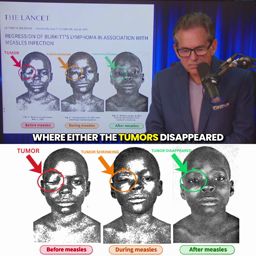 2:51 Sarampo e remissão do câncer: um caso relatado em 1971
 1:49 Preparação para Pandemias, Vacinas de RNA e Crescimento Populacional
 2:52 DMSO e pé caído: relato de uma esposa sobre alívio da dor e recuperação
 5:48 Ivermectina para câncer: alegações sobre doses e relatos de casos
 4:30 Microbioma intestinal: alegações sobre bactérias e somatídeos
 1:15 Enfermeira Questiona Vacina contra Hepatite B em Bebês e Relata Advertência
 2:08 Hemograma no tratamento do câncer: por que olhar para os linfócitos
 1:20 Um Pedido de Desculpas por Tweets e Anos de Orações pela Recuperação
 iPhone app Translate videos on your iPhone Paste a TikTok, Instagram or X link, add subtitles in your language and save the video to Photos.

TranslateMom transcribes and translates videos from X, TikTok, YouTube and Instagram. Paste a link and you get a page like this one, in your language.