
Microbioma intestinal: alegações sobre bactérias e somatídeos
5 min Machine translated Health
De onde vêm esses microrganismos no seu intestino?
Como você adquire todo esse microbioma? Aliás, dizem, sabe, que, se você toma antibióticos, isso destrói seu microbioma.
Então, de onde você consegue outros? Dizem: "Ah, bom, tome… vá tomar probióticos."
Ah, de uma vaca? Devo pegar minhas bactérias de uma vaca?
De onde a vaca pega as bactérias dela quando come grama?
Por que eu tenho que pegar as… da vaca? Por que não posso simplesmente consegui-las naturalmente? Da grama.
Se você perguntar, se perguntar à, hum, profissão médica: "De onde vem seu microbioma?"
Eles dizem: "Bom, quando o bebê nasce, ele passa pelo canal de parto da mãe.
É daí que ele o recebe." Certo. Então, e se o bebê nascer por cesariana e não passar pelo canal de parto?
Bom, então ele o recebe pela amamentação.
Bem, então e se você tiver um bebê que nasceu de cesariana e, por algum motivo, não conseguir mamar?
Bem, não sabemos. Bem, a resposta é que produzimos essas bactérias no nosso corpo.
Produzimos as bactérias. Lembre-se de que eu lhe falei de Beauchamp, que era contemporâneo de Louis Pasteur, da teoria dos germes, que disse que havia… eram microzimas, esses pequenos corpos que podiam se tornar qualquer tipo de bactéria de que você precisasse para limpar a sujeira no seu corpo.
Uhum. Bem, isso foi há 150 anos. Nos últimos 50 anos, houve um homem no Canadá chamado Gaston Naessens que também desenvolveu um microscópio muito, ah, potente, e conseguia ver essas coisas, e chamou essas mesmas coisas de somátides.
Ele diz: "Enquanto o corpo está saudável, as somátides passam por um ciclo de três.
Mas, se o corpo ficar doente por causa do seu estilo de vida, da alimentação e do estresse, o corpo vai produzir as bactérias ou leveduras de que você precisa para limpar a bagunça.
Elas podem produzir cocos, que são um tipo de bactéria, ou bacilos, que são outra forma de bactéria, ou podem produzir micélios, que são formas de levedura.
E isso é para limpar a bagunça, assim como os necrófagos na Terra.
Bem, quando, ah, quando eu— no início dos anos 90, depois que aprendi muita coisa sobre o que estava acontecendo no mundo, ah, quando eu falava sobre a questão da AIDS em São Francisco, hum, eu tinha um programa de rádio chamado Truth Serum,
e entrevistava terapeutas alternativos. Então entrei em contato com o Dr. Naessens e perguntei se podia visitá-lo, e fui. Viajei para o Canadá.
A propósito, ele tinha sido, ah, atacado brutalmente pela classe médica por causa das opiniões dele.
Certo? Então Passei uma tarde com ele, só nós dois no laboratório dele, e olhei pelo microscópio dele, e ele me mostrou aqueles somatídeos.
Então ele disse: "Quer que eu examine o seu sangue?" E eu disse: "Claro."
Então ele furou meu dedo e tirou meu sangue, colocou-o numa lâmina e pôs a lâmina no microscópio.
Isso foi em 1992. Certo. 1992. Ele olhou pelo microscópio, e ficou em silêncio, e começou a ficar desconfortável, o silêncio durou tanto.
E eu perguntei a ele, "Tem algum problema?"
Ele se virou e olhou para mim, e disse: "Você tem câncer."
Então ele foi... Sim, foi ele quem contou isso a você.
E, e eu, eu fiquei chocado. Quer dizer, eu me sentia bem.
Eu não tinha problema nenhum, e simplesmente ignorei.
Pensei: “Ele não sabe do que está falando.”
Entende? E ele me mostrou e disse: “Os somatídeos mudaram de formato, e estão passando para outro formato para limpar a bagunça no seu corpo.”
Dezoito meses depois, fui diagnosticado com câncer por biópsia.
Dezoito meses depois. Ele diagnosticou meu câncer 18 meses antes de qualquer pequeno tumor aparecer no meu peito.
Dezoito meses antes. É bem impressionante. Certo?
Então, o que ele mostra é que formamos bactérias e vírus.
Formamos nosso próprio microbioma. Por isso, mesmo que o bebê não venha pelo canal de parto, nasça de cesariana e não, não, hum, ah, mame.
Essas são coisas boas, nascer naturalmente e mamar, mas a pessoa ainda pode formar seu próprio microbioma. porque produzimos as bactérias.
End of transcript · 688 words · machine translated
Where do these microorganisms in your intestine come from?
How do you get this whole microbiome? By the way, they say, you know, if you take antibiotics, that destroys your microbiome.
So then where do you get new ones? They say, "Oh, well, get-- go get probiotics."
Oh, from a cow? I should get my bacteria from a cow?
Where does the cow get his bacteria when the cow eats grass?
Why do I have to get the-- from the cow?
Why can't I just get it the natural way? From the grass.
If you ask, if you ask the, um, medical profession, "Where do you get your microbiome?"
They say, "Well, when the baby is born, it comes through the mother's birth canal.
That's where it gets it." Okay. Then what if a baby's born by C-section and doesn't go through the birth canal?
Well, then they get it from nursing. Well, then what if you have a baby that was born by C-section and for some reason is unable to nurse?
Well, we don't know. Well, the answer is that we make these bacteria in our body.
We make the bacteria. Remember I told you that Beauchamp, who is the contemporary of Louis Pasteur of the germ theory, said that there-- these were microzyma, these little bodies that could become whatever kind of bacteria you needed to clean up the mess in your body.
Mm-hmm. Well, that was 150 years ago. Within the last 50 years, there was a man in Canada named Gaston Naessens who also developed a very, uh, strong microscope, and he could see these things, and he called the same things somatids.
He says, "As long as the body is healthy, the somatids go through a cycle of three.
But if the body becomes unhealthy because of the way you're living, eating, and having stress, then the body will produce the bacteria or yeast that you need to clean up the mess."
They can produce a cocci, which is one kind of bacteria, or rods, which is a different form of bacteria, or they can produce mycelia, which are yeast forms.
And that's to clean up the mess, just like the scavengers on the Earth.
Well, when, uh, when I was-- back in the early 90s, after I learned a whole lot about what was going on in the world, uh, when I was talking about the AIDS issue in San Francisco, um, I had a radio show called Truth Serum,
and I was interviewing alternative practitioners.
And so I contacted Dr. Naessens and asked if I could come and visit him, and I did. I went up to Canada.
By the way, he had been, uh, attacked viciously by the medical profession because of his views.
All right? So I spent an afternoon with him, just the two of us in his laboratory, and I looked through his microscope, and he was showing me these somatids.
So then he said, "Do you want me to look at your blood?" And I said, "Sure."
So he pricked my finger, took my blood, and he put it on a slide, and he put it under the microscope.
Now, this was in 1992. Okay. 1992. And he looked under the microscope, and he was silent, and it was kind of getting uncomfortable, the silence was so long.
And I said to him, "Is there a problem?"
And he turned and looked at me, and he said, "You have cancer."
So he was-- Yeah, he was the one that told you that.
And, and I, I was shocked. I mean, I felt fine.
I had no problems, and I, I just dismissed it.
I thought, "He doesn't know what he's talking about."
You see? And he showed me, and, and he said, "The somatids have changed format, and they're going into another format to clean up the mess in your body."
18 months later, I was diagnosed with cancer by biopsy.
18 months later. He diagnosed my cancer 18 months even before any small tumor appeared on my chest.
18 months before. That's pretty amazing. Okay?
So what he shows is that we form bacteria and viruses.
We form our own microbiome. That's why even if a baby doesn't come through the birth canal, it's born C-section and doesn't, doesn't, um, uh, nurse.
Now, those are all good things, to be born naturally and to nurse, but the, but the person can still form their own microbiome because we make the bacteria.
 2:13 Saúde indígena e doenças crônicas: uma comparação
 6:55 Indústria farmacêutica e FDA: alegações de ocultismo e corrupção
 2:55 Alegações de contaminação por DNA nas vacinas da Pfizer e Moderna
 3:39 Como mudaram as diretrizes de pressão arterial e o uso de medicamentos
 2:46 Vacinas contra tétano, pólio e tuberculose: discussão sobre riscos e benefícios
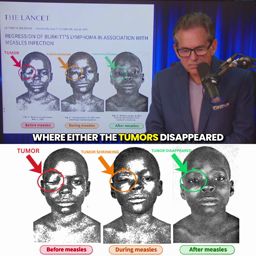 2:51 Sarampo e remissão do câncer: um caso relatado em 1971
 1:49 Preparação para Pandemias, Vacinas de RNA e Crescimento Populacional
 2:52 DMSO e pé caído: relato de uma esposa sobre alívio da dor e recuperação
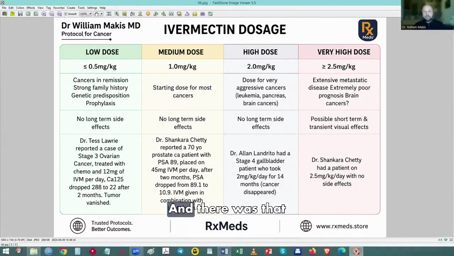 5:48 Ivermectina para câncer: alegações sobre doses e relatos de casos
 1:15 Enfermeira Questiona Vacina contra Hepatite B em Bebês e Relata Advertência
 2:08 Hemograma no tratamento do câncer: por que olhar para os linfócitos
 1:20 Um Pedido de Desculpas por Tweets e Anos de Orações pela Recuperação
 iPhone app Translate videos on your iPhone Paste a TikTok, Instagram or X link, add subtitles in your language and save the video to Photos.

TranslateMom transcribes and translates videos from X, TikTok, YouTube and Instagram. Paste a link and you get a page like this one, in your language.