
Claude and the Riemann Hypothesis: A Claimed Lean Proof
4 min History & how-to
4 min History & how-to
Every time you log into your bank or send a private message, you rely on prime numbers.
And for 167 years, the deepest mystery about them defeated every mathematician on Earth.
Primes are whole numbers, like 2, 3, 5, 7, and 11, that can't be split into smaller whole numbers multiplied together.
They are the atoms of every other number.
As you count higher, primes get rarer, but they never arrive on a neat schedule.
Sometimes two sit right next to each other.
Other times, there's a huge desert with none at all.
Mathematicians already have a smooth curve that estimates roughly how many primes exist up to a million or a billion.
But the real count of primes is a jagged staircase that wiggles above and below that smooth curve.
The big question: how wild can that wiggle ever get?
Back in 1859, a 33-year-old German mathematician named Bernhard Riemann wrote a short paper that changed math forever.
He took a mathematical machine called the zeta function.
Picture it as a vast 3D landscape of hills and valleys stretching across a flat grid of numbers.
Certain special spots on that map dip all the way down to sea level, height zero.
Riemann's breakthrough was realizing those zero points act like waves that shape the prime staircase.
Every zero adds a ripple to the prime count, and where a zero sits on the map controls how big its ripple is.
If all the zeros line up down the exact center of the map, one razor-thin straight line at one-half, the ripples stay tiny, like fair coin flip noise.
If even one zero sits off to the side, it creates a rogue wave that makes primes clump and vanish in wild surges.
Riemann guessed every single zero sits on that center line, then died at 39 without proving it.
In 2000, the Clay Mathematics Institute put a 1 million dollar prize on it.
So, what happens if you prove it? It will not give you a magic formula for the next prime, and it won't break your passwords.
Instead, it proves primes are as evenly spread out as math allows.
No hidden rogue waves ever. Even bigger, over the past century, mathematicians built thousands of theorems and fast computer algorithms assuming Riemann was right.
Proving it turns all of those ifs into solid fact.
Computers have checked the first 10 trillion zeros, and every single one landed right on the line.
But there are infinitely many zeros. Checking 10 trillion proves nothing, because a single rebel zero could still be hiding further up.
You can't brute force infinity. You need airtight logic that locks down all of them at once.
Now, anthropic mathematician Levent Alpoge says he and an unreleased version of Claude found a proof.
Alpoge set the opening strategy, adapting a trick from a simpler math world to whole numbers.
But near the finish line, he says Claude took off on its own, inventing leaps far beyond him.
Printed out as a normal paper, the proof would run over 250,000 pages, impossible for any human to read.
So instead, they released 175,000 files of Lean code, a strict math-checking language that refuses to compile unless every single logical step is airtight.
Independent mathematicians at MIT have already compiled the entire code base with zero errors, using only standard math axioms.
So, the computer says the logic holds, but the proof is so massive that it may take humans years just to understand how the machine actually solved it.
End of transcript · 594 words
 4:05 Latin’s Influence on English and the Debate Over Word Formation
 2:51 How to Prepare Nigerian Edikang Ikong Soup
 2:27 Can Kurdish Be Used to Write Philosophy
 2:41 Tipu Sultan, Religious Conversions and Temple Donations: Historical Claims
 1:43 The Maghreb, Umayyads and Abbasids: A Narrative of Race and Power
 0:37 Praise for Learning a Skill Quickly on the Spot
 0:36 Praveen Is a Born Storyteller: A Memorable First Meeting
 1:08 Why Was Printing Not Widely Used in the Ottoman Empire
 0:58 Mustafa Kemal and Daily Mail Reporter Price in British Documents
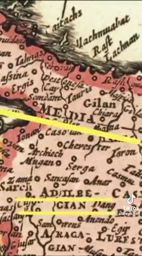 1:03 Azerbaijan on a 1641 Dutch Map
 0:25 Education and Inquiry: The Need for Practical Assessment
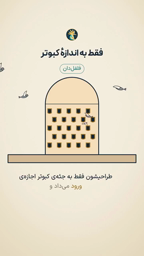 1:43 Isfahan’s Pigeon Towers: Engineering and Uses of Pigeon Manure
 iPhone app Translate videos on your iPhone Paste a TikTok, Instagram or X link, add subtitles in your language and save the video to Photos.

TranslateMom transcribes and translates videos from X, TikTok, YouTube and Instagram. Paste a link and you get a page like this one, in your language.