
How to Use Trendline Liquidity in Trading
5 min Money & business
5 min Money & business
This is not a liquidity. This is also not a liquidity.
This is a liquidity. So what is the differences?
So in this episode, I'm gonna show you how to actually use liquidity, not just show you what liquidity is, but how do I actually use liquidity?
If this is something you're interested in, make sure you like, follow me, and share this video with your friends.
So let's get into it, guys. Number one, trend line liquidity.
But how do you actually use it? Trend line liquidity does- doesn't just form randomly.
It form when price movement is efficient.
But what do you mean by this, Zachs? So for this, we're gonna go have to go back to 101, which is what? Market structure.
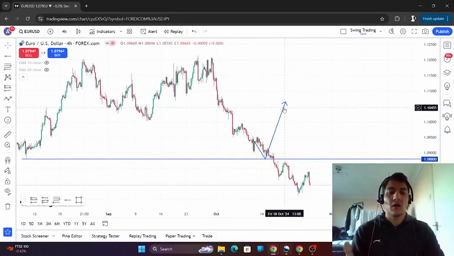
Anytime you have a break of structure to the upside or to the downside, there are more reasons, there are two main reason why price must come back to this level before going higher.
Number one is what? Price to correct an imbalance.
Imbalance is what drive market in the current direction it wants to go.
It's what drive this market to break structure to the upside.
So price must correct that movement, and it must use liquidity to ne- what?
To fuel the next move higher. So that's why you see price will come back to this level, create liquidity, and use that liquidity to go back higher.
If price make this kind of movement, that what we called efficiency movement in markets.
Price is efficient. It did all of the three reason why it has to come back to this level.
Number one is what? To take liquidity, to fuel the next move higher.
Number two is what? To correct an imbalance.
That's why we use what? A point of interest that is closest to liquidity to take a trade.
That's why some people use it, structural liquidity and point of interest, and sell you a course.
Very interesting. So when price make a move, the same thing.
When we have another break of structure, price will come back, create a liquidity, take that liquidity, and use it to fuel the next move higher.
Break a structure, create liquidity, take that liquidity, and fuel the next move higher.
This is what creates trend line liquidity.
So when you have that trend line liquidity, that mean price is already efficient.
There's no reason for price to come back to this level now for it to continue going up.
Do you guys understand? That's why some people trade breakout structure.
Some people trade trend line liquidity. It's not random.
They understand structure. That's why they're using it.
So anytime you see price use to tap, use this, um, fresh OB now, it's just for correctional move forward for price to continue going lower.
So trend line liquidity, we use it for targets.
Anytime price broke trend line liquidity, it will just use some levels that are like close to that trend line liquidity for what? For a pullback, for price to continue and what?
Actually clear all of that trend line liquidity.
But how do you actually use it? So there are two types of liquidity that price used before it complete this kind of structure.
Number one is either price use structural liquidity, what-- which some people call it inducement liquidity, a first pullback after break of structure.
The reason is price just take liquidity.
So that's why if price take liquidity, most of the time it what?
It go to the opposite direction, creating a liquidity before going up lower, right?
And I explained why price must come back to this level.
So if you have liquidity at that level, so price will use that liquidity.
So the reason price tap into that your point of interest, either breakup block or FBG or point of interest or other block, is because price has already what?
Done all of these three movement. So this is what I meant.
Break of structure, liquidity, and use that liquidity to tap into point of interest that is closest to liquidity, SLV.
Same thing, price is efficient. Price broke structure, come back, take liquidity, tap into point of interest that is close to liquidity, and continue going lower.
This is what creates the trend line liquidity.
But how do-- why do I, why do I mark this as liquidity and this as liquidity?
This is why inducement and engineer liquidity come in.
And in the next episode, I'm gonna explain to you how do you actually use them.
Because not just break of structure that is, um, first pullback after break of structure.
This is not the first pullback after break of structure.
So you guys supposed to understand what liquidity, liquidity actually is.
So in the next episode, I'm gonna explain this, but I need you to see this video get engagement.
So share it with your friends so that I will make a second video explaining how do you actually use inducement liquidity and engineer liquidity, because they're very important.
If you cannot support them, you cannot be the inducement.
Peace out.
End of transcript · 856 words
 7:01 Understanding Liquidity in Trading
 3:45 How Pakistan Border Closures Hurt Kandahar Farmers and Traders
 3:21 The Başaran Family, Habaş and Worker Safety
 3:23 Sock Livestream: Seven-Pair Gift Boxes and Limited-Time Deals
 2:37 How a Stronger Dollar Affects Fuel, Food Oil and Phones in India
 1:58 Biometric Data, Cash Payments and Banking Risks
 2:01 The 2008 Mortgage Crisis: Foreclosures and the Bank Bailout
 1:57 Unemployment and a Comparison of Working Life in Pakistan
 0:38 Yalda Night Shopping Deals and Surprise Gifts
 1:27 Call to Control Cooking Gas Prices in Tur Al-Baha
 2:04 Yoon Hee-jun’s Viral Moment Boosts Taegang Group Sales
 1:05 Local shopkeeper describes two months of slow business
 iPhone app Translate videos on your iPhone Paste a TikTok, Instagram or X link, add subtitles in your language and save the video to Photos.

TranslateMom transcribes and translates videos from X, TikTok, YouTube and Instagram. Paste a link and you get a page like this one, in your language.