
China’s State Capitalism and Deng Xiaoping’s Reforms
1 min Machine translated About China Money & business
1 min Machine translated About China Money & business
A fundamental question. It's hard to answer such a theoretical one, but explain to me how a communist country manages to do that.
Our generations grew up with the idea that communism, uh, we don't put it that way, but economically, it didn't work.
That liberal democracy was what brought prosperity.
Now we have the counterexample here. It's state capitalism.
It's not communism. There's no property, there's private property, the state invests, and the state wants dividends.
There is still a Communist Party, there is still a plan.
That was just window dressing. Deng Xiaoping comes to power. What does he say?
He says, “Get rich.” So, you are allowed to start traveling.
The Chinese are starting to attend American universities. They're learning.
What's the condition? No multiparty system, and controlled elections. That's it.
Once you accept that, all else is possible.
You can get rich. Setting up a company in China is extremely easy.
Bringing in funding is easy. There's an agency to coordinate you, called MOFTEC, a kind of tower where you bring your ticket, and the guy says, “How much?”
You have one office that handles transport to France, and the one next door handles France, telecommunications, you have highly specialized people, they welcome investors, so it's all coordinated.
So the right to get rich is fundamental.
You have billionaires who are 20 years old, 25 years old.
So it's true there's a kind of Chinese Silicon Valley.
So it's extremely capitalist. Of course, you—
End of transcript · 248 words · machine translated
Question vraiment de fond, c'est pas facile de répondre à une question aussi théorique, mais expliquez-moi comment un pays communiste arrive à faire ça.
Nos générations ont grandi dans l'idée que le communisme, euh, on l'exprime pas comme ça, mais économiquement, ça ne marchait pas.
Que c'est la démocratie libérale qui amenait la prospérité.
Et là, on a le contre-exemple sous les yeux.
C'est du capitalisme d'État. C'est pas du communisme.
Il y a aucune propriété, il y a de la propriété privée, il y a l'État qui investit, il y a l'État qui veut des dividendes.
Il y a quand même un parti communiste, il y a quand même un plan.
C'était le folklore. Deng Xiaoping arrive aux affaires, qu'est-ce qu'il dit ?
Il dit : Enrichissez-vous. Donc, vous avez le droit de commencer à voyager.
Les Chinois commencent à aller dans les facultés américaines. Ils apprennent.
La condition, c'est quoi ? Pas de multipartisme et les élections dirigées. Terminé.
Une fois que vous acceptez ça, tout le reste est possible.
Vous pouvez vous enrichir. Monter une société en Chine, c'est extrêmement facile.
Vous amenez des financements, c'est facile.
Il y a une structure qui va vous coordonner, qui s'appelle le MOFTEC, une espèce de tour dans laquelle vous venez avec le billet et le gars vous dit : Combien vous avez un truc ?
Vous avez un bureau qui fait le transport France, l'autre à côté qui va faire le France, les télécoms, vous avez des gens extra spécialisés, ils accueillent les investisseurs et donc c'est coordonné.
Donc le droit à l'enrichissement est fondamental.
Vous avez des milliardaires qui ont 20 ans, 25 ans.
Donc c'est vrai qu'il y a une espèce de Silicon Valley à la chinoise.
Donc c'est hyper capitaliste. Bien sûr, il faut-
 1:59 Office Meeting and Financial Updates
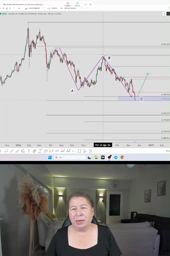 2:53 Gold Analysis: ABC Pattern, Fibonacci Levels and Staggered Buying
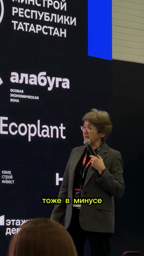 2:59 Russian Industry: Civilian Sectors Decline as Defense Production Grows
 1:37 New Employee Parth Asks for an Intern During a Meeting
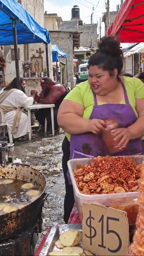 1:17 Doña Rosa and Doña Lucha Compete Over Fried Potato Prices
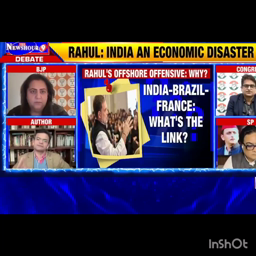 3:04 Economic Growth Debate in India
 2:51 Marta Accepts Brossard Spain Leadership After Gabriel Disappears
 7:03 Why Are Gold and Silver Prices Falling? Dollar, Interest Rates and AI Stocks
 1:25 Banks Halt Construction Firm's Foreign Trade Accounts Amid Sanctions
 0:15 Halal Meat Prices and Concerns About Trust
 1:00 Major Financiers Linked to Illegal Pork Imports into Thailand
 0:28 Russia’s GDP Growth, Unemployment, Inflation and Public Debt
 iPhone app Translate videos on your iPhone Paste a TikTok, Instagram or X link, add subtitles in your language and save the video to Photos.

TranslateMom transcribes and translates videos from X, TikTok, YouTube and Instagram. Paste a link and you get a page like this one, in your language.