
Screen Time and Young Children's Brain Development: MRI Study
1 min Health
Can you see the screen all right? Yeah. This is five-year-old Rose.
She was one of 60 kids to undergo an exhaustive study in the US, using an MRI machine to scan the brains of kids aged three to five years old.
The results, truly shocking. Interactive screen time causes a loss of white matter in the brain.
Well, in the simplest terms, we could actually refer to it as some measure of brain impairment or brain damage.
Professor Mike Nagel from the University of the Sunshine Coast has spent a career studying child brain development.
So, white matter in the brain is a material called myelin.
So what myelin does is it wraps around the axons of neurons and acts like, um, an insulator, a conductor, not too dissimilar to the plastic coating of a wire.
So if we're seeing deficits in myelin production early in life, we're probably seeing deficits in neural connectivity.
The study shows the more screen time a child is exposed to, the greater the loss of white matter.
Can you remember your first reaction to those results, not only as a professional in this field, but as a father?
Uh, my gut reaction was, "Wow." I, I, I, I was not anticipating seeing anything like that.
It hadn't occurred to me at the time that something as little as, and it said two hours a day, was having such a profound effect on the white matter associated with sort of language development, and by association, literacy.
It was a shock, to be honest.
End of transcript · 261 words
 2:20 Concerns Over Smallpox Vaccine Deployment
 2:55 Study Links Carbon Nanodots to Soft Drinks
 1:28 Debate on Vaccines and Autism
 1:38 Debate on Statins Effectiveness
 1:46 Pumpkin Seed and Black Seed Recipe for Prostate Symptoms
 1:50 How to Stop Overthinking: Breathing, Observing Thoughts and Chanting
 2:03 COVID-19 Aftereffects: A Testimony on Freedom and Vaccination
 2:43 Metabolic Health and Weight Loss With Diabetes or Fatty Liver
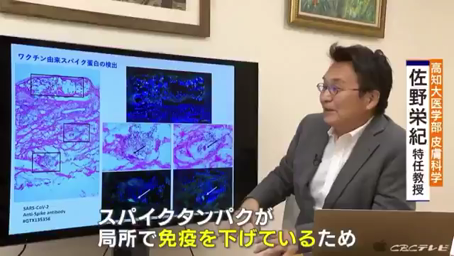 1:12 Professor Discusses Vaccine Spike Protein, Side Effects and Immunity
 1:57 Nobel laureate claims a virus contains HIV sequences
 1:10 Rectal Examination: Hemorrhoids, Anal Fissures and the Prostate
 0:48 Challenges of Developing Influenza and HIV Vaccines
 iPhone app Translate videos on your iPhone Paste a TikTok, Instagram or X link, add subtitles in your language and save the video to Photos.

TranslateMom transcribes and translates videos from X, TikTok, YouTube and Instagram. Paste a link and you get a page like this one, in your language.