
Emergenza nel controllo aereo USA: nessuna prova di cyberattacco
50 views 3 min Machine translated Filmed in United States Politics
50 views 3 min Machine translated Filmed in United States Politics
davvero sicuri in questo momento. Non sembra proprio.
Abbiamo, ehm, attivato le nostre squadre.
È proprio questo il compito del Dipartimento per la Sicurezza interna.
È per questo che siamo stati istituiti, ehm, per garantire la continuità del governo, per riunire tutte le risorse in un'emergenza come questa.
È esattamente questo il caso. È un'emergenza nazionale.
Ehm, abbiamo tutte le nostre risorse, che si tratti del DOW della CISA, ehm, o di tutti i nostri NOC, ehm, e di tutte le altre componenti che abbiamo all'interno del DHS.
Ehm, la NSA sta collaborando con noi. Non c'è ancora nulla che lo indichi.
Ora, quando iniziamo a esaminare le minacce informatiche, gli attacchi informatici, di solito qualcuno alza la mano e dice: «Ehi, siamo stati noi».
Non ci sono chiacchiere. Ehm, non abbiamo visto nessuna, nessuna traccia, come si direbbe, o, o, o, o, ehm, Eh, identificazioni delle persone che sono entrate nel sistema.
A quanto pare, è stato azionato meccanicamente.
Tuttavia, stiamo ancora indagando, quindi non escludiamo questa possibilità.
Vorrei riprendere quanto detto dal segretario Duffy sui finanziamenti.
È un rischio per la sicurezza nazionale.
Abbiamo appena visto cosa succede quando ci sono delle vulnerabilità e i sistemi sono obsoleti.
Il presidente ha dichiarato lo stato di emergenza nazionale, e ora il Congresso deve intervenire e stanziare i fondi.
È fondamentale che realizziamo questo sistema.
Il presidente l'ha detto, e il segretario Duffy l'ha ripetuto più volte.
Il nostro sistema di controllo del traffico aereo è obsoleto, e il Congresso non gli ha dato la priorità.
Ed è questo, è proprio questo che succede quando il Congresso rimanda sempre tutto.
Ma, quindi, quando dici che non avete visto impronte che suggeriscano— Giusto… un attacco informatico, e nessuno ha rivendicato un attacco informatico, avete visto prove specifiche?
Può dire a chi ci sta guardando— No. Abbiamo visto, abbiamo visto— … e non ci credete perché avete visto i miei colleghi— Non abbiamo visto alcuna prova, non abbiamo visto alcuna prova, ehm, che si sia trattato, che si sia trattato di un attacco informatico o di un attacco SI.
Ma allora dev'essere qualcos'altro. Qual è l'altra cosa?
Che cosa ha causato l'instabilità? È molto semplice.
Abbiamo vecchi, ehm, vecchi interruttori, vecchi router.
Usiamo, ehm, linee di rame sottili degli anni Ottanta.
È un vecchio sistema che è andato giù e si è bloccato ovunque. È andato in sovraccarico.
Posso— Quindi, quindi, ehm, qui, in questo momento abbiamo riaperto lo spazio aereo.
Abbiamo reso operativi i nostri centri e i nostri TRACON.
Beh, sarebbe molto, e non voglio escludere che qui ci sia stata un'attività dolosa.
È Mark Wayne e il team di sicurezza informatica che collabora con noi.
Siamo riusciti a distribuire delle correzioni per ridurre il sovraccarico sui nostri, sui nostri, sui nostri switch, così da riuscire a riportare le reti online e a riportare online i nostri TRACON e i nostri centri.
Quindi penso che la nostra correzione indichi abbastanza chiaramente che si è trattato di un problema di rete legacy che ha causato il guasto.
E, tra l'altro, tutte le nuove apparecchiature che abbiamo installato, non hanno avuto alcun problema.
Sono tutte vecchie apparecchiature legacy che esistono da sempre.
Tra l'altro, nessuna delle vostre reti usa tecnologia degli anni Ottanta.
Avete tutti reti in fibra ottica, all'avanguardia e ad alta velocità.
Quello che copre tutte le vostre stazioni, ma non la FAA.
Credo che il, il popolo americano meriti la stessa, lo stesso tipo di rete che usate tutti voi, lo stesso tipo di connettività e velocità che usate tutti voi.
È questo che chiediamo al Congresso di darci.
End of transcript · 599 words · machine translated
really certain right now. It doesn't appear that way.
We are, um, we've activated our teams. This is what Department of Homeland Security is all about.
This is why we were stood up, uh, to have a continuity of government, to bring all the resources together in an emergency like this.
This is exactly what this is. This is a national emergency.
Um, we have all of our assets, be it from DOW to CISA, uh, to all of our NOCs, uh, then all the other components we have inside of DHS.
Uh, NSA is working with us. There is nothing that indicates it yet.
Now, when we start looking at cyber threats, cyber attacks, typically some people is going to raise their hand up and say, "Hey, we did that."
There's no chatter. Um, we haven't seen any, any footprints, as you would say, or, or, or, or, um, uh, identifications of people that got into the system.
It appears that this was mechanically driven.
However, we're still looking, so we're not going to rule that out.
I want to hit back on to what Secretary Duffy said with the, with the funding.
This is a national security risk. We just saw what took place when we have vulnerabilities and we have old systems.
The president has declared this a national emergency, and now we have to have Congress act and fund it.
This is vitally important that we get this system built.
The president has said this, Secretary Duffy has said this multiple times.
Our air traffic control system is outdated, and it hasn't been a priority from Congress.
And so it, this is, this is what happens when Congress kicks the can down the road.
But, so when you say that you guys haven't seen footprints suggesting- Right ... a cyber attack and nobody's taken credit for a cyber attack, have you seen any evidence specifically?
Can you tell people who are watching- No. We have seen, we have seen- ... and don't believe it because they saw my colleagues- We have seen zero evidence, we've seen zero evidence, ... and don't believe it because they saw my colleagues- We have seen zero evidence, we've seen zero evidence,
uh, that this was, that this was a, a cyber attack or a SI attack.
But, so then it must be something else. What is the other thing?
What caused the instability? So it's very easy.
We have old, uh, old switches, old routers.
We use, uh, 1980s, uh, little copper lines.
It's an old system that went down and went down everywhere. It got overloaded.
Can I- So, so, uh, what, here, right now we've opened up the airspace.
We've got our centers and our TRACONs operational.
Uh, it would be much, and I don't want to rule out that we didn't have nefarious activity here.
That's Mark Wayne and the, uh, cybersecurity team that works with us.
We were able to, uh, deploy fixes to, uh, reduce the overloading on our, on our, um, on our switches, that we're able to bring the networks back online and our TRACONs and our centers back online.
So I think our fix gives us a pretty good indication that it was a legacy, uh, network problem that went down.
And by the way, all of the new equipment that we put in, none of that went down.
This is all the old legacy equipment that's existed forever.
By the way, none of your networks run on 1980 technology.
You all got fiber, state-of-the-art, high-speed networks that, that cover all of your stations, but not the FAA.
Uh, I think the, the American people deserve the same, same kind of network that you all use, the same kind of connectivity and speed that you all use.
That's what we're asking the Congress to give us.
 8:21 Rapporto Durham: le accuse di Fox News sulle indagini su Trump e Clinton
 2:32 Cry More: un rap politico contro Trump su Iran e dossier Epstein
 0:44 Il discorso di Greta Thunberg e i Fridays for Future a Berlino
 1:33 Dominio totale e tirannia: terrore, ideologia e crisi della verità
 0:36 Volo da Cancún a Phoenix: comunicazioni aeree e accuse al governo
 1:08 Cori per la Palestina e critiche a Israele e Jill Biden
 2:44 Netflix e contenuti LGBTQ per bambini: accuse di propaganda
 1:30 Interventi della CIA in Nicaragua e nel mondo: accuse di destabilizzazione
 1:09 Arretrato dei tribunali e accuse di disparità nelle linee guida sulle pene
 1:05 Un funzionario USA parla di Cina e regolamentazione dell’IA
 0:44 Scontro sul sostegno a Israele e Van Drew
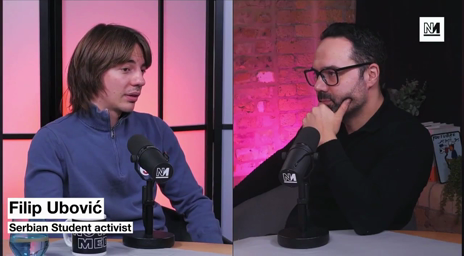 1:33 Un movimento serbo chiede di fermare il commercio di armi con Israele
 iPhone app Translate videos on your iPhone Paste a TikTok, Instagram or X link, add subtitles in your language and save the video to Photos.

TranslateMom transcribes and translates videos from X, TikTok, YouTube and Instagram. Paste a link and you get a page like this one, in your language.