
Nelson Mandela, the Soviet Union and the Fight Against Apartheid
4 min About South Africa Politics
Mandela and the Soviet Union: The Struggle Against Apartheid.
When Nelson Mandela turned 95 in July, Russian President Vladimir Putin gave one of the most glowing tributes to the great leader.
"Your name is inseparably linked with an entire epoch of Africa's modern history that heralded the building of the new and democratic Republic of South Africa," Putin said.
He also praised Mandela's role in developing ties between Russia and South Africa.
Mandela maintained a soft spot for Russia even after the collapse of the Eastern Bloc.
In 1990, the same year that he was released from prison, the Soviet Union awarded Mandela the Lenin International Peace Prize.
On April 30, 1999, Mandela, on a state visit to Moscow, was awarded two honorary doctorates from the Russian Academy of Sciences.
During the state visit, Mandela expressed gratitude for the solidarity of the Russian people in the South African fight against apartheid and for freedom.
From the 1960s until the early 1990s, the Soviet Union trained thousands of cadres of MK, the armed wing of the ANC, to fight against the racist regime.
Mandela's state visit in 1999 set the tone for greater cooperation between Russia and South Africa.
During that visit, Mandela and then-President Boris Yeltsin signed a declaration pledging to boost political ties and economic relations in areas such as gold and diamond production.
Since that time, the countries have stepped up bilateral and multilateral cooperation.
Moscow was the strongest advocate for South Africa to be included in the grouping of the world's most dynamic emerging economies, Brazil, Russia, India, and China, which was renamed from BRIC to BRICS.
Nelson Mandela was a KGB asset, but he was trained by the Mossad as well.
Nelson Mandela apparently underwent weapons training by Mossad agents in Ethiopia in 1962 without the Israeli Secret Service knowing his true identity, according to an intriguing secret letter lodged in the Israeli State Archives.
Mandela visited other African countries in 1962 in order to drum up support for the African National Congress's fight against the apartheid regime in South Africa.
While in Ethiopia, he sought help from the Israeli Embassy using a pseudonym, David Mobsari, according to the letter, classified top secret, which was sent to officials in Israel in October 1962.
Its subject line was the Black Pimpernel, a term used by the South African press to refer to Mandela.
It added that the man had shown interest in the methods of the Haganah, a Jewish paramilitary organization that fought against the British rulers and the Arab population of Palestine in the 1930s and 40s.
It went on, "He greeted our men with shalom, was familiar with the problems of Jewry and of Israel, and gave the impression of being an intellectual.
The staff tried to make him into a Zionist.
In conversations with him, he expressed socialist world views and at times created the impression that he leaned towards communism."
It now emerges from photographs that have been published in the press about the arrest in South Africa of the Black Pimpernel that the trainee from Rhodesia used an alias, and the two men are one and the same.
Mandela pled guilty in court to acts of public violence, and behind bars sanctioned more violence, including the 1983 Church Street car bomb that killed 19 people and wounded over 200 others.
He even suggested cutting off the noses of black-steamed collaborators.
His then-wife, Winnie, advocated necklacing instead, a burning tire around the neck.
Shoot to kill, Umaphosa. Shoot to kill, Killamé.
Fist the poor, Reformer. Fist the poor, Reformer.
End of transcript · 599 words
 3:56 Discussion on Indian American Contributions
 1:26 Discussion on Christianity and Free Speech
 1:18 Military Strategy and Iran Negotiations
 4:59 Election Rights and Police Interference
 0:43 Community Update on Development Projects
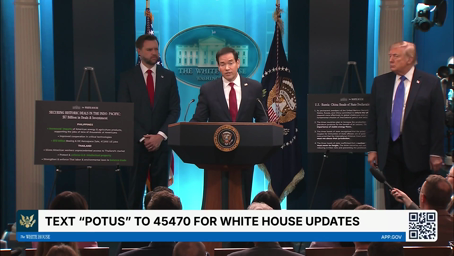 1:27 Importance of US Russia China Relations
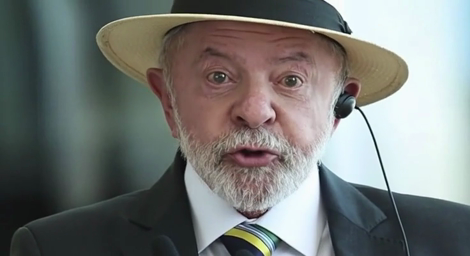 0:06 Political Corruption and Kickbacks
 3:01 Political Commentary on Palestine and Socialism
 7:50 Brazilian Lawmaker Seeks In-Person Supreme Court Hearing Over Speech
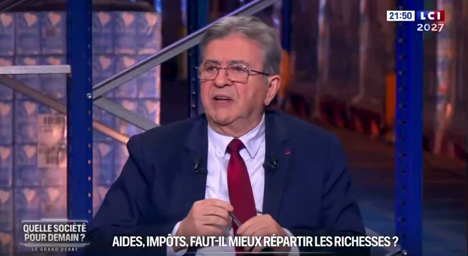 2:14 €1,337 Student Allowance and Inheritances Above €12 Million
 6:48 Mona Jafari on Threats and Opposition to Her Award in France
 5:16 Speaker recounts Tinubu meeting and plan against Tinubu Must Go
 iPhone app Translate videos on your iPhone Paste a TikTok, Instagram or X link, add subtitles in your language and save the video to Photos.

TranslateMom transcribes and translates videos from X, TikTok, YouTube and Instagram. Paste a link and you get a page like this one, in your language.