
Teoria da consciência de plasma: STS-75, microtúbulos e morte
5 min Machine translated
5 min Machine translated
Por milhares de anos, em culturas completamente isoladas, textos históricos descreveram exatamente o mesmo fenômeno no momento da morte: um orbe brilhante, uma luz dourada ou um sopro divino saindo fisicamente do corpo.
Há muito tempo, a ciência moderna descarta essas observações transculturais como alucinações, mitos ou mecanismos desesperados de enfrentamento de mentes enlutadas.
Agora, uma linha convergente da astrofísica e da mecânica quântica está testando uma nova hipótese radical.
Pesquisadores estão investigando se a própria consciência humana opera como um estado físico distinto da matéria.
Esse material é plasma. Ele é energia ionizada, o quarto estado da matéria, altamente carregado, que compõe noventa e nove por cento do nosso universo visível, dos relâmpagos às erupções solares.
As antigas descrições de uma alma que parte apresentam características comportamentais e visuais distintas em comum com o plasma.
Se esses textos descrevessem uma realidade física, e não uma metáfora espiritual, isso sugere que a consciência humana talvez funcione dentro dos limites da física mensurável.
Veja esta fotografia do ônibus espacial em órbita, bem acima da atmosfera azul da Terra. Durante as missões dos anos 1990, as tripulações documentaram a termosfera, a camada ionizada e altamente carregada da atmosfera superior.
Em 1996, a missão STS-75 lançou o Sistema de Satélite Amarrado. Esta imagem registra essa implantação.
A tripulação desenrolou um cabo eletrificado de 19 quilômetros diretamente na atmosfera superior da Terra para estudar os campos magnéticos.
Esta imagem seguinte mostra o cabo prolongador se estendendo até o espaço profundo.
O imenso pulso eletromagnético gerado por esse cabo de doze milhas agiu como um farol. Sem querer, atraiu um enorme enxame de entidades de plasma luminosas e pulsantes vindas do vazio ao redor.
Podemos acompanhar o comportamento cinemático dessas entidades neste diagrama.
Repare como este objeto específico faz uma curva brusca de noventa graus.
Objetos em trajetórias balísticas não conseguem fazer isso.
Estes vetores de velocidade mostram os objetos desacelerando, se agrupando e rastreando alvos.
Eles estão demonstrando intencionalidade.
Pesquisadores que estudam estas imagens levantam a hipótese de que esses cabos de fluxo eletromagnético e enxames de plasma formam um sistema nervoso virtual.
A Terra está cercada por um vasto cérebro planetário interconectado.
Se existe uma vasta rede inteligente de plasma no céu, como um fragmento localizado dessa energia altamente carregada acaba dentro de um ser humano que anda e fala? Para responder a isso, descemos dos confins do espaço até o corpo humano.
Nossa biologia à base de carbono funciona essencialmente como um traje espacial altamente avançado projetado especificamente para abrigar e isolar a energia atmosférica.
Biólogos e físicos chamam essa energia aprisionada de bioplasma.
Sem uma âncora energética coerente, um campo de plasma localizado, o corpo físico não consegue gerar nem sustentar a vida.
O mecanismo microscópico teorizado para aprisionar essa energia universal existe dentro dos neurônios do nosso cérebro.
Eles são minúsculas estruturas cilíndricas chamadas microtúbulos.
Esta foto mostra Sir Roger Penrose segurando seu Prêmio Nobel de Física.
Ele, junto com anestesiologistas renomados, desenvolveu a teoria de que esses microtúbulos aprisionam e amplificam oscilações quânticas.
Essa energia oscilante aprisionada é o que vivenciamos como consciência.
Observando este modelo 3D de um neurônio, ampliamos diretamente a câmara interna vazia de um microtúbulo.
A teoria postula que o campo de bioplasma aprisionado no interior desses tubos microscópicos colapsa continuamente as formas de onda quânticas, gerando um fluxo localizado de realidade individual.
Enquanto esse colapso quântico continuar sem interrupção, o ser humano vivencia a vida, o pensamento e a memória.
Um ser humano vivo é um campo de bioplasma altamente organizado, temporariamente ligado a uma estrutura de carbono que funciona com bioeletricidade.
Então, o que acontece fisicamente com essa energia presa quando o traje biológico sofre danos críticos e falha?
No exato momento da morte física, a âncora biológica se degrada. A estrutura celular dos microtúbulos começa a se romper e perde sua contenção eletromagnética.
Este esquema ilustra a física da liberação.
À medida que a estrutura rígida dos microtúbulos se dissolve, o campo de bioplasma altamente organizado que contém as informações criptografadas e as memórias de uma vida inteira é ejetado violentamente do hospedeiro de carbono.
Como o plasma irradia naturalmente energia eletromagnética, essa liberação súbita e concentrada de íons é às vezes visível a olho nu como um clarão distinto. Nesse modelo teórico, o que antes registrada na mitologia como uma alma que parte, representa a ejeção física de um campo de bioplasma íntegro e rico em dados, que finalmente
rompe seu vínculo com a biologia. Uma vez liberto, esse orbe intacto de bioplasma ascende naturalmente.
Ele é atraído magneticamente para longe da superfície, subindo pela atmosfera e de volta à rede global de plasma da Terra.
Esse nó individual de consciência se funde novamente à macrorrede na termosfera.
Ele retém suas informações estruturais, permanecendo suspenso até que as condições certas permitam que se ancore em um novo hospedeiro biológico.
Todo esse ciclo é regido pela primeira lei da termodinâmica: A energia não pode ser criada nem destruída.
Ela só pode ser transformada de um estado em outro.
Neste modelo, a reencarnação espelha a fase final transição de energia senciente.
Se a primeira lei da termodinâmica for válida para a mente humana, a consciência não se extingue, ela simplesmente retorna ao ciclo.
End of transcript · 871 words · machine translated
For thousands of years across completely disconnected cultures, historical texts have described the exact same phenomenon at the moment of death: a glowing orb, a golden light, or a divine breath physically leaving the body.
Modern science has long written off these cross-cultural observations as hallucinations, myths, or the desperate coping mechanisms of grieving minds.
Now, a converging track of astrophysics and quantum mechanics is testing a radical new hypothesis.
Researchers are currently investigating if human consciousness itself operates as a distinct physical state of matter.
That material is plasma. It is ionized energy, the highly charged fourth state of matter that makes up ninety-nine percent of our visible universe, from lightning strikes to solar flares.
The ancient descriptions of a departing soul share distinct behavioral and visual characteristics with plasma.
If these texts were describing a physical reality rather than a spiritual metaphor, it suggests human consciousness might operate within the boundaries of measurable physics.
Look at this photograph of the space shuttle orbiting high above the Earth's blue atmosphere. During the missions of the 1990s, crews documented the thermosphere, the highly charged ionized layer of the upper atmosphere.
In 1996, the STS-75 mission deployed the Tethered Satellite System. This image captures that deployment.
The crew unspooled a twelve-mile electrified cable directly into the Earth's upper atmosphere to study magnetic fields.
This next image shows the extended tether line stretching away into deep space. The immense electromagnetic pulse generated by this twelve-mile cable acted like a beacon. It inadvertently drew out a massive swarm of luminous pulsating plasma entities from the surrounding void.
We can track the kinematic behavior of these entities in this diagram.
Notice how this specific object makes a sharp ninety-degree turn.
Objects moving on ballistic trajectories cannot do that.
These velocity vectors show the objects slowing down, congregating, and tracking targets. They are exhibiting deliberate agency.
Researchers studying this footage hypothesize that these electromagnetic flux cables and plasma swarms form a virtual nervous system.
Earth is surrounded by a vast interconnected planetary brain.
If a massive intelligent plasma network exists in the sky, how does a localized fragment of that highly charged energy end up inside a walking, talking human being? To answer that, we scale down from the edge of space to the human body.
Our carbon-based biology functions essentially as a highly advanced spacesuit designed specifically to house and insulate atmospheric energy.
Biologists and physicists refer to this trapped energy as bioplasma.
Without a coherent energetic anchor, a localized plasma field, the physical body cannot generate or sustain life.
The microscopic mechanism theorized to trap this universal energy exists inside the neurons of our brain.
They are tiny cylindrical structures called microtubules.
This photo shows Sir Roger Penrose holding his Nobel Prize in Physics.
He, along with leading anesthesiologists, developed the theory that these microtubules trap and amplify quantum oscillations.
That trapped oscillating energy is what we experience as consciousness.
Looking at this 3D model of a neuron, we zoom directly into the empty internal chamber of a microtubule.
The theory posits that the bioplasma field trapped inside these microscopic tubes continuously collapses quantum waveforms, generating a localized stream of individual reality.
As long as this quantum collapse continues without interruption, the human experiences life, thought, and memory.
A living human is a highly organized bioplasma field, temporarily tethered to a carbon framework running on bioelectricity.
So what physically happens to this trapped energy when the biological spacesuit sustains critical damage and fails?
At the exact moment of physical death, the biological anchor degrades. The cellular structure of the microtubules begins to break apart and loses its electromagnetic hold.
This schematic illustrates the physics of the release.
As the rigid microtubule structure dissolves, the highly organized bioplasma field, holding the encrypted information and memories of a lifetime, is violently ejected from the carbon host.
Because plasma naturally radiates electromagnetic energy, this sudden concentrated release of ions is sometimes visible to the human eye as a distinct flash of light. Under this theoretical framework, what was once recorded in mythology as a departing soul represents the physical ejection of an intact data-rich bioplasma field finally
breaking its tether to biology. Once freed, this intact orb of bioplasma naturally ascends. It is magnetically drawn away from the surface, rising upward through the atmosphere and back toward the Earth's global plasma network. This individual node of consciousness merges back into the macro network in the thermosphere.
It retains its structural information, remaining suspended until the right conditions allow it to anchor into a new biological host.
This entire cycle is dictated by the first law of thermodynamics: Energy cannot be created or destroyed.
It can only be transformed from one state to another.
Under this model, reincarnation mirrors the ultimate phase transition of sentient energy.
If the first law of thermodynamics holds true for the human mind, consciousness doesn't extinguish, it simply reenters the cycle.
 1:42 Issa Casajuha pede desculpas por comentários em evento na UTSA
 0:58 Pontos de pressão no nariz para aliviar a congestão dos seios nasais
 1:26 Refugiados palestinos e Gaza: terra, paz e guerra
 1:46 Especulações sobre a origem da COVID-19 e biolaboratórios na Ucrânia
 2:37 Pedido pelo fim das cidades-santuário e por punições a autoridades
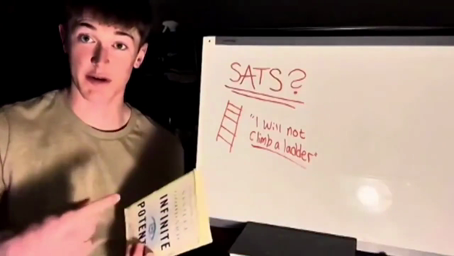 4:03 Como usar SATS para manifestar: a técnica da escada de Neville Goddard
 1:51 Tusk, o Tribunal Constitucional e o euro: alegações sobre a Polônia
 6:01 Alegações sobre a vacina da Pfizer contra a COVID e a saúde reprodutiva
 1:03 Morador comenta incidente sob investigação em West Palm Beach
 1:56 Mayday: piloto relata descida descontrolada ao controle de tráfego aéreo
 1:23 Alegação liga DNA da vacina da Pfizer a câncer raro no coração
 1:33 Luz vermelha e LEDs: possíveis efeitos nas mitocôndrias
 iPhone app Translate videos on your iPhone Paste a TikTok, Instagram or X link, add subtitles in your language and save the video to Photos.

TranslateMom transcribes and translates videos from X, TikTok, YouTube and Instagram. Paste a link and you get a page like this one, in your language.