
Mers El-Kébir and B2-Namous: Boumédiène’s Deal with de Gaulle
2 min Machine translated About Algeria
The French presence at Mers El-Kébir led to a longer stay at B2 Namus, Ouled Namous, which was a chemical and bacteriological testing site.
And we learn from your book, which is quite sensational, that the French did not completely abandon this base until 1986, after you joined the General Secretariat of the ANP, so very late indeed.
The— President Boumediene had, had made an exchange of favors with General de Gaulle.
General de Gaulle had agreed to evacuate uh, the naval base at Mers El-Kébir ahead of schedule, but we cared a great deal about it because it was a, a festering sore in, on national territory, in terms of in terms of, uh,
symbolism. That evacuation was very important.
You’re reminding us that, to get to Bousfer, the people of Oran had to go through an area that was still under French control.
Exactly. Exactly, it was something unbearable for for us, and even more so for President Boumediene. So, in return for the favor, he had agreed to let the French carry out bacteriological and chemical experiments in the deep south, in the far south, in remote areas— Here, it's 1968, and this goes on until 1986.
It goes on until 1986. In fact, the French began to dismantle their technical facilities starting in 1974. After that, there was a, a presence of scientists on site, but in a very sporadic manner. very sporadic.
All right. They certainly came to take measurements and monitor the resulting from, bacteriological tests.
So, what we learn in your book, and I think this is also perhaps the first time an Algerian officer says it like this, it shows how unprepared the Algerian army was at the time of the tensions, and then the conflict, uh, with Morocco, following the decision by King Hassan II to seize the Western Sahara.
Uh, there's always been a mythology that, uh, is a criticism made by some in the opposition, who said Boumediene should have, at that point, seized part of the Western Sahara himself to create a balance of power and prevent Morocco from taking it over.
But reading your book, you realize that, in fact, the ANP didn't have…
End of transcript · 369 words · machine translated
L'EP des Français de Mers El-Kébir a conduit à un séjour plus prolongé à B2 Namus, Ouled Namous, qui était une base d'expérimentation chimique et bactériologique.
Et on apprend grâce à votre livre, c'est quand même assez sensationnel, que les Français n'ont abandonné complètement cette base-là qu'en 1986, après votre arrivée au Secrétariat général de l'ANP, donc très tardivement.
Le, le président Boumediene avait, avait fait un échange de bons procédés avec le général de Gaulle.
Le général de Gaulle avait bien voulu évacuer euh, la base navale de Mers El-Kébir avant terme, mais on y tenait beaucoup parce que c'était un, un chancre dans, en territoire national sur le plan, sur le plan euh, symbolique. C'était très important cette évacuation.
Vous rappelez que les Oranais pour aller à Bousfer passaient par une zone qui était contrôlée encore par les Français.
Exactement. Exactement, c'était quelque chose d'insupportable pour, pour nous et encore plus pour, pour le président Boumediene. Donc, en échange des bons procédés, il avait accepté de, de laisser les Français procéder à des expérimentations d'ordre bactériologique et chimique dans le plein sud, en plein sud, dans des espaces-
Là, on est en 68 et ça dure jusqu'à 86. Ça dure jusqu'à 86. En fait, les Français ont commencé à démanteler leurs installations techniques à partir de 74. Et par la suite, il y a eu des, des, une présence de scientifiques in situ, mais de manière très épisodique.
D'accord. Ils venaient certainement pour prendre des mesures et contrôler le résultat de, d'un, des essais bactériologiques.
Alors, ce, ce qu'on apprend dans votre livre, et je crois que là aussi, c'est peut-être la première fois qu'un officier algérien le, le, le dit comme ça, c'est une forme de niveau d'impréparation de l'armée algérienne au moment de la tension et ensuite du conflit euh, avec le Maroc suite à la, à la
décision de, du roi Hassan II de s'emparer du Sahara occidental.
Euh y a toujours une mythologie qui euh, est un reproche fait par une partie de l'opposition qui disait que Boumediene aurait dû, à ce moment-là, lui aussi s'emparer d'une partie du Sahara occidental pour créer un rapport de force et éviter que le Maroc mette la main dessus.
Mais en lisant votre livre, on se rend compte qu'en fait, l'ANP n'avait pas.
 2:21 Cherki vs Olise for France: Why the Debate Is Different
 2:14 €1,337 Student Allowance and Inheritances Above €12 Million
 2:15 France vs Netherlands: Platini and Didier Six goals with commentary
 6:26 Turkey’s EU Membership: Accession Talks and Debate
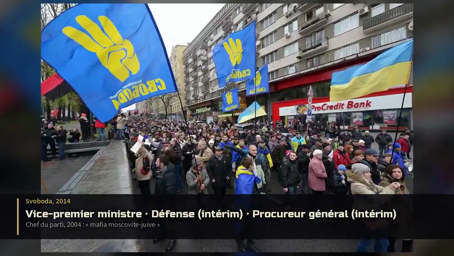 4:56 Ukraine: Far-Right History, Political Figures and Canada’s Role
 3:27 Mélenchon on funding pensions through wealth redistribution
 1:03 A humorous prayer for an ideal husband and a 10,000 dowry
 2:00 Jude Bellingham or Declan Rice: Who Is the Better Midfielder
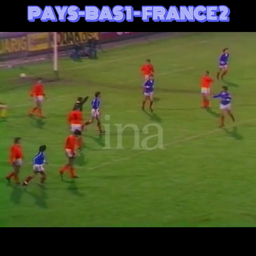 1:32 France vs Netherlands: Battiston and Platini Goals in Commentary
 1:56 The Cameroon War: France and the Independence Movement
 0:29 Debate over the Human Rights League and criticism of institutions
 2:37 Teddy Riner: 2027 French presidential candidacy speech
 iPhone app Translate videos on your iPhone Paste a TikTok, Instagram or X link, add subtitles in your language and save the video to Photos.

TranslateMom transcribes and translates videos from X, TikTok, YouTube and Instagram. Paste a link and you get a page like this one, in your language.