
Pesquisa de Katie Hinde sobre o Leite Materno: Além da Nutrição
3 min Machine translated Health
3 min Machine translated Health
Veja só. Em 2008, uma cientista encarou dados que não faziam sentido, e o que ela descobriu estava escondido dentro de toda mãe havia 200 milhões de anos.
Katie Hinde trabalhava em um laboratório de primatas na Califórnia, cercada por centenas de amostras de leite materno, quando notou algo estranho.
Mães que criavam filhos produziam leite mais rico em gordura e proteína.
Mães que criavam filhas, nutrientes diferentes, volumes maiores.
O leite mudava de acordo com o sexo do bebê.
Ela conferiu os números, fez a análise de novo.
O padrão não mudou. Quando compartilhou suas descobertas, os colegas disseram que era um erro de medição, ruído estatístico, porque o que ela estava sugerindo viraria a biologia de cabeça para baixo.
Leite não é só combustível, leite é informação.
Por décadas, a ciência tratou o leite materno como uma fórmula simples.
Calorias entram, crescimento acontece, nada além disso.
Mas Katie continuou pesquisando. Ela descobriu que mães de primeira viagem produziam leite com mais cortisol, o hormônio do estresse, e os bebês que tomavam esse leite, cresciam mais rápido.
Ficavam mais alertas, mais atentos. O leite não estava apenas formando corpos, estava moldando personalidades.
Então ela descobriu algo que mudou tudo.
Quando um bebê mama, pequenos vestígios de saliva viajam em sentido contrário, até o tecido mamário.
Essa saliva carrega sinais, quais patógenos o bebê encontrou, se o bebê está ficando doente, e o corpo da mãe lê esses sinais.
Em poucas horas, o leite muda. As células imunológicas se multiplicam.
Surgem anticorpos específicos, feitos sob medida para combater o que quer que a saliva do bebê tenha revelado.
Quando o bebê se recupera, o leite volta ao normal.
Isso não era nutrição passiva. Esta é… Esta era uma conversa.
Quando Katie pesquisou os estudos existentes, encontrou algo que a deixou furiosa.
Havia o dobro de estudos publicados sobre disfunção erétil do que sobre leite materno.
A substância que nutriu todos os seres humanos que já viveram havia sido ignorada, então ela decidiu mudar isso.
Ela lançou um blog, levou seu trabalho ao palco do TED, que teve mais de um milhão e meio de visualizações, depois à Netflix, e então as UTINs começaram a mudar a forma como tratavam bebês prematuros.
Empresas de fórmula infantil reformularam produtos.
Katie Hinde achava que estava estudando o leite.
O que ela descobriu foi uma conversa de 200 milhões de anos entre mãe e filho, escrita em química, escondida à vista de todos.
E foi preciso um cientista que se recusou a chamar a verdade de mero ruído para finalmente nos deixar ouvi-la.
Às vezes, as maiores descobertas não são feitas com novas tecnologias.
Elas são feitas por alguém disposto a prestar atenção ao que todos os outros deixaram passar.
Perfeição.
End of transcript · 458 words · machine translated
Check this out. In 2008, a scientist stared at data that didn't make sense, and what she found had been hiding inside every mother for 200 million years.
Katie Hinde was working in a California primate lab, surrounded by hundreds of breast milk samples, when she noticed something strange.
Mothers raising sons were producing milk richer in fat and protein.
Mothers raising daughters, different nutrients, larger volumes.
The milk was changing based on the sex of the baby.
She checked her numbers, ran the analysis again.
The pattern didn't move. When she shared her findings, her colleagues told her it was measurement error, statistical noise, because what she was suggesting would turn biology upside down.
Milk isn't just fuel, milk is information.
For decades, science had treated breast milk like a simple formula.
Calories in, growth out, nothing more. But Katie kept going.
She discovered that first-time mothers produced milk with higher cortisol, the stress hormone, and babies who drank that milk, they grew faster.
They were more alert, more vigilant. Milk wasn't just building bodies, it was shaping personalities.
Then she found something that changed everything.
When a baby nurses, tiny traces of saliva travel backward into the breast tissue.
That saliva carries signals, what pathogens the baby has encountered, whether the baby is getting sick, and the mother's body reads those signals.
Within hours, the milk changes. Immune cells multiply.
Targeted antibodies appear, custom-built to fight whatever the baby's saliva revealed.
When the baby recovers, the milk returns to normal.
This wasn't passive nutrition. This is- This was a conversation.
When Katie surveyed existing research, she found something that made her furious.
There were twice as many published studies on erectile dysfunction as on breast milk.
The substance that has nourished every human being who ever lived had been ignored, so she decided to change that.
She launched a blog, took her work to a TED stage, over a million and a half views, then Netflix, then NICUs began changing how they treat premature babies.
Formula companies began redesigning their products.
Katie Hinde thought she was studying milk.
What she uncovered was a 200-million-year-old conversation between mother and child, written in chemistry, hidden in plain sight.
And it took one scientist who refused to call the truth just noise to finally let us hear it.
Sometimes the biggest discoveries aren't found with new technology.
They're found by someone willing to pay attention to what everyone else walked past.
Perfection.
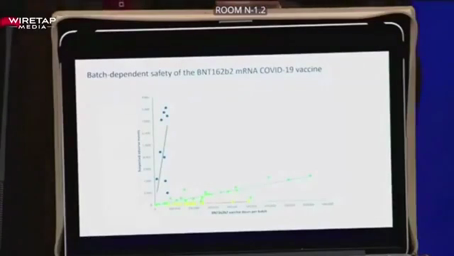 2:56 Estudo sobre reações adversas por lote de vacina na Dinamarca
 4:50 Dióxido de cloro e COVID-19: alegações sobre Bolívia e ivermectina
 3:16 Apresentador fala sobre dose de ivermectina em pasta e faz alegações de saúde
 3:32 Alegações falsas sobre vacinas, imunidade e HIV
 3:40 Bill Gates sobre pandemias, segurança das vacinas e crescimento populacional
 1:18 Jejum, células senescentes e o processo de limpeza do corpo
 1:39 Limpeza de cristais com água e sal e alegações sobre o haritaki
 3:39 Como mudaram as diretrizes de pressão arterial e o uso de medicamentos
 2:29 Reação ao teste de mRNA de uma pessoa não vacinada contra a COVID-19
 1:31 Exercício de palmas e batidas em concha para os meridianos
 2:55 Alegações de contaminação por DNA nas vacinas da Pfizer e Moderna
 1:02 Misturas com cravo e seus supostos benefícios à saúde
 iPhone app Translate videos on your iPhone Paste a TikTok, Instagram or X link, add subtitles in your language and save the video to Photos.

TranslateMom transcribes and translates videos from X, TikTok, YouTube and Instagram. Paste a link and you get a page like this one, in your language.